
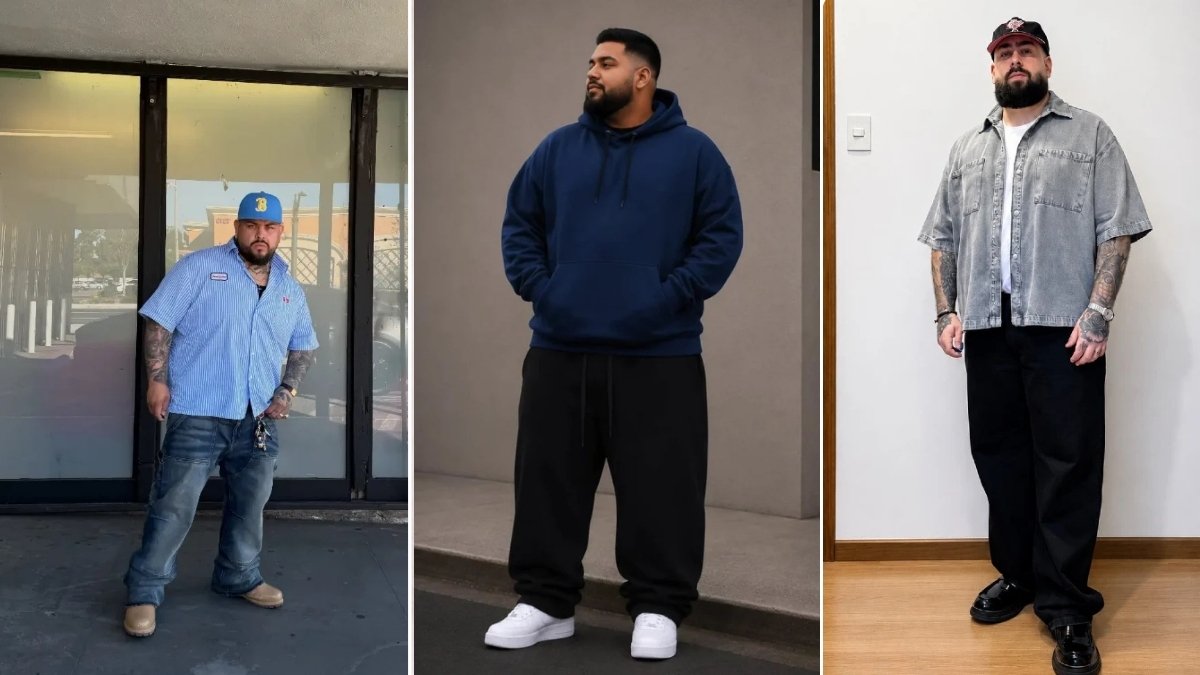
Fall weather invites rich textures, deep colors, and intentional layering. Building an outfit feels exactly like designing a cozy, well-appointed room. Soft flannel shirts provide a warm base. Structured jackets act like architectural anchors. Heavy knits bring that grounded, plush feeling you crave when temperatures drop.
Mastering these combinations solves the cold-weather dilemma of staying warm without looking heavy. Plus-size guys benefit massively from strategic proportions and sturdy fabrics. Smart layering creates vertical lines that define your shape. Solid base pieces allow you to experiment with rugged outerwear confidently.
Mastering Proportions How to Layer Like a Pro
Great style requires a strong foundation before adding heavier outer elements. Thin, breathable cotton tees keep your core comfortable while preventing awkward bunching under rugged garments.
Cardigans and chore coats offer excellent structure for broader chests and shoulders. Wearing darker shades near your body pulls the eye inward and builds a grounded silhouette.
1. Early Fall Transitional Base Layers
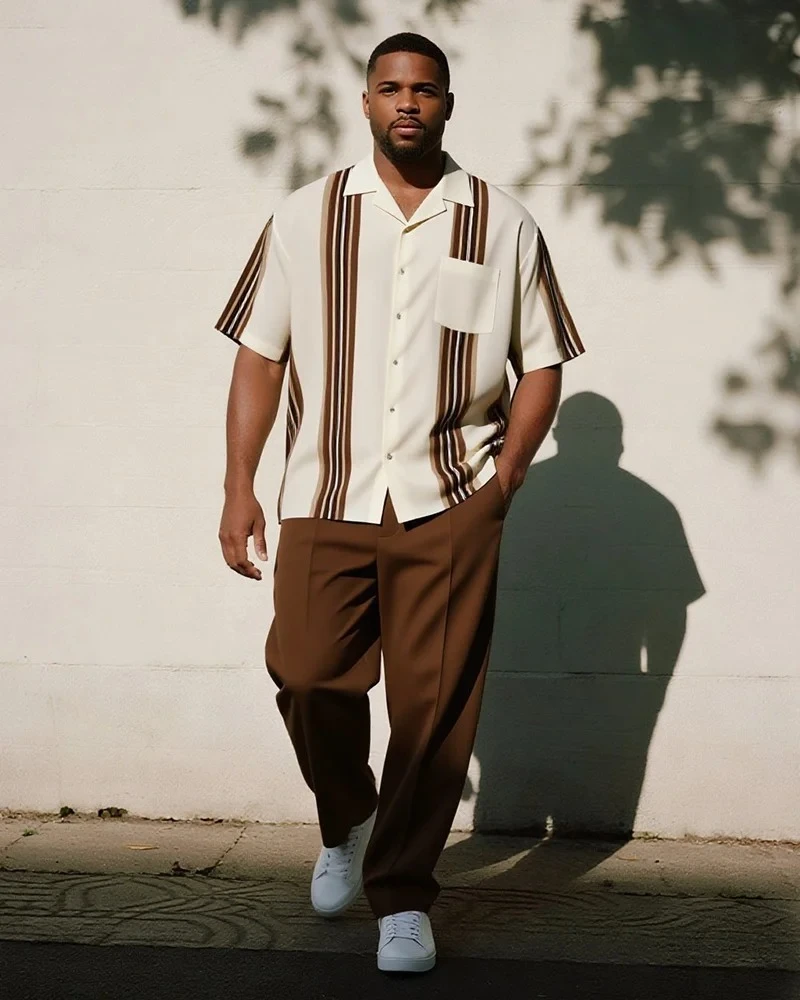
Cream fabrics anchor the look, interrupted by crisp brown vertical stripes down the chest. Rich chocolate trousers ground the outfit, falling with a soft drape toward clean white leather sneakers. Sunlight highlights the airy, lightweight texture of the open-collar camp shirt.
Vertical lines act like tall windows in a room, drawing the eye upward and creating structural length.
Early autumn days require breathable base pieces before introducing heavy jackets. This color-blocking setup works exceptionally well for broader frames because the matching brown tones connect the upper and lower halves. Toss a rugged denim chore coat over this shirt when the evening air finally cools down.
2. Monochromatic Bases with a Pop of Crisp White
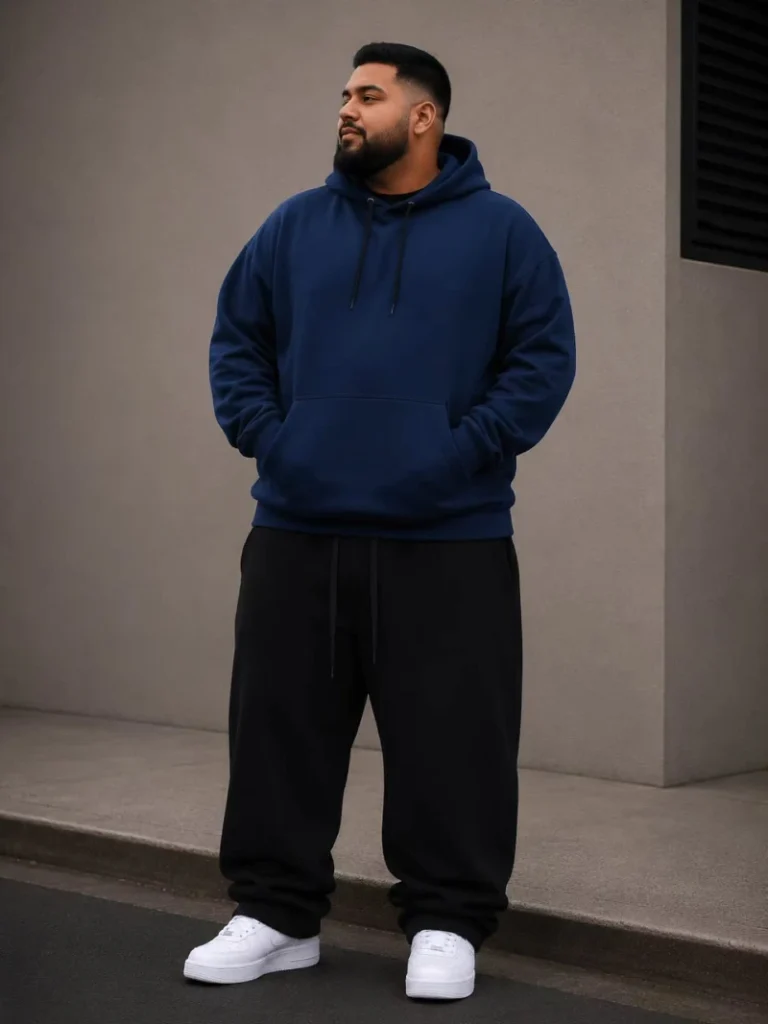
A deep, plush navy hoodie creates a solid core, matched in soft texture by loose, slouchy black sweatpants. The look is entirely grounded, providing a cohesive foundation. A pair of crisp white leather sneakers breaks up the darkness, offering a clean, architectural finish.
Matching deep colors across soft fabrics is like using analogous tones on plush upholstery—it creates a deeply comforting, grounded space.
This approach is less about adding bulk and more about adding depth through matching tones and textures. It simplifies the silhouette into one cohesive block, which works brilliantly for broader frames. Use this formula whenever you want maximum comfort without sacrificing structure.
Why This Works
The analogous navy and black tones create a single, deep mass.
Plush matte fabrics prevent bulk through softness, not rigidity.
Crisp white sneakers act like a bright accent, breaking the heavy mood.
3. Matching Sets as Structural Anchors
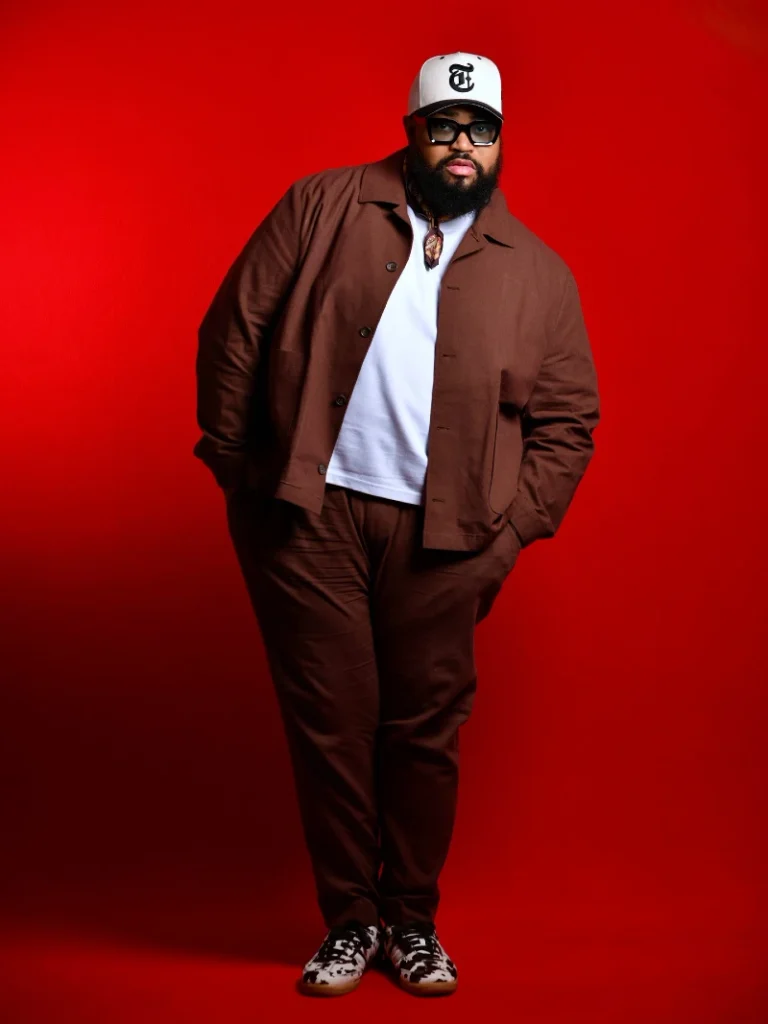
Deep chocolate brown sets a grounded tone across a relaxed chore coat and matching trousers. A crisp white tee breaks up the dark canvas like a flood of natural light in a moody room. Small patterned accessories, from the silk neckerchief to the graphic sneakers, add sharp visual tension.
Matching your top and bottom layers builds a unified architectural frame that lengthens your profile.
Monochromatic outer layers work like painting a room ceiling-to-floor in one rich shade. This technique hides harsh visual breaks and creates long, clean lines that flatter broader shapes naturally. Anchor the formula with a stark white inner shirt to prevent heavy fabrics from feeling enclosed.
Why This Works
Element 1: The unbuttoned jacket creates a vertical strip of white that visually narrows your torso.
Element 2: Solid brown fabrics act as a cohesive backdrop to let bold accessories stand out.
Element 3: A crisp white cap balances the bright undershirt while drawing the eye upward.
4. Waffle Knits as Textural Anchors
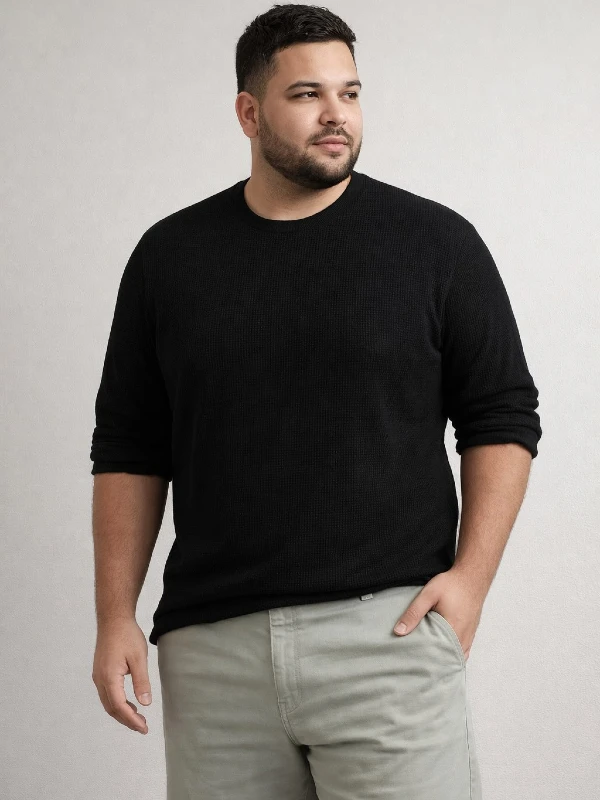
Deep black waffle knit absorbs light, offering a rich, tactile surface. Crisp sage chinos provide a bright contrast against the heavy upper half. Pushed-up sleeves break up the solid block of dark fabric while adding relaxed, human energy.
High-contrast styling functions like a dark accent wall, grounding your frame while keeping the overall mood airy.
Thermal materials grab onto heavier outer garments securely without slipping. Grid patterns work exceptionally well for broader chests because the physical texture diffuses visual mass. Toss a rugged olive field jacket over this exact pairing for a brisk morning dog walk or casual coffee run.
5. Structured Brown Outerwear over Dark Foundations
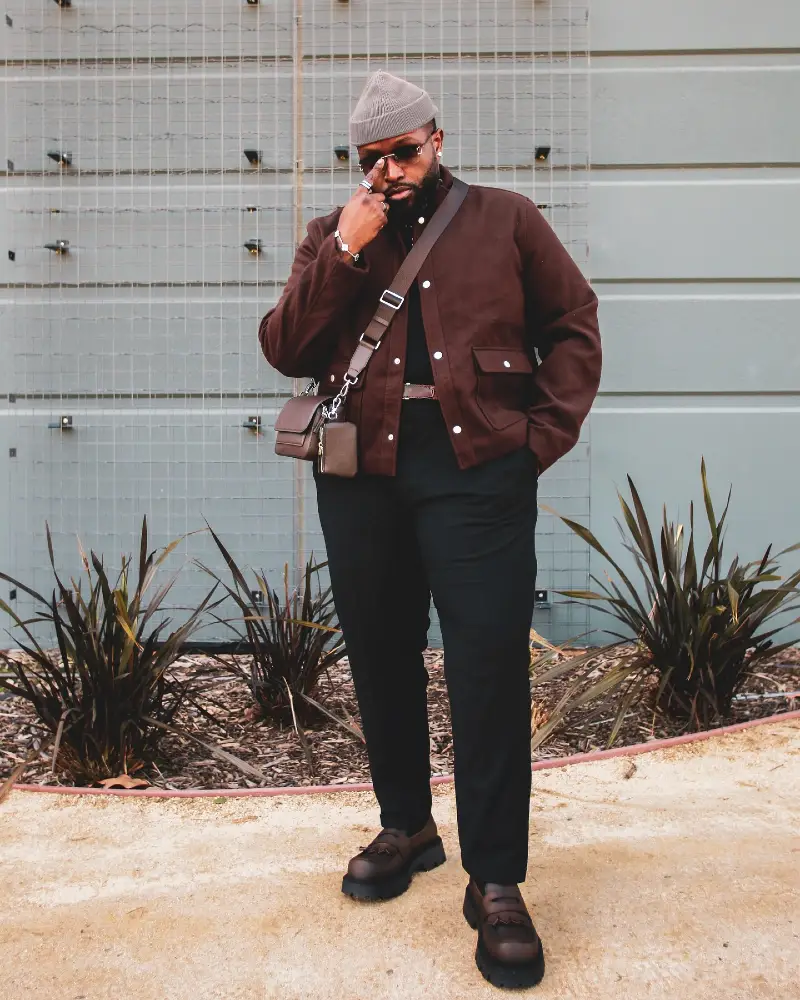
A structured chocolate brown jacket with crisp silver hardware breaks up a solid black foundation. Thick-soled brown loafers ground the lower half, mirroring the physical weight of the heavy upper layer. A taupe beanie and sleek leather crossbody bag add functional, tactile warmth against the cool outdoor lighting.
Metallic hardware acts like cabinet pulls in a dark kitchen, offering sharp visual contrast against matte fabrics.
Placing a mid-tone outer layer over a dark base creates a natural framing effect. This method builds a defined silhouette for broader shoulders, much like positioning a bold accent chair against a shadowed wall. Keep your leather accessories within the same warm color family to maintain clean visual flow.
Quick Styling Tips
Budget version: Swap the heavy wool jacket for a structured cotton chore coat to achieve the same architectural lines on a tighter budget.
Renter tip: Treat your daily accessories like temporary peel-and-stick backsplash—use a bold crossbody bag to quickly update a basic black outfit without committing to a completely new wardrobe.
Pro move: Match the leather finish of your chunky footwear directly to your bag for a highly intentional, cohesive final look.
6. Crisp Stripes and Structural Denim
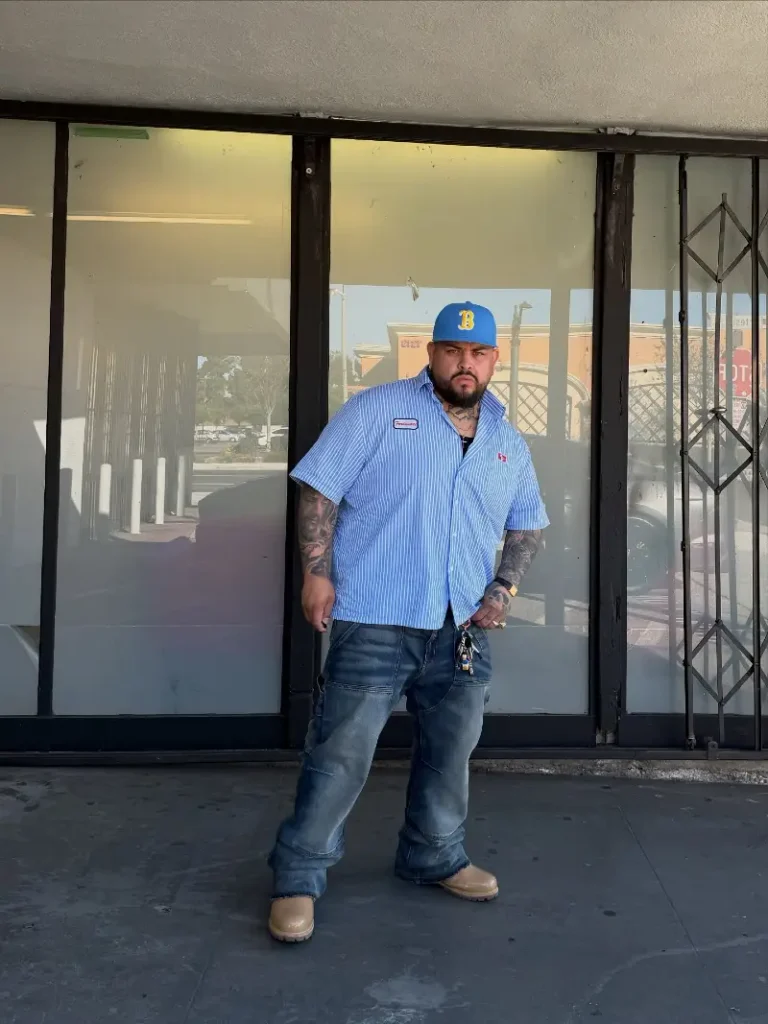
A structured blue pinstripe work shirt brings an airy lightness against heavy medium-wash carpenter jeans. Sturdy tan boots ground the lower half with a rugged, earthy texture. Bright daylight catches the clean white lines running through the breezy blue cotton.
Pinstripes function like vertical beadboard in a cramped room, visually lifting the ceiling and elongating your frame.
Utilitarian workwear offers natural structure without clinging tightly to your midsection. Leaving the bottom buttons undone creates a relaxed drape that mimics casual slipcovered furniture. Anchor this sturdy combination with a matching blue cap to connect your upper and lower color palettes.
7. Neutral Overshirts and Dark Utility Bases
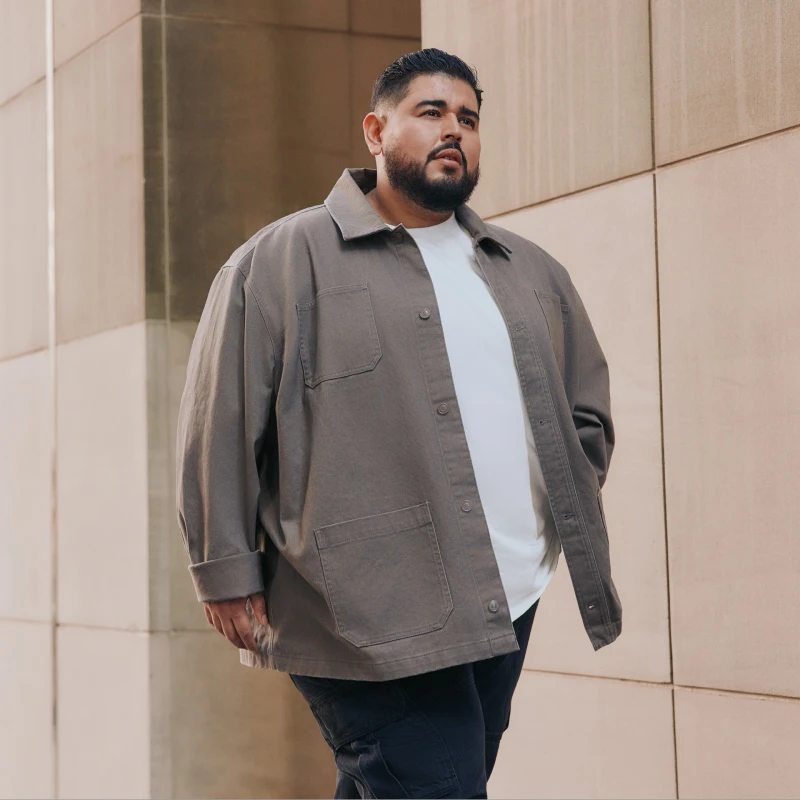
A generously cut taupe overshirt drapes smoothly over a crisp white foundation. Deep navy utility pants anchor the lower half with rugged, heavy weight. Soft daylight catches the matte canvas texture of the large chest patch pockets.
Oversized canvas layers act like durable linen slipcovers, softening your overall silhouette while maintaining crisp structural integrity.
Wearing unbuttoned jackets creates a strong vertical column of bright white down your center. This visual trick acts like floor-to-ceiling drapes, instantly lengthening your physical proportions. Pair this specific combination with relaxed-fit trousers to keep the volume balanced from your shoulders down to your ankles.
Quick Styling Tips
Budget version: Hunt for vintage military surplus shirts to grab this exact heavy canvas texture at a fraction of the retail cost.
Renter tip: Treat your undershirts like temporary peel-and-stick wallpaper—swap out different colors to change the entire mood of the outfit without committing to a new jacket.
Pro move: Match the earthy tone of your footwear directly to the taupe overshirt to create a highly cohesive, bookended frame.
8. Vertical Stripes and Earthy Green Denim
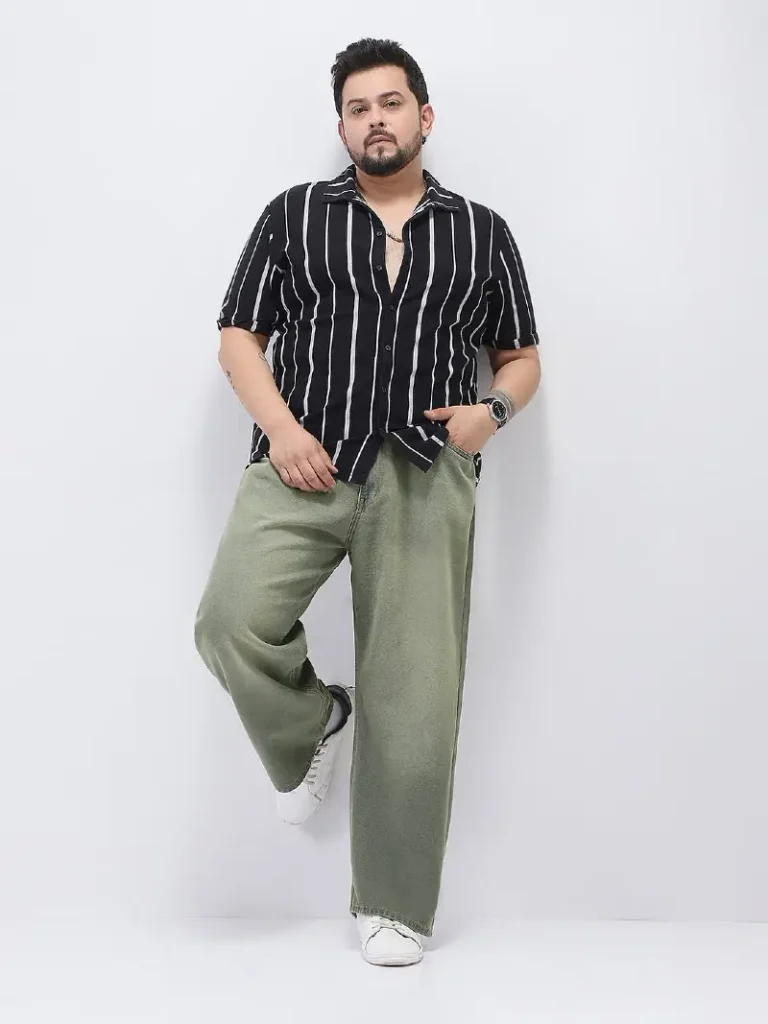
A stark black camp shirt heavily detailed with bright white vertical stripes draws the eye immediately. Soft, faded olive green denim brings a textured, earthy weight to the bottom half. Clean white sneakers ground the look while echoing the sharp lines of the shirt.
High-contrast vertical patterns act like tall, narrow doorways, instantly making a space feel taller and less confined.
Transitioning into early autumn requires breathable fabrics that still carry visual weight. Leaving a camp collar wide open creates a deep V-neck shape that effectively breaks up a broad chest. Pair this bold top with muted, earthy trousers to keep the overall outfit from feeling busy or visually chaotic.
Why This Works
Element 1: Bold vertical striping creates a continuous upward sightline that naturally lengthens a wider torso.
Element 2: Faded olive green fabric acts as a heavy, grounded neutral to anchor the high-contrast upper half.
Element 3: The relaxed trouser cut perfectly balances the loose drape of the unbuttoned, airy shirt.
9. Earthy Greens and Heavy Indigo Denim
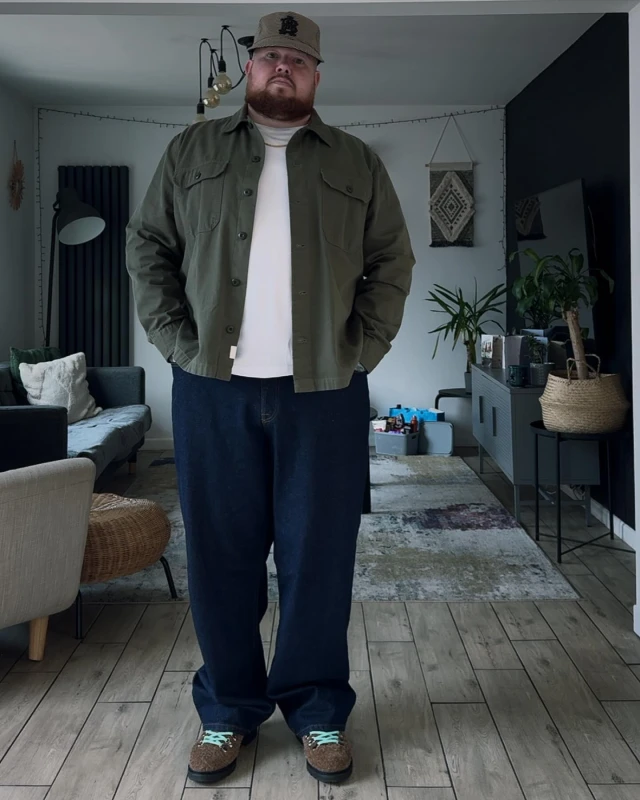
A structured olive green overshirt hangs loosely over a stark white base layer. Heavy dark indigo denim provides a solid foundation that falls cleanly over textured brown suede shoes. Bright mint green laces pop unexpectedly against the rugged, grounded color palette.
Adding a single bright accessory acts like placing a vibrant throw pillow on a deeply toned, heavy sofa.
Darker denim washes carry significantly more visual weight than lighter blues. Leaving your outer shirt unbuttoned establishes a crisp white vertical column that slices through that heaviness instantly. Wear this combination when you want the relaxed comfort of a casual den but need the crisp lines of a tailored accent chair.
10. Double Denim and Crisp White Foundations
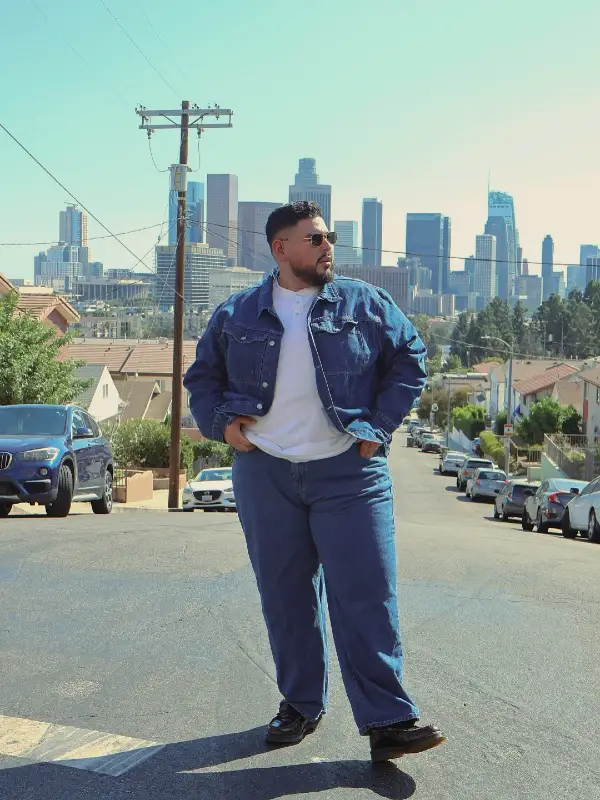
Heavy blue denim creates a cohesive, rugged shell from top to bottom. A crisp white henley shirt breaks up the uniform texture with soft, breathable cotton. Bright city sunlight highlights the sturdy metal hardware and thick seams across the structured jacket.
Matching top and bottom utility fabrics works like a monochromatic room scheme, making your frame look highly intentional rather than casual.
Wearing a denim jacket with matching jeans builds a continuous visual frame for broader shoulders. The unbuttoned outer layer reveals a bright white core, acting like natural light flooding a dark hallway. Keep your boots dark and heavy to visually support the sturdy materials above.
Quick Styling Tips
Budget version: Scour local thrift shops for broken-in denim pieces that already carry a soft, lived-in texture.
Renter tip: Treat your base layer like temporary wallpaper—swap the white henley for a rich burgundy tee to instantly warm up the cool blue palette.
Pro move: Ensure your jacket and jeans match closely in wash color to maintain an unbroken, floor-to-ceiling architectural line.
11. Faded Charcoal and High Gloss Foundations
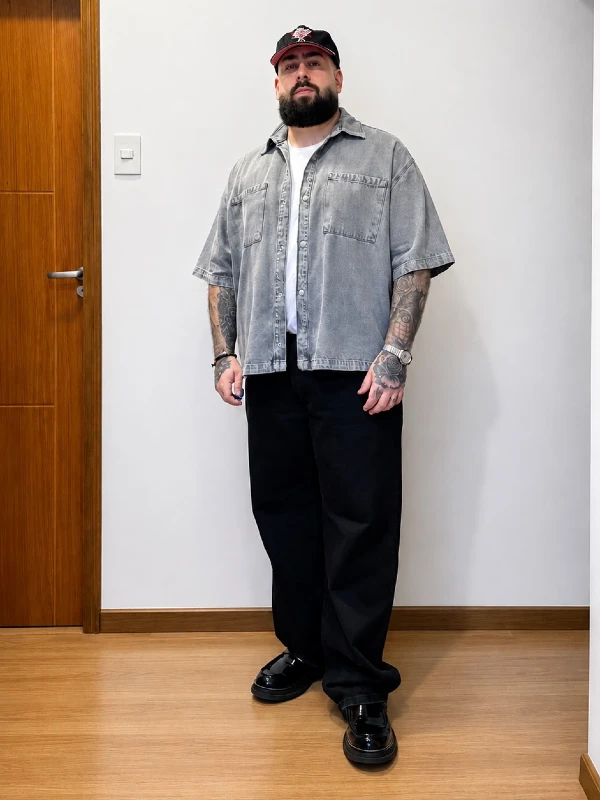
A washed charcoal overshirt hangs comfortably over a crisp white base. Heavy black trousers fall softly onto high-shine leather loafers. Bright indoor lighting catches the worn, tactile grain of the faded grey fabric.
Contrasting matte fabrics against glossy footwear works exactly like hanging a polished mirror on a flat plaster wall.
Transitional weather demands breathable layers that handle temperature shifts without feeling bulky. Keeping the dark overshirt unbuttoned establishes a stark white vertical column down your torso. Bring this relaxed formula into casual home offices or crisp weekend coffee runs.
12. Rich Burgundy and Light Khaki Contrasts
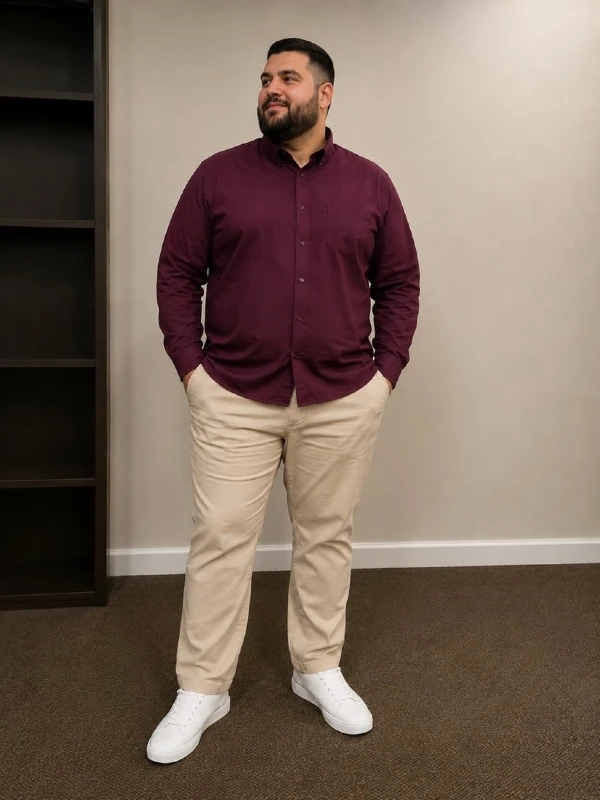
A deep burgundy button-down shirt provides a warm, saturated focal point against a neutral backdrop. Crisp khaki chinos offer a structured, clean contrast to the heavy red cotton above. Bright white sneakers finish the look with an airy, polished touch.
Pairing a jewel-toned top with neutral slacks works exactly like grounding a velvet accent chair on a light oak floor.
Office environments and holiday gatherings demand outfits that balance comfort with formality. Wearing a well-fitted shirt untucked keeps your silhouette relaxed rather than stiff. Rely on this solid color-blocking technique when you need the structured appeal of a formal dining room without the rigid atmosphere.
Why This Works
Element 1: The dark burgundy shade draws attention upward toward your face while absorbing light to visually slim the torso.
Element 2: Light khaki trousers serve as a crisp neutral foundation that prevents the saturated top half from feeling overly heavy.
Element 3: Stark white leather footwear introduces a modern, architectural break directly at the floor level.
13. Gradient Tones and Grounded Dark Foundations
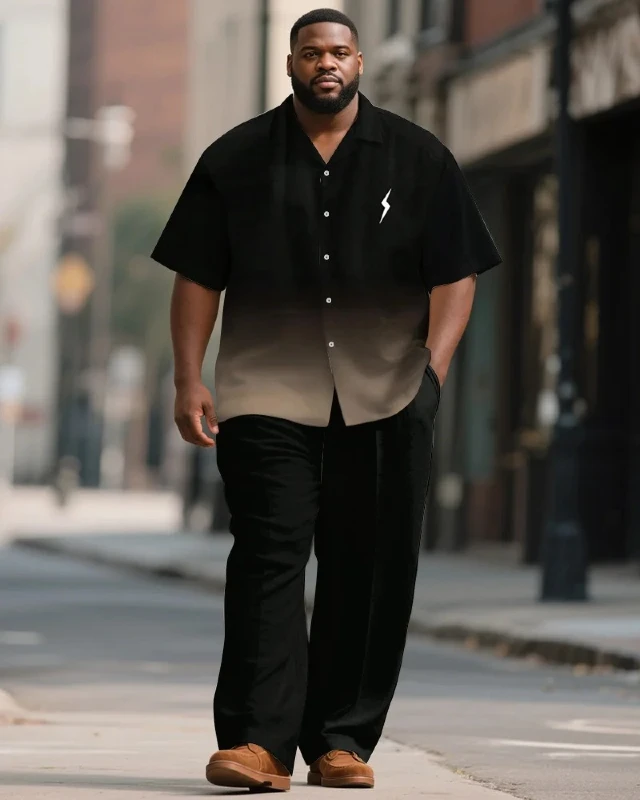
A smooth black camp shirt fades gradually into a warm sand hem. Deep black trousers mirror the dark chest, creating a solid, structured core. Bright street sunlight catches the crisp white lightning bolt graphic and the earthy tan leather shoes.
Gradient fabrics function like ombre painted walls, softly breaking up heavy visual blocks without drawing harsh lines.
Transitioning colors horizontally pulls the eye gently down your frame. Matching your trousers directly to the dark upper chest builds an elongated, architectural silhouette. Pair this specific color-blocking method with warm tan footwear to anchor the entire look firmly to the ground.
14. Quilted Textures and Solid Black Foundations
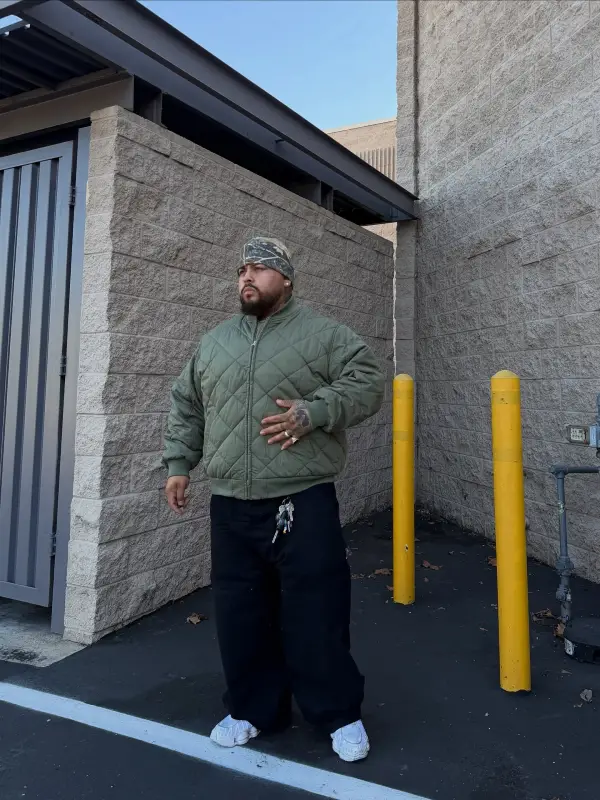
A puffy olive green bomber jacket introduces heavy diamond quilting across the upper body. Deep black wide-leg trousers anchor the lower half with a dense, matte finish. Chunky white sneakers and a rugged camo beanie bookend the outfit against the harsh concrete surroundings.
Diamond stitching acts like tufted upholstery, adding strong visual interest without requiring rigid fabrics.
Quilted outerwear traps warmth efficiently while maintaining a remarkably soft drape. Zipping a structured jacket to the collar creates a solid, unified color block across broader chests. Treat this combination like styling a modern industrial loft by using stark black lower layers to ground a highly textured focal piece.
Quick Styling Tips
Budget version: Search military surplus stores for authentic quilted jacket liners to capture this exact textural depth affordably.
Renter tip: Use your heavy outerwear like temporary slipcovers—throw a highly textured jacket over a basic black uniform to instantly change the daily mood.
Pro move: Match the physical bulk of the top layer directly to thick-soled, chunky footwear for complete architectural balance.
15. Washed Charcoal and Heather Grey Foundations
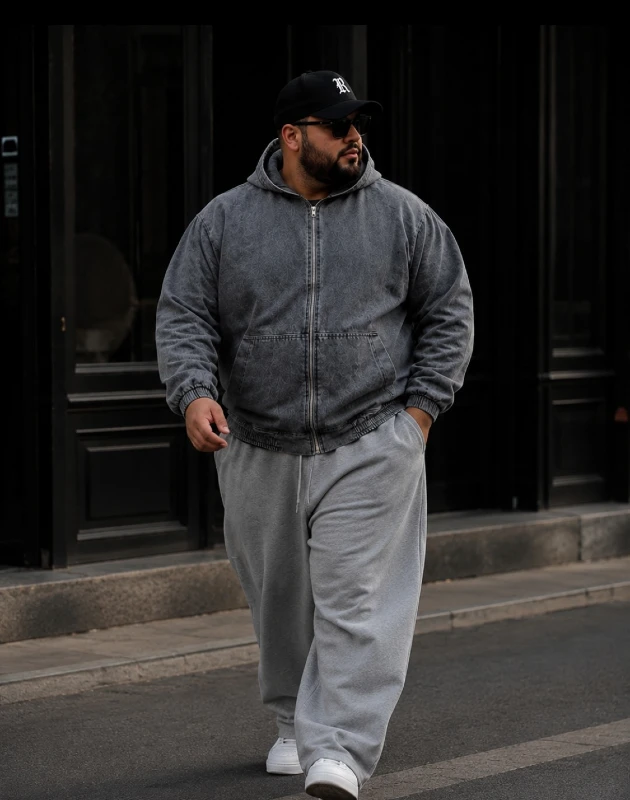
A heavily washed charcoal zip-up hoodie brings a rugged, concrete-like texture to the upper body. Soft heather grey sweatpants fall casually toward crisp white leather sneakers. Dark accessories, including a stark black cap and heavy sunglasses, frame the face sharply against the muted, cloudy backdrop.
Mixing different shades of grey functions exactly like layering polished concrete and plush wool in a monochromatic room, building depth through physical texture rather than bright color.
Athletic wear requires distinct material finishes to avoid feeling flat or uninspired. Zipping a structured, heavy-wash fleece straight up the center creates a clean, unified block that flatters broader frames naturally. Treat this relaxed weekend formula like styling a minimalist modern den, relying on subtle material shifts to keep the overall look visually engaging.
16. Light Grey Knits and Grounded Black Denim
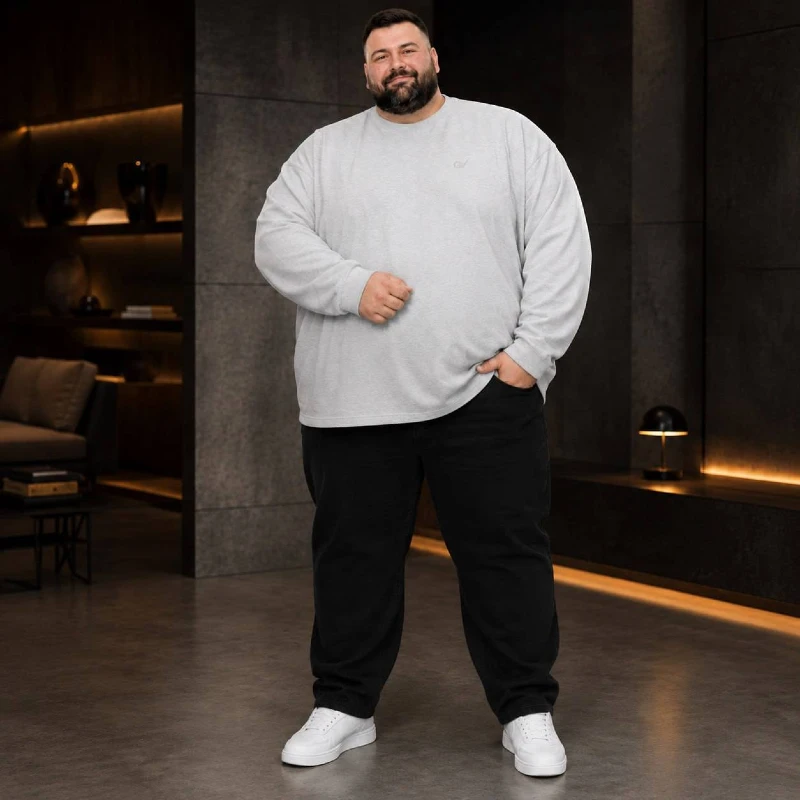
A soft, pale grey crewneck provides a bright, clean expanse across the upper body. Dense black denim grounds the lower half with a heavy, matte structure. Warm ambient room lighting catches the subtle drape of the lightweight cotton pullover.
Pairing a bright top with dark trousers works exactly like painting a ceiling white above dark hardwood floors, instantly drawing the eye upward.
High contrast builds natural structure when you want to avoid wearing heavy outerwear entirely. Tucking one hand casually into a pocket creates a relaxed, asymmetrical break across the waistline. Keep your footwear stark white to echo the lightness of the upper body and bookend the dark pants cleanly.
Why This Works
Element 1: The pale grey fabric acts as a bright focal point that keeps the overall outfit feeling airy and open.
Element 2: Heavy black jeans anchor the visual weight firmly to the lower half.
Element 3: Stark white sneakers visually connect back to the light sweater, creating a cohesive, architectural frame.
17. Bold Grids and Earthy Brown Foundations
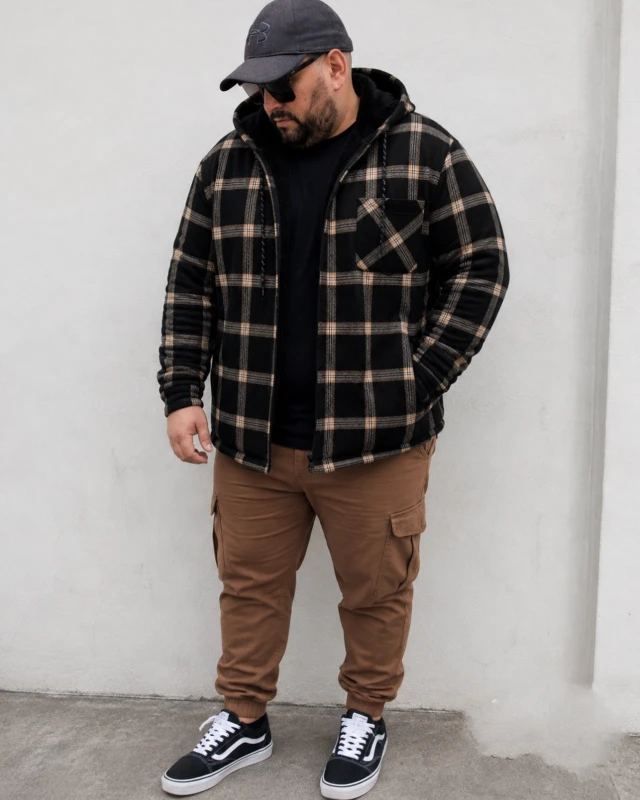
A heavy flannel jacket featuring a stark black and tan grid pattern wraps comfortably over a solid dark core. Soft brown cargo joggers anchor the lower half with a relaxed, utilitarian drape.
Large-scale geometric patterns act like bold wallpaper, adding strong architectural interest without relying on bulky materials.
Wearing an unzipped patterned jacket over a dark base creates a sharp vertical column down your center. Plaid fabrics work effectively to diffuse visual mass naturally across broader chests.
Quick Styling Tips
Budget version: Hit up local farm supply stores to find highly durable, authentic heavy flannel jackets at lower retail prices.
Renter tip: Swap the heavy cargo joggers for dark raw denim to quickly shift this casual weekend look into a sharper evening outfit.
Pro move: Match the tan accent stripes in your jacket directly to the brown shade of your trousers to build a highly cohesive visual frame.
18. Structured Denim and Flowing Khaki
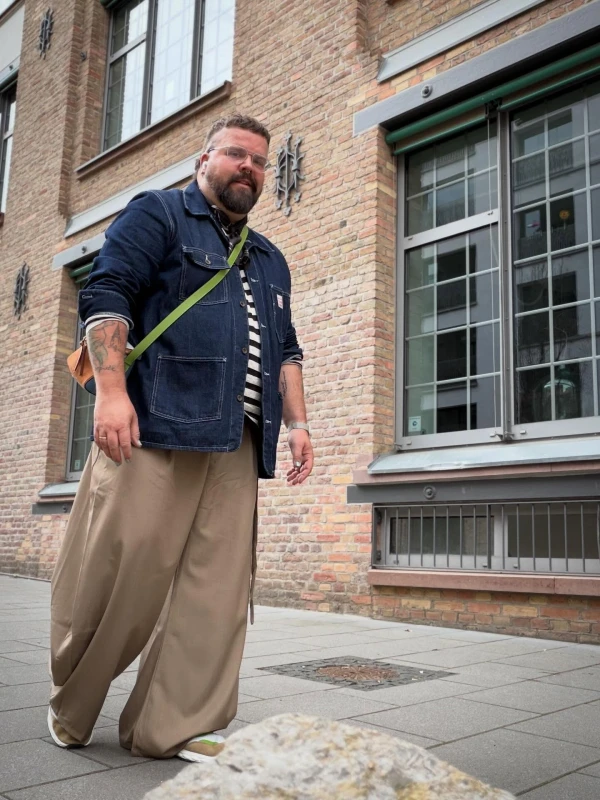
A structured, dark indigo chore coat provides a heavy, crisp shell over a black-and-white striped tee. Billowing tan trousers create a soft, airy foundation that moves effortlessly in the natural street light.
Introducing a vibrant accessory against rugged workwear staples functions exactly like placing a bright, modern sculpture in a muted, traditional study.
Pairing rigid upper fabrics with ultra-relaxed bottoms builds excellent architectural balance for broader frames. Layering horizontal stripes underneath a solid, unbuttoned jacket grounds your center without visually widening your overall profile.
19. Draped Camel Outerwear and Monochromatic Cores
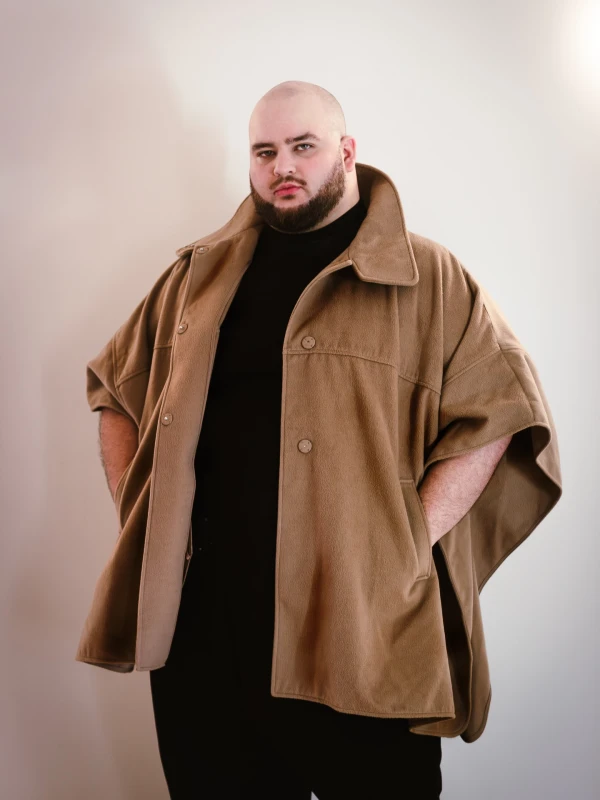
A sweeping camel coat drapes heavily over a stark black foundation. The structured collar adds sharp framing to the face, contrasting the incredibly soft, flowing edges of the outer layer. Warm studio lighting emphasizes the rich, brushed texture of the tan fabric against the matte black base.
Pairing a flowing, unstructured outer layer with a dark, fitted base works exactly like hanging heavy velvet curtains around a sleek, modern window frame.
Monochromatic base layers instantly streamline and lengthen the torso visually. Adding a cape-style coat offers massive warmth and dramatic shape without restricting movement around the arms or shoulders.
Why This Works
Element 1: The solid black core absorbs light entirely, creating a strong, receding foundation that anchors broader chests.
Element 2: Wide, structured collars draw immediate attention upward toward the face, balancing the volume of the loose garment.
Element 3: An open, draped sleeve design prevents any uncomfortable bunching or tightness across the biceps and shoulders.

Hello there! I’m Jesse Joe, the author and editor behind SolganGenius. I’m thrilled you’ve stopped by, and I can’t wait to share with you the essence of what this platform is all about.
I’m a writer, social media enthusiast, and a firm believer in the power of words. I’ve always been fascinated by how a simple phrase or slogan can capture an emotion, convey a message, and even change perspectives. Learn More