

Joe Kuhn spent much of his career solving problems, making changes, and accepting that some ideas would fail. A bad call could become a lesson because there was still time to adjust and try again.
Retirement changes that equation. At 62, a major financial mistake may hit savings when there are fewer earning years available to rebuild them. That makes guessing much more dangerous.
Joe Kuhn’s concern is simple: retirement mistakes do not always come with an easy second chance. The goal is not to remove every risk. It is to know which risks are being taken, what could go wrong, and what can be done next.
1. Trying to Time the Market Can Turn a Drop Into Permanent Damage

Joe Kuhn puts market timing near the top of the list because getting out of stocks is only one decision. The investor must eventually make a second call about when to get back in.
That sounds manageable until markets fall quickly and then recover before the economic news feels safe. Waiting for certainty can mean missing part of the rebound.
The problem becomes more serious in retirement because withdrawals may already be coming from the portfolio. Vanguard describes this as sequence risk, meaning poor returns early in retirement can cause greater damage because money is being removed while asset values are depressed.
Joe does not need to know what the market will do next to reduce this risk. He can decide beforehand how much belongs in stocks, bonds, cash, and other assets and rebalance when those percentages move too far from the plan.
That approach will never eliminate losses. It does remove the need to make two high pressure market calls correctly.
A retiree should be able to answer three questions:
- How much of the portfolio can fall without changing the retirement plan?
- Where will the next one to two years of expected withdrawals come from?
- What rule will trigger rebalancing rather than panic selling?
The goal is not maximum return every year. It is staying financially functional through years that do not cooperate.
2. Ignoring Inflation Can Quietly Shrink a Good Retirement

Joe Kuhn sees inflation differently from a temporary stock market decline. A portfolio can recover after a bear market, but higher living costs generally become part of the new spending base.
That matters because retirement can last decades.
The Bureau of Labor Statistics reported that consumer prices were 3.4 percent higher in July 2026 than one year earlier. Food prices were up 3.0 percent, while the broader energy index was up 14.7 percent over the same period.
Even moderate inflation compounds.
Suppose a household needs $60,000 for its first year of retirement. At a hypothetical 3 percent annual inflation rate, maintaining roughly the same purchasing power would require about $80,600 after ten years and about $108,400 after twenty years.
Those numbers are illustrations, not forecasts. They show why Joe cannot build a plan using today’s expenses and assume they will stay still.
Cash still has a job because it can pay near term bills without forcing stock sales during a bad market. But putting every retirement dollar in very low growth assets creates another problem if living costs keep climbing.
A stronger plan asks what portion of future income can rise over time and what portion may remain fixed.
3. Being Too Aggressive or Too Conservative Creates Different Problems

Joe Kuhn knows that taking too much investment risk at 62 can hurt. He also knows that avoiding nearly all investment risk can create a different kind of danger.
Vanguard illustrated the tradeoff using historical portfolio results. In its analysis, a portfolio with no stocks had much lower historical drawdowns than an all stock portfolio. But the all bond portfolio also produced lower median annualized returns in the period studied.
Neither extreme automatically fits a retiree.
Someone with a large pension, modest spending, and strong Social Security income may be able to tolerate investment swings differently from someone who needs the portfolio to pay most monthly expenses.
Concentration matters too. Holding a huge percentage of retirement savings in one company can feel comfortable when that company created much of a person’s wealth, but the result is still concentrated risk.
Joe’s better question is not, “How much stock should every 62 year old own?”
It is, “How much loss can this specific retirement plan absorb without forcing major changes?”
That answer should reflect spending needs, guaranteed income, expected withdrawals, time horizon, and the retiree’s ability to stay invested when markets become uncomfortable.
4. Retiring Without a Spending Plan Leaves Too Much to Guesswork
A retirement account balance is not a spending plan.
Joe Kuhn wants to know what regular life costs, what expenses will show up only occasionally, which income sources arrive automatically, and which accounts will fund the gap.
A simple annual budget can separate the expenses that keep life running from expenses that can be adjusted.
| Spending Bucket | Examples | How Flexible Is It? |
|---|---|---|
| Core expenses | Housing, food, utilities, insurance | Low |
| Health costs | Premiums, prescriptions, dental care | Low to medium |
| Lifestyle spending | Travel, restaurants, hobbies | High |
| Large irregular costs | Car, roof, major repair | Timing may be flexible |
| Family and gifts | Help for children, grandchildren, charity | Usually flexible |
This distinction becomes useful during a market decline. Joe does not have to treat a vacation the same way he treats property taxes.
Withdrawal rules such as the familiar 4 percent approach can be useful starting references, but they are not personal guarantees. Real retirees make changes. Spending shifts, investments move, taxes change, and large expenses arrive at uneven times.
A better plan has rules.
Joe can decide what happens if the portfolio falls sharply, what spending can be postponed, how much cash will be kept available, and how often the withdrawal rate will be reviewed.
That makes retirement spending a process instead of a one time guess.
5. Working Too Long Can Cost Something Money Cannot Replace

Most retirement advice focuses on the danger of leaving work too early. Joe Kuhn thinks the opposite mistake deserves attention too.
Working another year can have clear financial benefits. A person may save more, delay withdrawals, keep employer health insurance, increase Social Security earnings, and give investments another year to grow.
But there is another side.
Joe is 62, and his concern is that the years when someone has the health and energy for ambitious travel, sports, long trips, or demanding hobbies are limited. There is no account where unused healthy years can be saved for later.
That does not mean everyone should retire at 62. Many people enjoy working, need additional savings, or simply are not financially ready.
It does mean that “one more year” deserves the same scrutiny as “retire now.”
For workers who decide another year is worthwhile, 2026 provides an unusual savings opportunity. The basic contribution limit for many 401(k) style plans is $24,500.
Workers ages 60 through 63 may qualify for an $11,250 catch up contribution, allowing as much as $35,750 in employee deferrals if their plan permits it and other applicable rules are met.
Joe therefore needs to measure both sides: what an extra working year buys financially and what it costs personally.
6. Claiming Social Security Without Running the Numbers Can Lock In Less Income

Age 62 is important because Social Security retirement benefits can begin then. That does not make 62 the automatic best claiming age.
For people born in 1960 or later, full retirement age is 67. The Social Security Administration says starting at 62 can reduce the monthly retirement benefit by as much as 30 percent compared with the full retirement benefit.
Waiting beyond 67 works in the other direction. For someone born in 1960 or later, starting at 70 can produce 124 percent of the full retirement benefit. The increase stops at 70.
| Claiming Age | Approximate Share of Full Benefit for Someone Born 1960 or Later |
| 62 | 70% |
| 67 | 100% |
| 70 | 124% |
This does not mean everybody should wait until 70.
Health, life expectancy, other assets, employment, cash needs, taxes, marital status, and survivor planning can all affect the decision. Someone who needs income immediately has a different problem from someone with enough savings to delay.
For married couples, the survivor question deserves special attention. A decision that raises the higher earner’s eventual benefit can also affect income available to a surviving spouse.
Working while claiming early adds another issue. In 2026, someone below full retirement age for the entire year can earn up to $24,480 before Social Security’s earnings test begins withholding benefits.
Above the limit, SSA generally withholds $1 of benefits for every $2 of excess earnings. Different rules apply during the year full retirement age is reached.
Benefits withheld under the earnings test are not simply lost forever. SSA later recalculates benefits after full retirement age to account for months in which benefits were withheld.
Joe’s takeaway is still clear: claiming because “the money is available” is not enough analysis for a decision that can affect monthly income for life.
7. Entering Retirement Without a Tax Plan Can Make Withdrawals More Expensive

During a career, taxes often feel automatic. An employer withholds money, retirement contributions happen through payroll, and tax season cleans up the difference.
Retirement gives Joe Kuhn more control, which also gives him more ways to make an expensive mistake.
Money may eventually come from traditional retirement accounts, Roth accounts, Social Security, taxable investments, pensions, cash, or other income. The source and timing can change the tax result.
That is why Joe wants a tax plan that looks several years ahead rather than asking only how to minimize this year’s tax bill.
Required minimum distributions are one reason. Under current federal rules, people who reach age 73 before 2033 generally face an applicable RMD age of 73. The applicable age rises to 75 for a later group specified by the SECURE 2.0 rules.
A 62 year old may therefore have years before RMDs begin. Those years can be worth studying for withdrawals or possible Roth conversions, depending on the person’s tax situation.
Taxes can also affect Medicare costs.
For 2026, the standard Medicare Part B premium is $202.90 per month. Higher income beneficiaries can pay more through income related premium adjustments.
For example, CMS lists higher Part B premiums beginning above $109,000 of modified adjusted gross income for single filers and $218,000 for married couples filing jointly under the 2026 thresholds.
That means a large conversion or withdrawal can have effects beyond the income tax return.
Joe does not need to become a tax professional. He does need to know which decisions interact before moving a large amount of money.
8. Ignoring Medicare Until 65 Can Create an Expensive Surprise
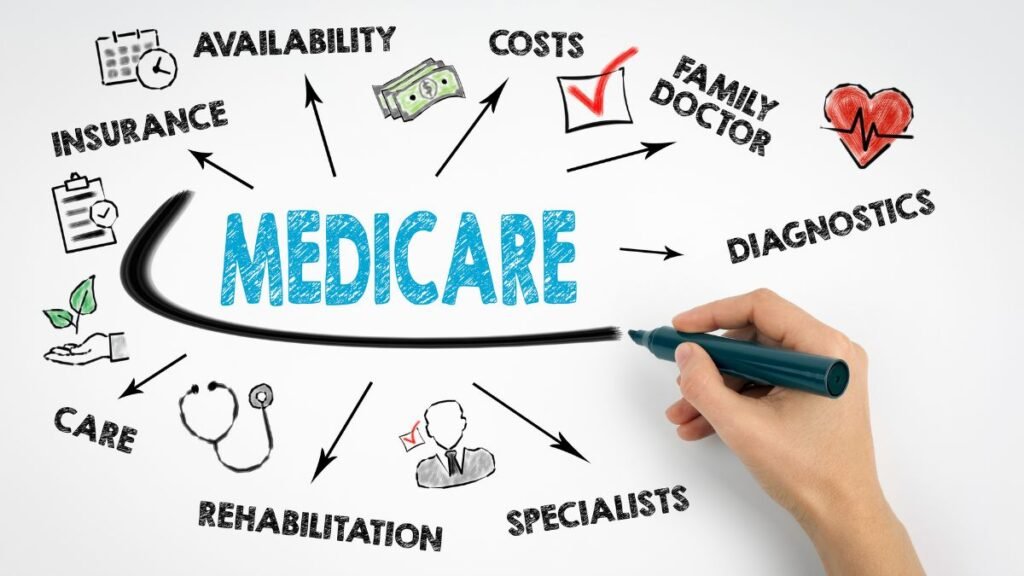
Retirement age, Social Security claiming age, and Medicare age are three separate decisions.
That distinction matters to Joe Kuhn because someone can retire at 62, delay Social Security, and still need a plan for health coverage before and after 65.
The Social Security Administration specifically warns people who delay retirement benefits to pay attention to Medicare enrollment at 65 because delaying enrollment in some circumstances can cause coverage delays or higher costs.
Employer coverage can change the situation, so someone still covered through active employment should check how that coverage interacts with Medicare before making an enrollment decision.
Health care also deserves its own line in the retirement budget. Premiums are only one part of the expense. Retirees may still face deductibles, copays, dental care, vision costs, prescriptions, and services that are not fully covered.
The 2026 standard Part B premium of $202.90 means a couple paying the standard amount would spend $405.80 a month on Part B premiums alone. That excludes Part D coverage, supplemental coverage, other premiums, and out of pocket costs.
For Joe, health care cannot be treated as a number to figure out after retirement. It belongs in the plan before the paycheck stops.
9. Having No Backup Plan Makes Every Retirement Forecast More Fragile

This may be the most important lesson Joe Kuhn brought from his career into retirement.
A plan cannot make the future behave.
It can show what Joe will do when the future behaves differently than expected.
A useful retirement plan should be tested against several unpleasant possibilities instead of one smooth projection.
| What Goes Wrong? | What Joe Can Test Before Retirement |
| Stocks fall early | Reduce flexible spending, rebalance, use planned cash reserves |
| Inflation stays higher | Recheck spending growth and portfolio exposure |
| Retirement starts earlier | Recalculate health coverage and withdrawal needs |
| Large expense appears | Identify which account could fund it |
| Taxes rise unexpectedly | Compare withdrawal sources and timing |
| Social Security strategy changes | Recalculate portfolio withdrawals |
| Spending is higher than planned | Set a review point and adjustment rule |
The purpose is not to predict which event will happen. It is to identify which levers remain available if one does.
Joe can run a scenario with a severe early market decline. Then he can raise the assumed inflation rate. He can test living longer than expected or spending more during the first years of retirement.
He can also ask a qualified financial planner or tax professional to challenge the assumptions rather than simply approve them.
This is where retirement planning becomes much more useful than a single probability score.
A strong plan might show that Joe could postpone a large purchase, trim travel for a year, rebalance investments, change withdrawal sources, work part time, or adjust future spending if conditions become worse than expected.
That is very different from assuming everything must go exactly right.
I’m Austin Becker, an advocate for living life with intention and resilience. I write for men who are actively navigating life’s major transitions, tackling the realities of reinvention and finding renewed purpose with grit and honesty. I believe that personal growth doesn’t have a deadline it’s about continuously gearing up for the chapters that matter most.
Through my work, I aim to strip away the clichés of modern manhood, offering practical, no-nonsense insights on health, mindset, and legacy for those who want to move forward with strength and clarity.