

Your parents are retired, financially comfortable, and completely free to live almost anywhere. They love their grandchildren and enjoy every visit. Yet whenever someone suggests selling their home and moving closer to the family, they quickly change the subject.
That choice can feel confusing to adult children. You may wonder why old neighbors, a golf club, warm weather, or a familiar house could matter more than seeing the grandchildren every week. From the retiree’s side, though, the decision often has very little to do with love.
For many financially secure retirees, moving closer means giving up a life that took decades to build. It can affect friendships, taxes, health care, independence, routines, and even the way family members relate to one another.
1. Staying Put Protects a Life They Spent Decades Building

From the outside, moving during retirement can look easy. Sell one house, buy another, hire a moving company, and settle near the children. But retirees are not simply moving furniture from one address to another.
They may be leaving behind friends they have known for 30 years, neighbors they trust, doctors who know their medical history, and routines that make everyday life comfortable. Even knowing the easiest grocery store, favorite walking route, or dependable plumber has value after decades in the same community.
AARP’s 2024 Home and Community Preferences Survey found that 75 percent of adults age 50 and older said they wanted to remain in their current homes as they aged. About 73 percent also wanted to remain in their existing communities.
Those numbers help explain why staying put is not always about fear of change. Many older adults genuinely like the communities they already have and want to keep the support systems they spent years creating.
Moving near grandchildren may add three or four loved ones to daily life. At the same time, it can remove dozens of familiar people from that retiree’s normal week.
A grandchild can bring enormous happiness. But even a close family relationship cannot replace an entire community.
2. Living Nearby Can Slowly Turn Grandparents Into Regular Child Care
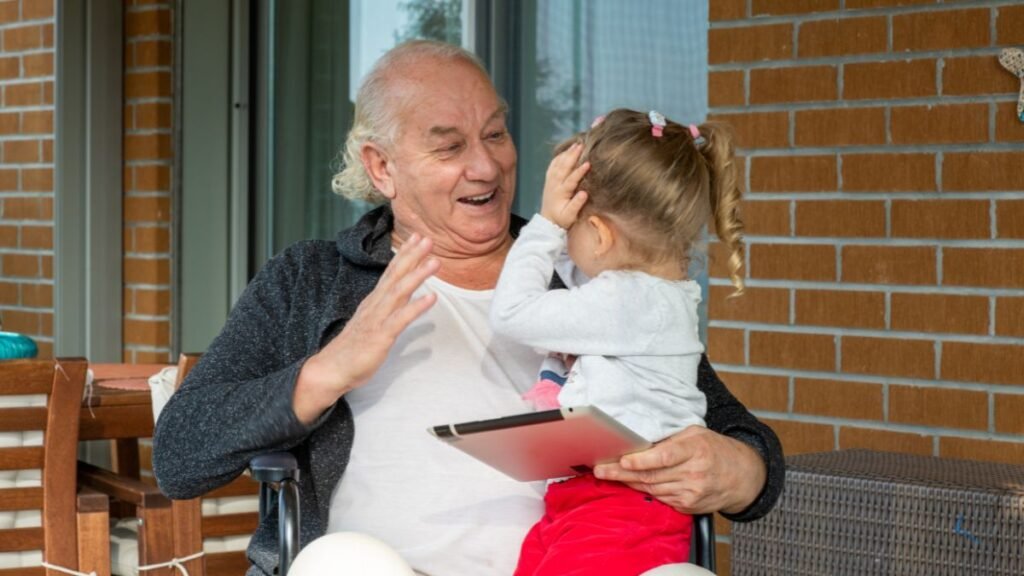
The invitation usually sounds harmless. Adult children may say that Grandma and Grandpa could see the kids whenever they wanted and come over for dinner more often. For many grandparents, that sounds wonderful.
Once they live ten minutes away, however, the expectations can start changing. A school pickup is needed one afternoon, then someone needs help during a teacher training day, and soon summer vacation creates several weeks that need covering.
Families naturally help one another, so none of these requests are automatically unreasonable. The problem begins when occasional help slowly becomes an expected part of the grandparents’ weekly schedule.
Research reviews on grandparent caregiving show that spending time caring for grandchildren can bring emotional and social benefits. However, the effects can depend on how much care grandparents provide and how much control they have over that responsibility.
High levels of child care can become tiring, especially for older adults who also have health needs, travel plans, hobbies, or other commitments. Retirees may therefore want to enjoy their grandchildren without becoming an unpaid second set of parents.
Financially secure grandparents have more freedom to protect that boundary. They can visit for birthdays, take grandchildren on trips, attend school events, and spend long weekends together without being available for every last minute request.
Distance can make that arrangement easier because everyone knows visits need to be planned.
3. Wealth Gives Retirees the Option to Visit Instead of Move

Retirees with limited savings may have fewer choices about how they stay close to family. Frequent flights, long hotel stays, and second homes can become expensive very quickly.
Wealthy retirees face a different situation. They may be able to maintain their current home while visiting their grandchildren several times each year.
Some can rent an apartment near the family for a month during summer. Others can spend several weeks with grandchildren during school holidays and then return to the community they already love.
A financially comfortable couple might even maintain a small second home near their children. That gives them family access without forcing them to abandon their main social life.
Pew Research Center has reported that upper income Americans are more likely than lower income adults to live away from extended family. That does not mean wealthy families care less about one another.
It may simply mean they have more resources to make distance manageable. A plane ticket is easier to buy when travel does not threaten the household budget.
For some retirees, mobility replaces proximity. They would rather spend money traveling to family than permanently redesign their entire retirement around one address.
4. Moving Near Family Can Create a Much Larger Tax Bill

Adult children often focus on the emotional side of a retirement move. Wealthy retirees may be looking at spreadsheets, tax rules, property values, and long term financial consequences before making the same decision.
State tax systems can be very different. Tax Foundation data for 2026 continues to show major differences among states in income taxes, property taxes, sales taxes, and other costs residents may face.
A retiree living in a state with favorable tax treatment might have a daughter living somewhere with much higher property or income taxes. Moving closer could therefore increase annual expenses for the rest of retirement.
Estate and inheritance rules can matter as well, especially for families with significant assets. Some wealthy retirees choose their legal residence partly because of the way a particular state handles income, estates, and other taxes.
Selling a longtime home can also have consequences. The IRS says qualifying homeowners may exclude up to $250,000 of gain from the sale of a primary residence, while certain married couples filing jointly may qualify for an exclusion of up to $500,000.
That sounds generous until you consider a couple who bought a desirable house decades ago. Their property may have appreciated far beyond the available exclusion.
Some retirees may also have property tax benefits connected to their current residence or state. Losing those benefits can make a new home more expensive than the purchase price suggests.
A move can still make financial sense. But wealthy retirees often want an accountant or financial adviser to run the numbers before they pack a single box.
5. Trusted Doctors Can Matter More Than Living Five Minutes From Family

Health care becomes a bigger part of location decisions as people age. A healthy 45 year old may be willing to move anywhere with a good job and decent housing. A 70 year old often has a much longer list of requirements.
Your parents may already have a primary doctor who has treated them for years. They may also rely on a cardiologist, eye doctor, dentist, dermatologist, physical therapist, or another specialist who already knows their history.
Moving across the country can mean rebuilding that entire medical network. Finding new doctors can take time, and some highly regarded specialists may have long waits for new patients.
Health care can also remain expensive after Medicare begins. KFF reported in 2026 that Medicare beneficiaries spent an average of $6,459 out of pocket on health care in 2023, including premiums and other medical expenses.
Medicare Advantage plans can introduce another issue because provider networks vary by location. A plan that works well in one county may not offer the same doctors or hospitals after a move.
For older retirees with ongoing health needs, access to trusted care may therefore outweigh the convenience of living close to grandchildren. They are thinking about who will care for them when their health changes, not just who will join them for Sunday dinner.
That concern becomes even more important as retirement continues.
6. They Know Their Adult Children Could Move Again

There is an uncomfortable question retirees may ask before following their children across the country. What happens if the children leave?
Adult children are often still building careers when their parents retire. A promotion, business opportunity, marriage, school choice, or housing change can send a young family to another city.
Suppose your parents sell the home they have owned for 30 years and move 800 miles to live near you. They find new doctors, make a few friends, and slowly settle into the area.
Three years later, you receive a major job offer somewhere else. Now your parents must decide if they should move again, stay in a city they never chose for themselves, or accept being far from the grandchildren anyway.
That risk can make financially independent retirees cautious. They may prefer to keep a strong home base while their adult children are still making major career and housing decisions.
The grandchildren can move too as they get older. College, jobs, relationships, and their own families may eventually take them far from the city their grandparents moved to.
A sensible retirement location needs to work even when the younger generation changes its plans.
7. Some Grandparents Want to Stay Grandparents, Not Become Backup Parents
Many grandparents want close relationships with their grandchildren. They want birthday parties, weekend sleepovers, holiday traditions, school concerts, long talks, and family vacations.
What they may not want is responsibility for the everyday work of raising another generation. Moving nearby can sometimes blur that line faster than anyone expected.
When grandparents live down the street, adult children may naturally involve them in more daily decisions. Grandparents may start hearing about homework, discipline, meals, schedules, and every disagreement inside the household.
That level of involvement works beautifully for some families. For others, it creates tension because parents and grandparents may have very different ideas about discipline, money, food, education, or screen time.
Research on grandparent relationships has found that the relationship between grandparents and adult parents can strongly affect the bond grandparents have with grandchildren. Living nearby does not automatically create emotional closeness.
Sometimes a little distance helps everyone maintain clearer roles. Parents remain parents, grandparents remain grandparents, and visits focus more on enjoying one another.
A family can be emotionally close without sharing the same zip code.
8. Their Friends Matter More Than Adult Children Sometimes Realize

Children often think family should become the main social circle after their parents retire. That sounds reasonable because family relationships are important, but relying on children for nearly all social contact can create another problem.
Retirees need people their own age. They need friends who can meet for coffee on a Tuesday morning, join them for dinner, play golf, attend a class, walk through the neighborhood, or simply talk about the same stage of life.
The National Institute on Aging reports that about one in four community dwelling adults age 65 and older are socially isolated. The CDC also warns that loneliness and social isolation are connected with several serious physical and mental health risks.
Moving near family might reduce loneliness for a retiree who already lives alone without a strong social network. But the same move could increase loneliness for someone leaving a thriving community.
Your parents might currently see friends four or five days each week. After moving near you, they could see the grandchildren twice a week while spending the rest of their time alone because everyone else is working or attending school.
That is not always an improvement.
Children and grandchildren can be a wonderful part of retirement. They should not have to become a retiree’s entire social life.
9. Longer Visits Can Feel Better Than Constant Casual Contact

Living far apart creates a disadvantage because grandparents cannot simply drop by for dinner. Yet distance can also create something families sometimes lose when everyone lives nearby.
It creates anticipation.
When grandparents are arriving from another city, children may count down the days. Families plan meals, outings, sleepovers, and activities because everyone knows the visit has a beginning and an end.
The time together may become more focused as a result. People put aside some normal chores and make a greater effort to enjoy one another.
Living around the corner creates a different type of relationship. Grandparents may technically see the family more often, but some visits happen while someone is folding laundry, answering work messages, rushing to soccer practice, or cooking dinner.
There is nothing wrong with that. Everyday family life has its own kind of closeness.
Some retirees simply prefer several longer, meaningful visits over dozens of quick visits squeezed between other obligations. Wealth can make that arrangement much easier through flights, rental homes, or extended stays.
They can spend real time with the grandchildren without permanently giving up the place they call home.
10. They Are Thinking About Life After the Grandchildren Grow Up
Moving near a five year old grandchild can feel like an easy decision. A five year old wants Grandma to visit the playground, read stories, attend birthdays, and watch school performances.
But that child will eventually become 15, then 20, then 30.
Teenagers develop busy social lives. College can move them hundreds of miles away, and careers may take them somewhere completely different after graduation.
Meanwhile, the grandparents could still be living in the town they selected almost entirely because their grandchildren once lived there.
That is why smart retirement planning usually looks beyond the next few years. A retirement location should support daily life even when family circumstances change.
AARP research shows that older adults place high value on communities that allow them to remain independent as they age. The National Institute on Aging also recommends thinking about transportation, health care, social support, housing, and access to services when planning to age in place.
Before moving, retirees may ask themselves several important questions:
- Would we choose this town if our children did not live here?
- Is good medical care nearby?
- Can we build friendships here?
- Could we manage daily life if we stopped driving?
- Are the taxes affordable over many years?
- Will the home work if stairs become difficult?
- Would we still stay if our children moved?
Those questions can reveal whether the move supports a complete retirement or simply solves one temporary family need.
11. Wealthy Retirees May Be Protecting the Freedom They Finally Earned

Retirement can be the first time in decades when no employer controls Monday morning. The children are grown, school schedules are gone, and many retirees finally have control over how they spend most of their day.
That freedom can feel extremely valuable after 40 years of work and family responsibility. Some retirees want mornings that begin slowly, afternoons spent on hobbies, and trips that do not require coordinating with anyone else’s schedule.
Moving near adult children can quietly rebuild some of the responsibilities retirement removed. The grandparents may suddenly become the easiest people to call when someone needs a ride, a repair, child care, pet care, or help during an emergency.
Most grandparents are happy to help sometimes. The key word is sometimes.
They may want their help to remain a choice rather than becoming an automatic expectation. Financial independence gives them the ability to protect that choice.
A retiree with substantial savings does not need to live near the children because flights cost too much. They also do not need to combine households simply to make housing affordable.
Money gives them options, and independence may be the option they value most.
Should You Ask Your Parents to Move Closer?
There is nothing wrong with asking. Having grandparents nearby can create wonderful relationships, make family gatherings easier, and give several generations more opportunities to share ordinary life.
The problem comes when the invitation assumes moving is obviously the right choice. Your parents may be comparing benefits and costs that you have never had to consider.
Instead of simply asking, “Why don’t you move here?” talk about what daily life would actually look like if they did.
Discuss questions such as:
- How often would everyone expect to see each other?
- Would regular child care be expected?
- Where could the grandparents make friends?
- Are strong medical services nearby?
- How would state and property taxes change?
- What type of home would support them as they age?
- What happens if the adult children move again?
- How much privacy does each generation need?
These conversations can prevent disappointment later. Expectations that seem obvious to one generation may be completely different for the other.
Another smart option is to test the arrangement before making it permanent. Retirees who can afford it might rent a nearby apartment or home for several weeks or months.
Living nearby for an ordinary month gives everyone much more useful information than spending Christmas together. You see the school schedules, work hours, social routines, child care expectations, traffic, weather, and everyday pace of life.
After that experience, everyone may want the grandparents closer permanently. Or the family may decide that regular extended visits work better.
Neither choice means the family is less loving.
Why Distance Does Not Mean They Love Their Grandchildren Less

Families sometimes use geography as a measure of closeness. A parent who lives nearby appears involved, while someone several states away can seem distant even when the emotional relationship tells a completely different story.
A grandparent can live across the street and rarely engage with the children. Another can live across the country while calling every week, attending important events, planning long visits, helping when needed, and building memories that last for years.
The more useful question is not how many miles separate the family. It is what everyone does with the relationship they have.
For rich retirees near grandchildren, refusing to relocate may be a careful retirement decision rather than rejection. They could be protecting their marriage, friendships, medical care, finances, routines, community, independence, and future.
Keeping those parts of life strong may actually give grandparents more energy and patience when the family is together. They can arrive because they want to be there rather than because proximity has made them responsible for every family need.
Before assuming your retired parents should move closer, ask what kind of arrangement would make everyone happiest for the next 10 or 20 years.
A strong family does not always need one zip code. Sometimes a little distance is exactly what allows every generation to stay close.

I’m Austin Becker, an advocate for living life with intention and resilience. I write for men who are actively navigating life’s major transitions, tackling the realities of reinvention and finding renewed purpose with grit and honesty. I believe that personal growth doesn’t have a deadline it’s about continuously gearing up for the chapters that matter most.
Through my work, I aim to strip away the clichés of modern manhood, offering practical, no-nonsense insights on health, mindset, and legacy for those who want to move forward with strength and clarity.