

The stairs feel steeper than they did last year. Cooking dinner takes more energy. You sometimes wonder if you took your pills. Your children have started calling more often to make sure everything is okay.
Then someone says it.
Maybe it is time for a care home.
But needing help does not automatically mean you need to leave your home or community.
There is a large space between living completely alone and receiving residential care. Family help, paid care, safer housing, community programs, adult day services and medical support can fill that space.
And staying home is what many older adults want. AARP’s 2024 Home and Community Preferences Survey found that 75 percent of adults age 50 and older would like to remain in their current homes as they age. Another 73 percent want to remain in their communities.
Needing Help Does Not Automatically Mean Needing a Care Home

There is an important difference between being independent and doing everything yourself.
You may need help showering but still make your own decisions.
You may stop driving but still manage your money.
You may need someone to prepare meals while you continue living in the home you love.
The National Institute on Aging says support for an older person living at home can include personal care, meals, transportation, housework, medication help, health care and safety support.
So start with a different question.
Do not ask, “Can I still do everything alone?”
Ask, “What help would make living here safe?”
Write down what has become difficult.
You might list:
• Bathing
• Stairs
• Cooking
• Shopping
• Driving
• Cleaning
• Remembering medication
• Getting out of bed
• Going to medical appointments
• Managing bills
Once you know the actual problems, you can solve them one at a time.
A care facility may eventually be one solution. It should not automatically be the first solution simply because three or four daily tasks have become harder.
Build Your Care Circle Before a Crisis Makes the Choice

The worst time to create an aging plan is during an emergency.
A fall happens. Someone ends up in the hospital. Everyone gets scared. Suddenly the family has two days to decide where Mom or Dad will live.
Planning earlier gives you more control.
The National Institute on Aging recommends thinking about aging at home before major care is needed. That gives older adults time to learn what services are available, discuss support with family and make changes to the home.
Start by writing down the people who could realistically help.
That may include a daughter, son, sibling, niece, neighbor, friend or member of your faith community.
Then get specific.
Do not create a plan that says, “My daughter will help me.”
Create one that says:
• Sarah handles grocery shopping on Saturday.
• Michael drives to medical appointments.
• James calls every evening.
• A paid aide comes Tuesday and Thursday.
• The neighbor has an emergency key.
• The pharmacy packages medication by dose.
One person should not have to do everything.
A care circle works better when the work is spread across several people.
There should also be a backup plan. If the person who normally helps is sick or away, everyone should know who gets called next.
Build the support before you desperately need it.
That single decision can give you far more choices later.
Move Closer to Family Without Giving Up Your Own Space

Living near family does not always mean moving into someone’s spare bedroom.
Sometimes the better choice is moving closer while keeping separate living space.
You might move into a smaller apartment five minutes from your daughter instead of living 45 minutes away.
Another family might add a small backyard home where local rules allow it.
Some homes can be arranged with a private bedroom, bathroom and sitting area for an older parent.
The goal is proximity.
You keep privacy. Your family becomes easier to reach.
That matters because many older adults want to remain connected to the community they already know. AARP found that 73 percent of adults age 50 and older want to stay in their communities as they age.
Moving a few streets away can sometimes give you more independence than remaining alone in a large house far from everyone.
Look at distance before square footage.
A smaller home near people who care about you may work better than a beautiful house where nobody can reach you quickly.
Bring the Help Into Your Home

If the house still works for you, another option is bringing care to the house.
Start with the task causing the biggest problem.
If bathing is difficult, you may need personal care help.
If medication or wound care is becoming complicated, skilled home health services may be appropriate.
If cooking is exhausting, meal preparation or delivery may solve part of the problem.
If driving has stopped, transportation could be the missing piece.
The National Institute on Aging lists home support ranging from personal care and household chores to meals, transportation and health services.
But there is an important Medicare rule to know.
Medicare does cover certain home health services for people who qualify. Those services can include intermittent skilled nursing, physical therapy, occupational therapy and certain home health aide services.
Medicare does not automatically pay for continuous personal care at home.
It also generally does not pay for round the clock care, meal delivery or homemaking services when those are the only services needed.
That catches many families by surprise.
Before hiring anyone, find out exactly what Medicare, Medicaid, long term care insurance or another program will cover.
Then build the paid support around what family and friends can realistically provide.
Make the House Safer Before You Decide It Is Unlivable
Sometimes the biggest problem is not age.
It is the house.
A deep bathtub can become difficult to enter.
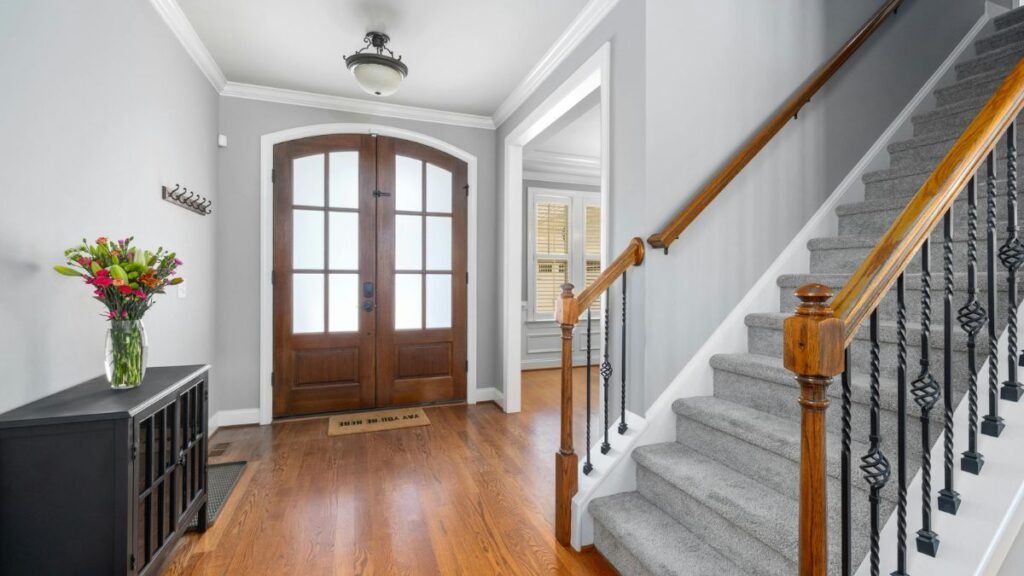
Poor stair lighting can turn a normal staircase into a hazard.
A bedroom upstairs can make every morning harder.
Loose rugs can become dangerous.
This matters because falls are a major risk for older adults. CDC data updated in February 2026 says more than 14 million Americans age 65 and older report falling each year. Falls are the leading cause of injury in this age group.
Before deciding you cannot live at home, walk through it room by room.
Start With the Bathroom
Install secure grab bars where appropriate.
Make wet surfaces less slippery.
Improve lighting.
Consider equipment recommended by an occupational therapist if getting on and off the toilet or entering the shower has become difficult.
Fix the Stairs
- Improve lighting at both ends.
- Repair loose railings.
- Keep steps clear.
If stairs have become truly unsafe, consider moving the bedroom to the main floor rather than immediately moving out of the house.
Remove Easy Trip Hazards
Loose rugs deserve special attention.
The National Institute on Aging recommends removing area rugs or making sure carpeting is secured. It also recommends good lighting, grab bars and safer surfaces in areas that become wet.
You do not need to turn the house into a hospital.
You need to remove the parts of the house that are working against you.
Use Adult Day Care, PACE and Community Services

Family care and home care are not the only options.
There are community programs designed specifically to keep older adults connected and supported.
Adult day services are one example.
The National Institute on Aging says adult day programs may provide social activities, exercise, meals, personal care and some basic health services. Some programs also provide transportation.
That can allow an older person to spend the day around other people while still sleeping in their own home at night.
Another option is PACE.
PACE stands for Program of All Inclusive Care for the Elderly.
Medicare says PACE is available in certain locations and can help qualifying adults receive coordinated medical and social services while living in their community instead of a nursing facility.
Eligibility includes being at least 55, living within a PACE service area, meeting the state’s nursing home level of care requirement and being able to live safely in the community with PACE support.
For people who qualify for Medicaid, Home and Community Based Services may provide another path.
Medicaid explains that HCBS programs give eligible beneficiaries opportunities to receive support in homes and community settings rather than institutions.
Services and eligibility differ by state.
That means your next call should often be local rather than national.
Your Area Agency on Aging can be a good starting point for finding what exists nearby.
No Nearby Family? Build a Chosen Village
Some people hear “stay close to family” and immediately feel left out.
Maybe your children live across the country.
Maybe you never had children.
Maybe your spouse has died and your siblings are gone.
That makes aging at home harder.
It does not automatically make it impossible.
Your support network may need to include friends, neighbors, community groups and paid professionals.
Think of it as building layers.
The first layer might be two trusted neighbors who have your phone number.
The second could be a weekly cleaner or personal care aide.
Another layer might be transportation to appointments.
Adult day services could provide meals and social contact several days each week.
A faith community, senior center or volunteer group may add another point of connection.
Then create an emergency layer.
Who notices if nobody has seen you all day?
Who has a key?
Who gets called after a fall?
Who knows your medication list?
These questions matter more than having a large number of casual acquaintances.
For help finding local services, the National Institute on Aging recommends the federal Eldercare Locator. It can connect older adults and families with local resources including transportation and support at home.
A village does not have to share your last name.
It needs people who know what role they have.
What Native Elder Programs Can Teach About Community Care

The reference behind this article presents elder care through the voice of an 84 year old Native American narrator.
There is an important point to make here.
There are hundreds of federally recognized tribes, along with Alaska Native and Native Hawaiian communities, and their traditions and elder care practices are not identical. One narrator should never be treated as speaking for every Native community.
But the larger idea of supporting elders within their communities does have a real counterpart in current federal tribal aging programs.
The Administration for Community Living funds Title VI programs serving American Indian, Alaska Native and Native Hawaiian elders.
These programs can support home delivered meals, transportation, personal care, chores, caregiver assistance and other community services.
ACL also explains that caregiver programs are meant to strengthen the role of family and community caregivers rather than simply replace them.
That is a useful lesson far beyond any one culture.
Care does not always have to mean removing someone from ordinary community life.
Sometimes the better solution is to bring more support into that life.
For Native elders specifically, a local tribal organization or Title VI elder program may be an important place to ask about available services.
When Staying Home Is No Longer the Safer Choice

Aging at home is a choice, not a rule.
There are situations where a residential setting may provide care that simply cannot be recreated safely at home.
The National Institute on Aging acknowledges that there may come a time when remaining at home is no longer safe or comfortable.
That decision deserves the same honesty as the rest of this conversation.
Warning signs might include repeated dangerous falls, serious wandering, an inability to transfer safely from bed or chair, severe confusion, medical needs that cannot be managed at home or the need for supervision that nobody can reliably provide.
Caregiver limits matter too.
A daughter cannot safely provide constant care while also working, sleeping and raising children.
A spouse with physical limitations may not be able to lift another adult safely.
Love does not remove those limits.
If the home cannot be made safe and enough care cannot be brought in, residential care may become the responsible choice.
And there is no shame in that.
Good nursing facilities, assisted living communities and memory care programs can provide valuable care when their services match what a person needs.
The point is not to refuse residential care.
The point is to avoid assuming it is your only option before you have examined the others.
Have the Family Conversation Before Something Goes Wrong

Do one thing before you finish thinking about this subject.
Start the conversation.
Do it before a fall.
Do it before a hospital discharge.
Do it while the older person whose life is being discussed can still clearly say what matters to them.
Start with six questions.
- What parts of daily life have become difficult?
- Which tasks can family or friends realistically handle?
- What professional care could fill the gaps?
- What needs to change inside the home?
- Which local programs might help?
- What would tell us that staying home is no longer safe?
Write down the answers.
Then talk with the older adult’s health care team about medical and safety needs.
The plan does not have to stay the same forever.
Someone might need two visits a week today and daily help next year.
The National Institute on Aging recommends reviewing needs as health and living circumstances change.
Planning now means you are making decisions calmly instead of making them during a crisis.
| Care Option | Best For | Main Benefit | Important Limitation |
|---|---|---|---|
| Family Care Circle | Older adults with nearby relatives or trusted friends | Keeps support personal and familiar | One person should not carry all the work |
| In Home Care | Help with bathing, meals, cleaning, or daily tasks | Lets you stay in your own home longer | Costs can rise as more hours are needed |
| Adult Day Services | People who need daytime support and social contact | Provides meals, activities, supervision, and caregiver relief | Services and transportation vary by location |
| PACE | Eligible adults age 55 and older with significant care needs | Combines medical and community support while living at home | Only available in certain service areas |
| Medicaid HCBS | Eligible people who need help with daily living | May fund home and community based support | Eligibility and services differ by state |
| Living Near Family | Older adults who want privacy but need help nearby | Makes daily check ins and emergency help easier | Moving costs and suitable housing can be barriers |
| Residential Care | People who cannot be kept safe with home support | Provides higher levels of supervision and care | Means leaving the current home and may be expensive |
The Goal Is Support, Not Solitude
If you cannot safely live completely alone anymore, that does not automatically mean your next address must be a care facility.
Maybe the answer is a smaller house near your children.
Maybe it is a bedroom on the first floor and an aide three mornings each week.
Maybe it is PACE, adult day services, family help and meal delivery working together.
Maybe residential care really is the safest answer.
What matters is choosing based on what you actually need, rather than fear, pride or the belief that there are only two choices.
The best care home alternatives build support around the person instead of forcing the person to fit around the support.
Start with the conversation.
Then build the plan while you still have time to choose.

I’m Austin Becker, an advocate for living life with intention and resilience. I write for men who are actively navigating life’s major transitions, tackling the realities of reinvention and finding renewed purpose with grit and honesty. I believe that personal growth doesn’t have a deadline it’s about continuously gearing up for the chapters that matter most.
Through my work, I aim to strip away the clichés of modern manhood, offering practical, no-nonsense insights on health, mindset, and legacy for those who want to move forward with strength and clarity.