

The first weeks of retirement may feel peaceful. Then the quiet can start to feel heavy.
You no longer hear coworkers talking nearby. Nobody asks for your opinion before lunch. There is no reason to leave home at the same time each morning. A full day can pass without one meaningful conversation.
That is how loneliness in retirement can creep in. It does not always look like sadness. It may feel like boredom, poor sleep, low energy, or a growing wish to avoid other people.
The health warning in the headline needs some context. The U.S. Surgeon General reported that lacking social connection can carry a risk of early death similar to smoking up to 15 cigarettes a day.
Why Loneliness in Retirement Can Become a Health Risk

Loneliness and social isolation are related, but they are not the same.
Social isolation means having little contact with other people. Loneliness is the painful feeling that the connection you have does not meet your needs. You can live alone without feeling lonely. You can also feel lonely in a busy room or an unhappy marriage.
Retirement can raise the risk because work provides more than income. It gives you a routine, casual conversation, shared goals, and a reason to be around the same people each week.
Other changes may happen at the same time. Friends may move. A spouse may die. Health problems may make travel harder. Hearing or vision changes can make social events tiring.
The National Institute on Aging says social isolation and loneliness are linked with higher risks of heart disease, depression, and cognitive decline. These findings show an association. They do not prove that loneliness alone causes every health problem.
The Surgeon General’s materials report that poor social relationships are associated with a 29 percent higher risk of heart disease and a 32 percent higher risk of stroke. A large NIA funded analysis also found that people who felt lonely had a 31 percent higher risk of dementia.
The World Health Organization reported in 2025 that about one in six people worldwide experiences loneliness. Its estimate for older adults was about 11.8 percent.
These numbers are serious. But they should lead to action, not fear.
1. Put Two Social Appointments on Your Weekly Calendar
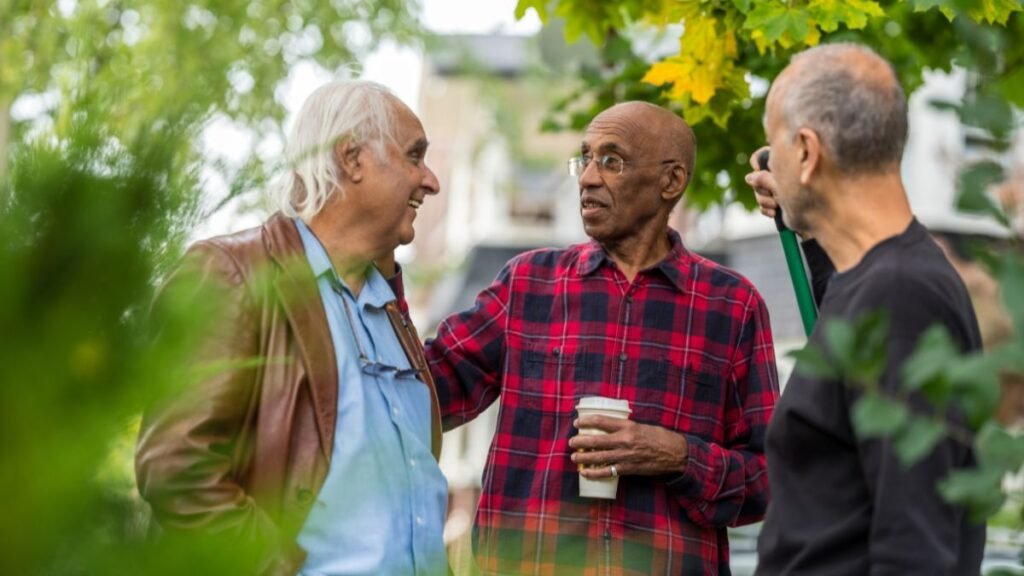
The quickest first step is to stop waiting until you “feel social.”
Choose two forms of contact and give each one a fixed place on your calendar. They do not need to be large events.
Your appointments might be:
• Coffee with a neighbor every Tuesday
• A call with your sister every Thursday
• A walk with a friend on Saturday morning
• Lunch at a senior center once a week
• A regular visit to the library
Specific plans work better than “I should call someone soon.” A named day removes the daily decision.
The National Institute on Aging recommends scheduling time each day to contact family, friends, and neighbors. It also suggests joining activities based on interests, such as cooking, reading, sports, or music.
Start with two appointments rather than filling every day. A schedule that feels tiring will be hard to keep.
2. Choose Activities That Repeat Every Week

A one time event may be enjoyable. A repeating event is more likely to create a relationship.
People often become comfortable through repeated contact. You learn names. Other members notice when you are absent. Conversation becomes easier because you already share an activity.
Look for groups that meet at least twice a month:
• Water exercise
• Dance lessons
• Painting or pottery
• Gardening
• Woodworking
• Choir practice
• Pickleball
• A book club
• A faith group
• An adult learning class
The CDC recommends doing enjoyable activities with other people and visiting parks, senior centers, places of worship, and other community spaces. Its examples include group exercise, gardening, crafts, cooking, and outdoor activities.
A 2024 evidence review found that group programs, internet training, and possibly group exercise were linked with modest reductions in loneliness among older adults living in the community. The results were helpful, but no single program worked for everyone.
Choose one activity that fits your real interests. Do not select a class simply because it is marketed to seniors.
3. Give Yourself a Job That Someone Depends On

Retirement may remove the feeling that someone needs you at a certain time.
Volunteering can restore that sense of purpose. The strongest roles give you a clear task, a regular schedule, and contact with the same people.
Good options include:
• Reading with children
• Sorting donations at a food bank
• Helping at a public library
• Greeting visitors at a museum
• Walking dogs at an animal shelter
• Calling people who live alone
• Helping a faith group serve meals
• Mentoring someone in your former field
Research from the German Ageing Survey found that older adults who chose to volunteer may experience a reduction in self reported loneliness. Because volunteers select their own roles, the study cannot prove that volunteering alone caused the change. Still, the results support volunteering as a useful option for some retirees.
Begin with one short shift each week. You can add more time after you know the role feels right.
4. Turn an Existing Hobby Into a Shared Activity

You do not need to become a different person to make friends.
Start with something you already enjoy. Then add one or two people.
A gardener can join a seed exchange. A reader can attend a library book group. A photographer can plan a monthly photo walk. A home cook can trade meals with a neighbor.
This works because the activity gives you something to discuss. There is less pressure to produce instant personal chemistry.
Try one of these changes:
• Replace a solo walk with a walking partner
• Invite someone to watch a weekly game
• Join a group that works on the same craft
• Ask a neighbor to help with a small garden project
• Attend a local class connected to your hobby
The goal is not to turn every quiet activity into a social event. Time alone can be healthy. The goal is to add connection where it feels natural.
5. Make the First Invitation Small and Specific
Many adults say, “We should get together sometime.”
That sentence is friendly, but it rarely creates a plan.
Offer one clear invitation instead:
“Would you like coffee at the library café on Tuesday at 10?”
A small invitation feels easier to accept. It also feels safer when you are reconnecting with someone you have not seen for years.
Keep the first meeting short. An hour is enough. You can always stay longer when the conversation is going well.
One person may decline because of work, family duties, illness, or travel. That response is not proof that you are unwanted.
Try again with a different time or another person. Friendship often grows through several small invitations rather than one bold effort.
6. Use Technology to Support Real Relationships

Technology helps most when it connects you with a real person.
A weekly video call can let you see a grandchild growing up. A group message can keep old coworkers in touch. An online class can introduce you to people who share an uncommon interest.
The CDC reports that phone programs, video calls, social platforms, websites, and voice controlled tools have all been used to address isolation among older adults.
Research reviews suggest that internet training and video based programs may produce small improvements in loneliness for some older adults. Results vary, and technology should not be treated as a complete cure.
Use it with a clear purpose:
• Schedule a repeating family video call
• Take a live online class with discussion
• Join a local group that also meets in person
• Send a voice message instead of only liking a post
• Ask someone to teach you one useful feature at a time
Scrolling through other people’s lives can make some people feel worse. Direct conversation usually provides more connection than passive viewing.
7. Check Whether Hearing Loss Is Pushing You Away

Sometimes the problem is not a lack of invitations. It is the effort required to follow a conversation.
Hearing loss can make a restaurant, family dinner, or community meeting exhausting. You may miss part of a story, answer the wrong question, or smile because you do not know what was said.
Over time, staying home can feel easier.
The National Institute on Aging warns that hearing loss can contribute to frustration, embarrassment, loneliness, and social isolation. Even mild hearing trouble can make it harder to stay connected.
Signs worth checking include:
• Asking people to repeat themselves
• Raising the television volume
• Struggling in rooms with background noise
• Feeling that people mumble
• Avoiding phone calls
• Feeling tired after group conversations
Ask your doctor about a hearing assessment. Also choose quieter meeting places, sit where you can see people’s faces, and tell trusted friends what helps.
8. Build More Contact Into Your Home and Neighborhood

Your home can make small conversations more likely.
You do not need a major renovation. Look for places where you naturally cross paths with other people.
A comfortable chair near a front garden may lead to brief talks with neighbors. An apartment resident may spend ten minutes in the shared lounge instead of going straight back upstairs. A regular morning walk can help familiar faces become familiar names.
Try these simple changes:
• Sit outside at the same time several days a week
• Add a second chair near your porch or garden
• Use a shared courtyard, lobby, or community room
• Collect mail when neighbors are usually outside
• Walk the same safe route at a regular time
• Learn the names of three nearby people
Brief contact is not a replacement for close friendship. Still, it can make a neighborhood feel safer and less anonymous.
Consistency matters more than charm. People need a chance to see you more than once.
9. Adopt or Spend Time With an Animal Carefully

An animal can provide routine, touch, movement, and companionship.
A dog may create daily contact with other walkers. A cat may make a quiet home feel less empty. Caring for an animal can also give structure to the day.
A 2024 systematic review found that interventions involving animals were among the approaches that sometimes reduced loneliness in older adults. The studies differed in quality and design, so the result does not mean every person should adopt a pet.
Before adopting, consider:
• Veterinary costs
• Food and grooming
• Your balance and mobility
• Travel plans
• Pet friendly housing rules
• Who would provide care during illness
There are lower commitment options. You could foster an animal, walk a neighbor’s dog, volunteer at a shelter, or attend a therapy animal program.
A pet should match your health, budget, home, and energy.
10. Join a Group Built Around a Shared Life Experience
Some forms of loneliness come from feeling that nobody understands what changed.
A general social club may not meet that need. A support group can connect you with people facing a similar loss or life change.
Look for groups related to:
• Bereavement
• Caregiving
• Chronic pain
• Cancer recovery
• Divorce
• Military service
• Moving to a new area
• Retirement adjustment
• Loss of vision or hearing
The World Health Organization lists community groups, support groups, creative activities, learning services, volunteering, and social skills programs among useful forms of support for older adults.
A good group should feel respectful and well managed. It should not pressure you to share more than you are ready to share.
The first group may not be a good fit. Try another format before deciding that support groups are not for you.
11. Tell Your Doctor When Loneliness Is Affecting Daily Life

Loneliness is not a personal failure.
It may overlap with grief, depression, anxiety, chronic pain, poor sleep, hearing loss, medication effects, or limited mobility. A health professional can help separate these issues.
Talk with your doctor when you notice:
• Loss of interest in normal activities
• Major changes in sleep or appetite
• Frequent crying or hopelessness
• Growing use of alcohol or sedatives
• Fear of leaving home
• Trouble caring for yourself
• Memory changes
• Weeks of pulling away from other people
The National Institute on Aging notes that loneliness and social isolation are associated with a higher risk of depression in older adults. It recommends speaking with a health care professional when symptoms continue or interfere with daily life.
Psychological treatments may help some people examine fears, painful beliefs, or habits that keep them withdrawn. Reviews have found small to moderate benefits from psychological approaches, though results differ between programs.
In the United States, the Administration for Community Living’s Eldercare Locator connects older adults and families with nearby aging services.
Seek urgent help if you are thinking about harming yourself, feel unable to stay safe, or believe life is no longer worth living. Contact local emergency services or a crisis service in your country.
12. Follow This 30 Day Connection Plan
Advice is easy to read and hard to use. A short plan can turn good intentions into action.
Week 1: Restore Existing Contact
• Call two people you already know
• Send one specific invitation
• Schedule one repeating family or friend call
• Write down the times you feel most lonely
Do not judge the week by how many people reply. Judge it by whether you reached out.
Week 2: Enter One Shared Space
• Visit a library, community center, faith group, or senior center
• Ask for a calendar of regular activities
• Attend one group linked to a real interest
• Introduce yourself to one person
You do not need to feel confident before going. Confidence often appears after an activity becomes familiar.
Week 3: Become a Regular
• Return to the same activity
• Learn two names
• Arrive a few minutes early
• Offer a small amount of help
This is where strangers begin to recognize one another.
Week 4: Add Purpose
• Contact one volunteer program
• Invite someone for coffee or a walk
• Review which contact felt genuine
• Put next month’s plans on the calendar
At the end of 30 days, keep the activities that gave you energy or meaning. Stop the ones that left you drained.
The goal is not to stay busy every hour. It is to create steady, meaningful connection.
When a Busy Social Calendar Still Feels Lonely
More contact does not always solve loneliness.
You may attend several events and still feel unseen. This can happen when conversations stay shallow or when relationships do not feel safe.
Ask yourself:
• Can I speak honestly with anyone?
• Does someone notice when I am missing?
• Do I spend time with people who share my values?
• Am I always helping without receiving support?
• Do my relationships leave me calm or drained?
Quality matters. A trusted weekly conversation may offer more comfort than five crowded events.
It is also normal to need time alone. Solitude is chosen and can feel restful. Loneliness feels unwanted and painful.

I’m Austin Becker, an advocate for living life with intention and resilience. I write for men who are actively navigating life’s major transitions, tackling the realities of reinvention and finding renewed purpose with grit and honesty. I believe that personal growth doesn’t have a deadline it’s about continuously gearing up for the chapters that matter most.
Through my work, I aim to strip away the clichés of modern manhood, offering practical, no-nonsense insights on health, mindset, and legacy for those who want to move forward with strength and clarity.