
Retirement can solve one problem and create another.
The work stress may be gone. Yet a new fear can take its place. You may wonder whether your strongest years are behind you and whether each ache or forgotten name is proof that decline has begun.
Those thoughts may feel harmless. Research suggests they may matter more than most people expect.
A well known Yale study found that older adults with more positive beliefs about aging lived an average of 7.5 years longer than those with more negative beliefs. The one thing was not a special diet, pill, or expensive health program. It was the way people viewed their own aging.
That does not mean cheerful thoughts can prevent every illness. It also does not mean anyone causes their own health problems by feeling worried or discouraged.
What the 7.5 Year Longevity Study Actually Found

In 2002, Yale researcher Becca Levy and her colleagues published a study involving 660 adults who were at least 50 years old.
The participants answered questions that measured how they viewed aging. Some saw later life as a period of growth, value, and continued ability. Others connected aging more strongly with weakness, uselessness, or decline.
Researchers then tracked survival for as long as 23 years.
The group with more positive views of their own aging lived 7.5 years longer on average than the group with more negative views. The difference remained after the researchers considered factors such as age, sex, health, loneliness, and socioeconomic status.
That is the source behind the headline.
But one detail matters. This was an observational study. It found a strong connection between age beliefs and survival, but it did not prove that changing one thought directly adds 7.5 years to a person’s life.
People with positive age beliefs may also behave differently. They may move more, manage stress better, attend appointments, stay connected, or recover more confidently after illness.
The study does not give anyone a guaranteed number of extra years.
It shows that the stories people accept about aging may become part of how they live.
Why Your Beliefs About Aging May Change Your Behavior

A belief can become a quiet instruction.
Suppose you believe that people over 70 cannot become stronger. You may see little reason to begin resistance training. Less movement can then lead to more weakness, which appears to confirm the original belief.
The belief did not magically weaken the body. It influenced the choices that shaped the body.
A more useful belief might be: “My body has changed, but safe training can still help me improve.”
That thought invites action.
The National Institute on Aging reports that positive beliefs about aging may be linked with better health outcomes. It also warns against common myths, including the idea that depression, severe memory loss, and loss of independence are normal or unavoidable parts of getting older.
Negative age beliefs can affect several choices:
- Whether you begin exercising
- Whether you report a new symptom
- Whether you try a new skill
- Whether you make social plans
- Whether you expect recovery after a setback
- Whether you see yourself as useful
The World Health Organization says ageism can affect physical health, mental health, social connection, health behavior, and quality of life. It can also be directed inward when a person begins applying age based stereotypes to themselves.
A positive attitude toward aging does not require pretending that every day is easy.
It means refusing to treat decline as the only possible future.
New 2026 Research Shows Improvement After 65 Is Common

One reason negative age beliefs are so powerful is that they often sound like facts.
Memory always gets worse. Walking always becomes slower. Physical improvement ends after a certain birthday.
A 2026 Yale study challenges that fixed view.
Becca Levy and Martin Slade studied data from more than 11,000 adults aged 65 and older. Participants were followed for as many as 12 years. Researchers measured changes in cognitive ability and walking speed.
They found that 45.15 percent improved in cognitive function, physical function, or both during the study period.
Around 28 percent improved cognitively. Around 32 percent improved physically. Some participants improved in both areas. Positive beliefs about aging predicted a greater chance of improvement.
This does not mean everyone will improve in the same way.
Health conditions, income, safe housing, access to care, disability, stress, genetics, and social support all affect aging. Mindset is one part of a much larger picture.
Still, the finding challenges a harmful assumption. Aging is not always a straight line from ability to disability.
Some losses are real. So are adaptation, recovery, learning, and growth.
5 Signs Negative Age Beliefs Are Limiting Your Retirement

Negative age beliefs often hide inside ordinary comments.
You may not think of them as ageism because they are directed at yourself. Watch for these five patterns.
1. You Stop Before Checking What Is Possible
You avoid a class, trip, job, hobby, or exercise because you assume you are too old.
Age may affect how you approach an activity. It does not automatically decide whether you can do it.
Ask what support or adjustment would make the activity safer.
2. You Call Every Symptom Normal Aging
Joint pain, low mood, poor sleep, dizziness, hearing loss, and memory problems deserve attention.
Some changes are related to age. Others may be treatable medical issues, medication effects, vision problems, infections, stress, or sleep disorders.
Do not let an age stereotype replace a medical assessment.
3. You Speak About Decline as a Certainty
Listen for phrases such as:
- “It is all downhill now.”
- “People my age cannot learn technology.”
- “There is no point getting stronger.”
- “I am too old to make new friends.”
These statements turn a possibility into a rule.
4. You Treat Help as Proof of Failure
Using a hearing aid, walking aid, grab bar, or medication does not erase independence.
The right support may help you keep doing more of what matters.
5. You No Longer Plan Meaningful Goals
A goal does not need to involve a marathon or a new business.
It could mean growing vegetables, caring for a grandchild, improving balance, joining a reading group, learning five meals, or visiting an old friend.
The key is believing that the future still contains something worth preparing for.
The 10 Minute Practice That Builds a Healthier Outlook

You do not need to force yourself to “think young.”
Aging is real. Your goal is to separate facts from stereotypes.
Use this ten minute practice once a day for one week.
Step 1: Catch the Message
Write down one negative thought about aging.
Example:
“I am getting too old to learn new things.”
Do not judge the thought. Just notice it.
Step 2: Ask Whether It Is Always True
Look for proof against the statement.
Have you learned to use a new phone, tried a recipe, remembered a new route, or adjusted to a life change in the past year?
One real example is enough to weaken an absolute claim.
Step 3: Replace It With a Balanced Statement
Do not replace it with empty praise.
Use something true:
“Learning may take more practice, but I can still learn.”
Or:
“My knees limit some activities, but they do not stop every form of movement.”
Step 4: Take One Matching Action
Your action should take less than ten minutes.
You might:
- Watch the first lesson in a course
- Walk to the end of the street
- Send one message to a friend
- Call about a medical appointment
- Practice standing safely from a chair
- Read two pages of a new book
The action matters because it gives your brain fresh evidence.
Step 5: Record What Happened
Write one sentence about the result.
“Starting was easier than I expected.”
“I needed help, but I completed it.”
“I could do five minutes without pain.”
Small proof is more useful than a large promise.
Turn a Positive Aging Mindset Into Daily Action

Mindset works best when it changes behavior.
These five habits help turn a better belief into a better retirement routine.
Move Within Your Current Ability
The CDC recommends that adults aged 65 and older aim for at least 150 minutes of moderate aerobic activity per week, two days of muscle strengthening, and activities that improve balance. The guidance also says some activity is better than none.
That does not mean everyone should follow the same routine.
A safe starting point might be a five minute walk, seated exercise, water exercise, light resistance, or movements provided by a physical therapist.
Speak with a medical professional before beginning vigorous activity when you have been inactive or live with a chronic condition or disability.
Protect Your Social Life
Retirement removes many casual contacts that once happened at work.
Do not wait for friendship to occur by accident.
Schedule regular contact through a walking group, faith community, library program, volunteer role, class, neighborhood gathering, or weekly phone call.
The World Health Organization reports that social connection supports health and longer life, while loneliness and social isolation are serious health concerns.
Keep Learning Something That Matters
The subject does not need to be academic.
Learn to edit family photos, grow herbs, speak basic phrases in another language, use a fitness app, play an instrument, or repair something around the home.
Choose a skill that produces visible progress. Progress gives you direct evidence that age has not ended your ability to grow.
Ask About Changes Instead of Accepting Them
Bring new symptoms to a doctor.
Ask whether medication, hearing, vision, sleep, mood, nutrition, pain, or another condition could be affecting your daily function.
A positive aging mindset does not say, “Nothing is wrong.”
It says, “I am worth examining and helping.”
Choose One Role That Makes You Feel Useful
Retirement often ends a job title, but it does not end contribution.
You might mentor, volunteer, care for animals, help a neighbor, support a local group, teach a skill, or organize family records.
Choose a role with clear limits. Purpose should add structure, not exhaust you.
What Positive Thinking Cannot Do
Positive thinking has limits.
It cannot cure cancer, reverse every disability, remove chronic pain, replace medicine, or protect a person from every loss.
It also cannot erase poor access to health care, unsafe housing, financial stress, discrimination, grief, or caregiving pressure.
Telling a sick person to “stay positive” can make them feel blamed for a condition they did not choose.
That is not the lesson of the research.
The useful goal is realistic hope.
Realistic hope sounds like this:
- “I cannot control every health result, but I can ask for care.”
- “My body has limits, but I can work with the ability I have.”
- “I feel discouraged today, but today does not predict every future day.”
- “Needing support does not make my life less valuable.”
- “I can still make choices that improve comfort, connection, or strength.”
You are allowed to feel scared, angry, tired, or sad.
A healthy outlook makes room for those feelings without turning them into a final verdict about your future.
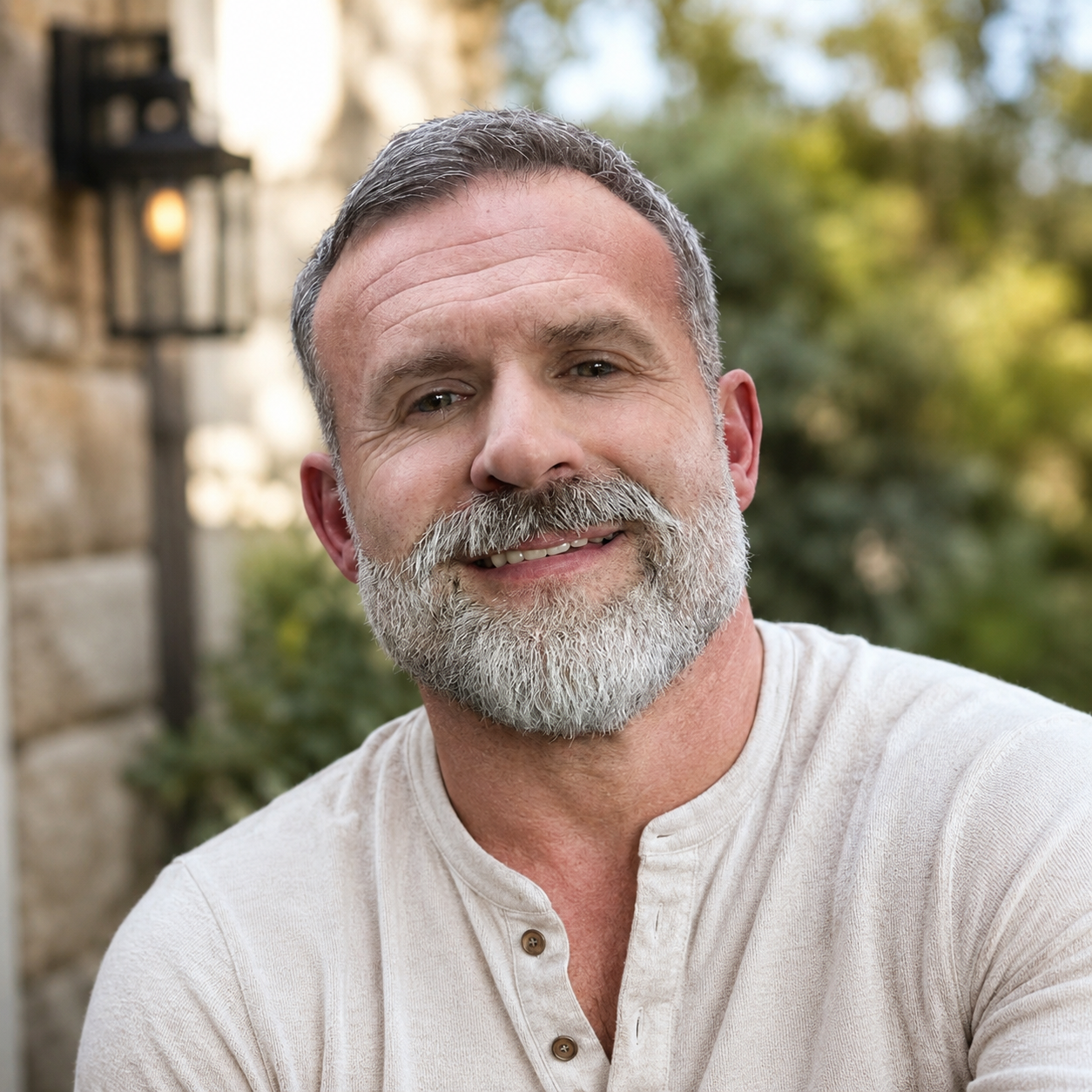
I’m Austin Becker, an advocate for living life with intention and resilience. I write for men who are actively navigating life’s major transitions, tackling the realities of reinvention and finding renewed purpose with grit and honesty. I believe that personal growth doesn’t have a deadline it’s about continuously gearing up for the chapters that matter most.
Through my work, I aim to strip away the clichés of modern manhood, offering practical, no-nonsense insights on health, mindset, and legacy for those who want to move forward with strength and clarity.