
Retirement boredom can catch you by surprise.
You may spend years wishing for more free time. Then retirement arrives, and the open hours begin to feel heavy. Tuesday feels like Thursday. You finish breakfast and have no clear reason to leave the house.
This does not mean you are bad at retirement.
Work gave you more than a paycheck. It gave your week a shape. You had tasks to finish, people to talk with, problems to solve, and reasons to get moving.
A satisfying retirement often requires you to replace those benefits on purpose.
Why Retirement Boredom Feels Harder Than Expected

Retirement removes several parts of daily life at once.
Your old job may have supplied routine, identity, social contact, mental challenge, and visible progress. Even a stressful job gave you clear reasons to get dressed and start the day.
Once those signals disappear, too much freedom can feel more like uncertainty.
You may also lose casual contact. There are no quick talks in the hallway, shared lunch breaks, or regular meetings. Your close relationships may still be strong, but your total amount of daily conversation can drop.
That matters because social connection supports health as well as happiness. The Centers for Disease Control and Prevention reports that close to one quarter of older adults experience social isolation. It also links loneliness and isolation with a higher risk of depression, cognitive problems, heart disease, stroke, dementia, and earlier death.
The World Health Organization says meaningful social activities can support life satisfaction, positive mental health, and quality of life in older adults. These activities may include community groups, education, creative programs, and volunteering.
Boredom is therefore worth addressing. But you do not need to fix your entire retirement at once.
1. Give Each Morning One Clear Purpose

A day feels empty when nothing needs to happen.
Choose one main purpose before you go to bed. It could be buying groceries, walking at the park, calling your sister, fixing a cabinet, or reading one chapter of a book.
Write it on paper. Place it where you eat breakfast.
The task should be clear enough that you know when it is finished. “Be productive” is vague. “Organize the top kitchen drawer” gives you a visible result.
Start with one task, not ten. A long list can make retirement feel like another job.
2. Plan Three Weekly Anchor Activities

You do not need to schedule every hour. You do need a few events that give the week a shape.
Choose three activities that happen at roughly the same time each week. For example:
- A walk every Monday morning
- A library visit every Wednesday
- Coffee with a friend every Friday
These are your weekly anchors.
Anchors reduce the daily question of what you should do. They also give you something to expect.
Make at least one anchor social. Make another physical. The third can be restful, creative, spiritual, or practical.
Keep the schedule easy during your first month. You can always add more later.
3. Walk With Another Person

Walking gives you movement and conversation at the same time.
The National Institute on Aging says physical activity can reduce feelings of anxiety and depression, improve sleep, and support emotional health. Exercising with other people adds social connection as well.
Ask a neighbor, friend, or relative to meet you once or twice a week. Set a clear time and place so the walk does not remain a loose idea.
You do not need to walk fast. Begin with a distance that feels safe for your body.
A shopping center, community hall, or large store can provide a flat indoor route during very hot, cold, or wet weather.
Talk with your doctor before starting a new exercise plan if you have chest pain, balance trouble, severe joint pain, or another health concern.
4. Join a Group That Meets in Person
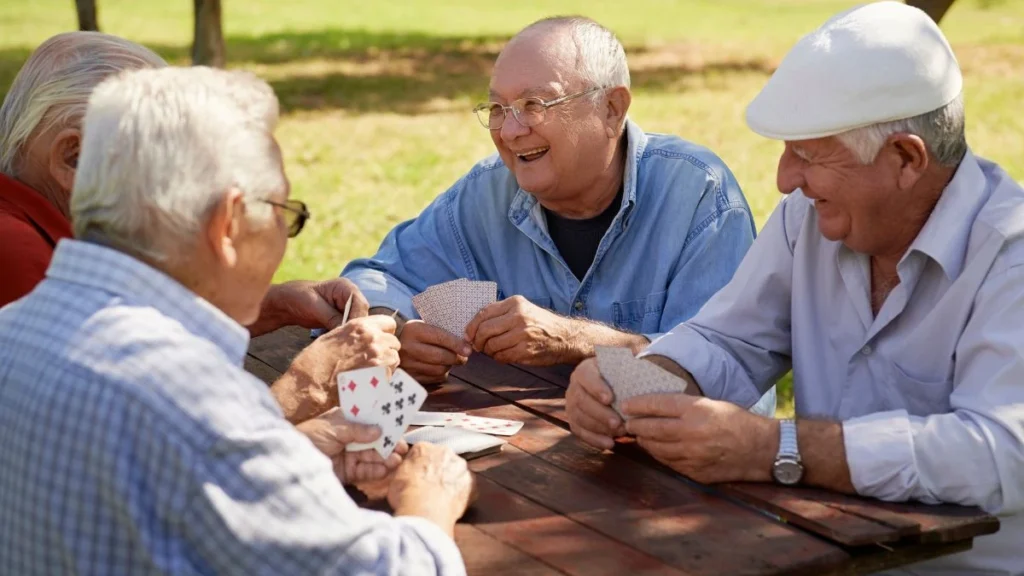
Watching videos about a hobby is different from sharing it with real people.
Look for a group that meets around a clear activity. Book clubs, walking groups, faith groups, choirs, card clubs, gardening groups, and local history clubs all create natural conversation.
An activity based group may feel easier than attending an event where the only goal is to socialize. You already have something to discuss.
The National Institute on Aging recommends staying connected through community groups, classes, volunteering, and enjoyable shared activities. Social participation may also be linked with better mood and cognitive health.
Attend at least three meetings before deciding that a group is not right for you. The first visit may feel awkward because everyone else already knows the routine.
Still, do not force yourself to remain in a group that leaves you tense or unwelcome. Try a different one.
5. Volunteer for a Small, Fixed Shift
Volunteering can replace some of the purpose that disappeared when work ended.
You could help at a library, food pantry, animal shelter, school, museum, hospital, garden, or place of worship. Your role does not need to be large.
Start with a fixed shift of two or three hours. A clear limit protects your energy and keeps the role from becoming another full time duty.
Research has linked volunteering in later life with social contact, a stronger sense of usefulness, and several measures of wellbeing. One longitudinal study found links between volunteering and later health and wellbeing, though the results do not prove that volunteering causes every benefit.
More is not always better. Research following people through retirement found that excessive volunteering may reduce life satisfaction for some people. Choose a level that supports your life rather than controlling it.
6. Learn One Useful Skill
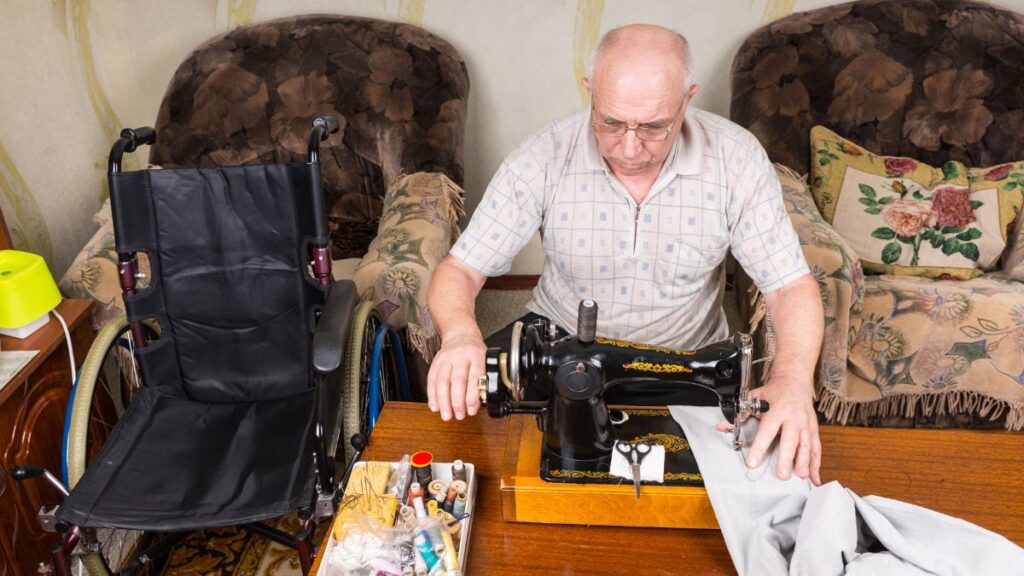
Learning gives your brain a problem to work on and a reason to practice.
Choose a skill you can use in real life. You might learn basic phone photography, conversational Spanish, bread making, sewing, home repair, music, or computer skills.
A research review found that education and structured learning in later life were associated with wellbeing, quality of life, cognitive health, independence, and a sense of belonging.
Small studies have also found cognitive gains when older adults learned several demanding skills. Examples included drawing, language study, and music composition. The studies were small, so the results should not be treated as a promise. They do show that older adults can continue learning hard things.
Pick one skill that genuinely interests you. Practice it twice a week for a month before judging your progress.
7. Create Something With Your Hands

Passive entertainment fills time. Creative work gives you something to show for it.
Try drawing, woodworking, knitting, cooking, pottery, flower arranging, model building, photography, or writing family stories.
The result does not need to be impressive. The value often comes from choosing, practicing, correcting, and finishing.
A systematic review of arts participation in later life found early evidence of reduced loneliness, stronger community connection, and improved wellbeing. Researchers also noted that the evidence varies in quality, so art should be seen as a helpful activity rather than a medical treatment.
Make your first project small. Paint one picture. Sew one cushion cover. Write one page about a childhood memory.
Finishing creates a sense of progress.
8. Grow Plants or Work in a Garden

Gardening gives you a reason to check on something each day.
You can grow herbs in a sunny window, flowers in containers, or vegetables in a small outdoor bed. Even caring for one plant creates a simple routine.
Gardening combines gentle movement, planning, sensory interest, and contact with nature. A review of outdoor nature activities found that gardening, green exercise, and other nature programs were associated with better mental health outcomes in adults.
Choose plants that suit your climate, light, and physical ability. Raised beds and tall containers can reduce bending.
Ask a local garden center or extension service which plants are easy to grow in your area. Starting with difficult plants may create frustration rather than pleasure.
9. Spend Regular Time Outdoors
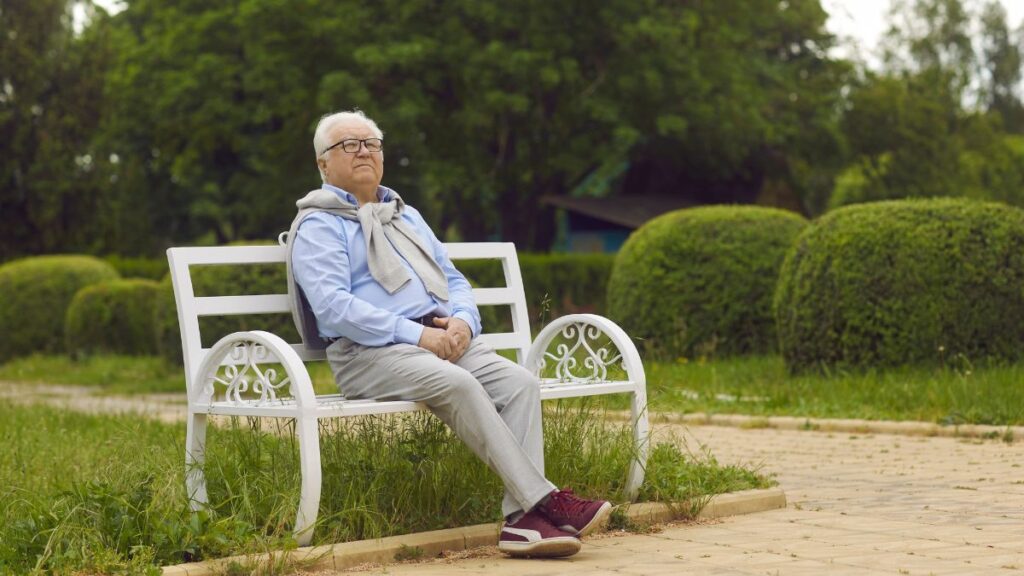
A change of setting can break the dull feeling of a long day at home.
Sit in a park, walk near trees, drink tea on a balcony, visit a public garden, or watch birds from a shaded bench.
Research reviews generally link time in nature with lower stress, better mood, and improved quality of life. Researchers still debate the best amount and type of nature exposure, so there is no magic number that works for everyone.
Make the habit specific. “Go outside more” is easy to ignore. “Sit in the garden after lunch for 15 minutes” is easier to follow.
Use sun protection and avoid extreme heat. Bring water if you plan to stay outside for long.
10. Help Someone From a Younger Generation
You have knowledge that another person may need.
You could help a grandchild cook, teach a neighbor basic repairs, tutor a student, review a young adult’s job application, or share family history.
The goal is not to lecture. Ask what the other person wants to learn.
Programs that bring older and younger people together may support social contact and wellbeing.
A systematic review found several promising forms of intergenerational activity, including school programs, music, language learning, and shared community projects. However, many studies were small, so researchers could not make firm claims about every benefit.
Start with one useful task. A clear project feels more natural than telling someone you would like to mentor them.
11. Turn Exercise Into a Social Appointment

Exercise is easier to skip when you do it alone and whenever you feel like it.
Place it on the calendar with another person or group. Try a water exercise class, beginner dance session, tai chi group, chair exercise class, or walking club.
The CDC says physical activity for adults aged 65 and older supports balance, coordination, brain health, and mood. Older adults are generally encouraged to combine aerobic activity, strength work, and balance practice, based on their health and ability.
Choose an activity you enjoy enough to repeat. The most advanced program will not help if you stop after two weeks.
Do not compare your body with anyone else’s. Your goal is regular movement, not competition.
12. Start a Project With a Visible Finish Line

A project creates direction that lasts longer than one afternoon.
Choose something you can complete within two to eight weeks. You could organize old photographs, repaint a room, create a family recipe book, repair a bicycle, or research your family tree.
Give the project a finish line. “Work on family history” may continue forever. “Create a ten page family history booklet” is clear.
Break it into steps and place two work sessions on your calendar each week.
Avoid choosing five projects at once. Too many unfinished tasks can add stress. Complete one small project before beginning another.
13. Schedule Small Local Outings

You do not need a major vacation to make life feel fresh.
Visit a museum, market, garden, historic building, library talk, community concert, or neighborhood you have never explored.
Place one outing on your calendar every two weeks. Invite someone when possible, but do not cancel every plan because another person is unavailable.
Research on leisure and wellbeing suggests that active forms of leisure, such as clubs, volunteering, travel, and hands on activities, can be more strongly linked with life satisfaction than passive leisure. The results differ between people and do not mean television or rest is harmful.
Keep outings within your budget. Free public events may be just as enjoyable as costly trips.
14. Use Your Former Work Skills in a New Way
Retirement does not erase the skills you spent decades building.
A retired accountant might help a charity improve its records. A former teacher might tutor one student. A mechanic might teach a basic car care class. A manager might support a small community project.
The key is using your skills without rebuilding the pressure of your old career.
Set limits before you agree to help. Decide how many hours you can give and which tasks you will not take on.
You may also choose paid part time work or consulting. This can add structure and income. But it should fit your health, financial needs, and retirement goals.
15. Limit Passive Screen Time

Television, news, and social media can fill several hours without making the day feel satisfying.
Passive screen use is not always bad. A favorite show can help you rest. A video call can support connection. An online class can teach you something useful.
The problem begins when screens replace movement, face to face contact, sleep, or activities you care about.
Choose one daily screen free period. Start with 30 minutes.
Use that time for an active task such as walking, cooking, calling someone, reading, or working on a project.
Do not rely on willpower alone. Keep your walking shoes, book, puzzle, or art supplies where you can see them. Make the better choice easy to begin.
16. Write a Personal Retirement Purpose Statement

Purpose does not need to be grand.
It can be as simple as caring for your health, supporting your family, learning new things, serving your community, or creating a calm home.
Write one sentence that answers this question:
What do I want my time and energy to support now?
Your answer might be:
“My retirement is a time to stay close to family, care for my body, and use my skills to help others.”
Use the statement when choosing commitments. An activity should support your purpose, your enjoyment, or your practical needs.
Review it every six months. Your health, family role, and interests may change.
Use the 3 Part Rule When You Do Not Know What to Choose
Too many options can create another form of boredom. You spend hours searching for ideas but never begin one.
Use a simple three part rule.
Choose:
- One activity for your body
- One activity for your mind
- One activity involving another person
Your first week might include a Tuesday walk, a Thursday library class, and Sunday lunch with a friend.
That is enough.
You do not need to build a full new identity in seven days. You are testing what gives you energy and what drains it.
At the end of the week, ask three questions:
- Which activity made time pass quickly?
- Which activity improved my mood?
- Which activity would I willingly repeat?
Keep the activity that worked. Replace the one that did not.
A Simple 7 Day Retirement Boredom Reset
Use this plan when your days have started to blur together.
| Day | Simple action | What it adds |
|---|---|---|
| Day 1 | Write one main purpose for tomorrow | Direction |
| Day 2 | Take a safe 15 to 20 minute walk | Movement |
| Day 3 | Call someone and arrange a meeting | Connection |
| Day 4 | Visit your library or community center | New options |
| Day 5 | Spend 30 minutes learning a skill | Mental challenge |
| Day 6 | Begin a small creative or home project | Progress |
| Day 7 | Plan three anchors for next week | Structure |
Keep each action small.
The goal is not to stay busy every minute. Constant activity can become another way to avoid rest, grief, or difficult feelings.
Your goal is to create a week that contains a healthy mix of purpose, movement, contact, learning, and quiet time.

I’m Austin Becker, an advocate for living life with intention and resilience. I write for men who are actively navigating life’s major transitions, tackling the realities of reinvention and finding renewed purpose with grit and honesty. I believe that personal growth doesn’t have a deadline it’s about continuously gearing up for the chapters that matter most.
Through my work, I aim to strip away the clichés of modern manhood, offering practical, no-nonsense insights on health, mindset, and legacy for those who want to move forward with strength and clarity.