
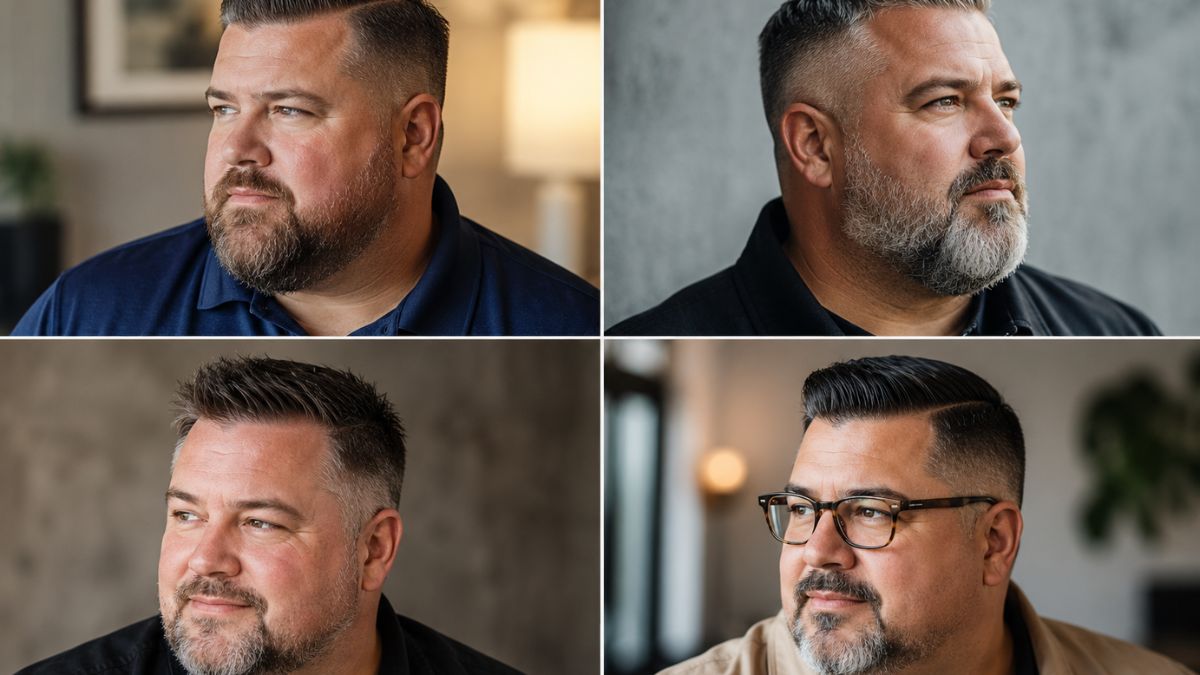
Most advice for heavier men over 40 lands in the same place: keep it short, follow your face shape, maybe go gray gracefully. None of that is wrong. Solid advice, but not enough to walk into a barber shop and come out looking sharp.
A good haircut at this stage isn’t about hiding anything. It’s about proportion between your face, your neck, your frame, and the cut sitting on top of all three. That’s the conversation most articles never have. Here’s what works.
Your Face Shape Is Only Half the Story Your Neck Is the Other Half
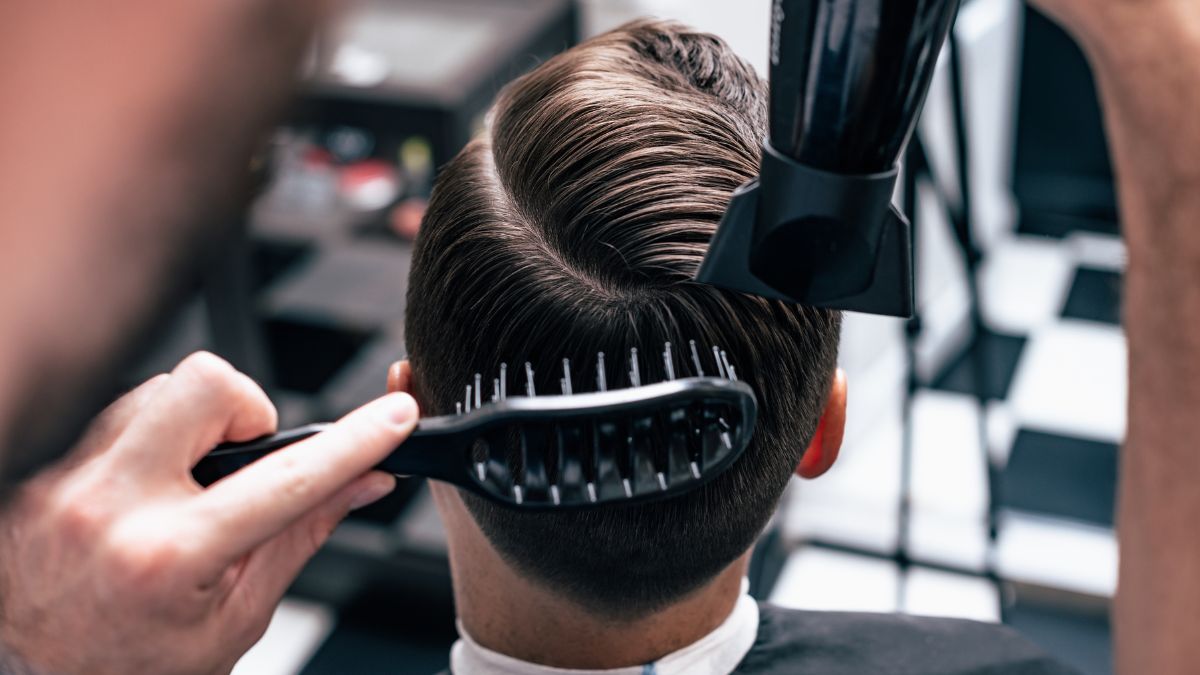
Face shape gets all the attention. That’s the wrong place to start.
For plus size men, the neck its width, how it meets the jaw, where it transitions into the shoulders determines whether a haircut looks intentional or just there. Two men can have identical oval faces and walk out of the same barber shop looking completely different, because one has a narrower neck and the other doesn’t.
Standard advice tells you to match a cut to your face shape. Round face? Go short on the sides. Oval? Anything works. What that advice skips is that a tight taper on a wider neck makes the neck look wider not trimmer. The fade pulls the eye down exactly where most heavier men don’t want attention drawn.
What works instead: a low or mid fade that ends above the widest point of the neck, combined with a neckline shaped to a slight arc rather than a straight edge. The arc shortens the visual length of the neck without exposing width.
Broader shoulders change this slightly. When shoulder width is significant, a cut with modest height on top creates a vertical line that breaks the horizontal read of the body. Not a quiff. Not a pompadour. Just enough structured volume to shift the eye upward.
Check two things before choosing any cut: the width of your neck at its widest point, and where your jaw ends relative to your ears. Those two measurements tell you more than any face-shape chart ever will.
“Keep It Short Hair” Is Vague Enough to Be Wrong
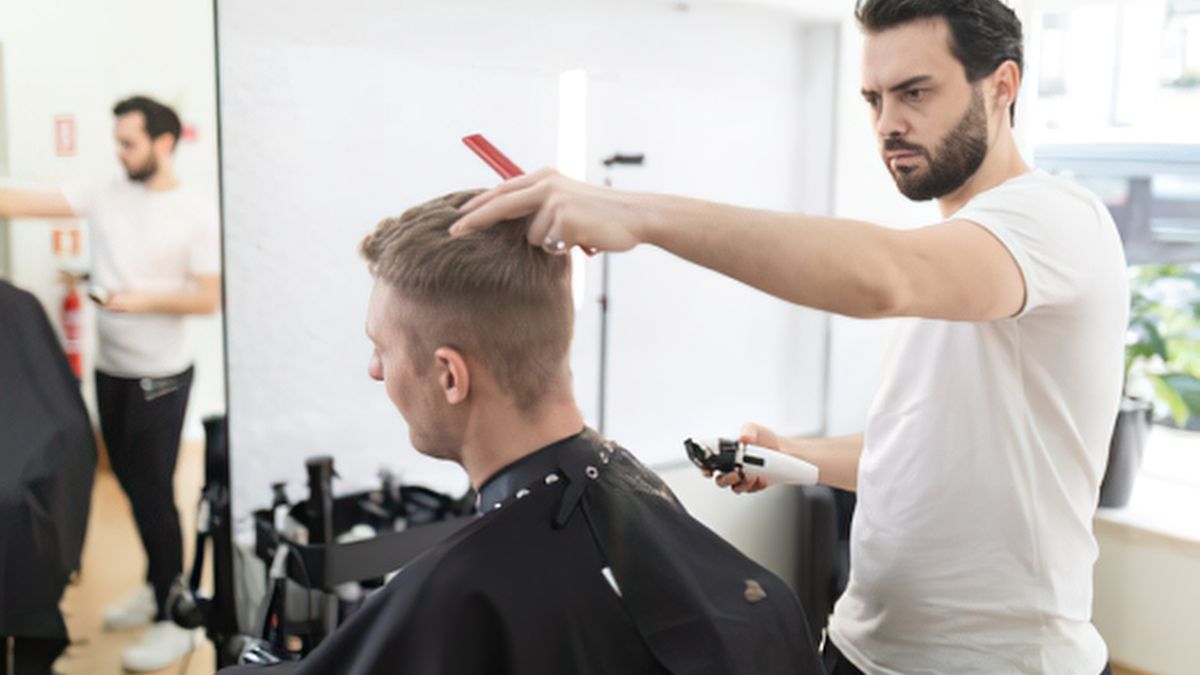
Short is not a haircut. It’s a drawer everyone throws bad advice into.
The standard line for heavier men over 40 is: keep it short, keep it clean. That advice isn’t wrong it’s just incomplete enough to get you a haircut that makes your head look small sitting on top of a wider frame. A number-two all-over buzz does exactly that. No structure, no contrast, nothing pulling the eye where you want it.
Here’s what separates a short cut that works from one that doesn’t:
- Texture on top matters more than length. A textured crop with a small amount of movement on top adds visual weight to the head which balances a heavier body below it. A flat, uniform buzz removes all of that.
- Skin fades need a stopping point. Faded to the skin all the way up the sides with nothing on top leaves the head looking undersized. Stop the fade at a mid or low level and keep some density above it.
- A defined shape beats a trimmed shape. Rounded, soft silhouettes read as grown-out. A cut with a clear, deliberate edge even if subtle reads as groomed.
One exception: if your hair is thinning significantly on top, a closer cut across the whole head with a well-shaped neckline is still the strongest option. Trying to add texture to sparse hair creates a different problem.
Short cuts earn their keep. But “short” without a specific shape in mind is just a starting point, not a finish line.
Controlled Hair Volume on Top Works Uncontrolled Volume Doesn’t
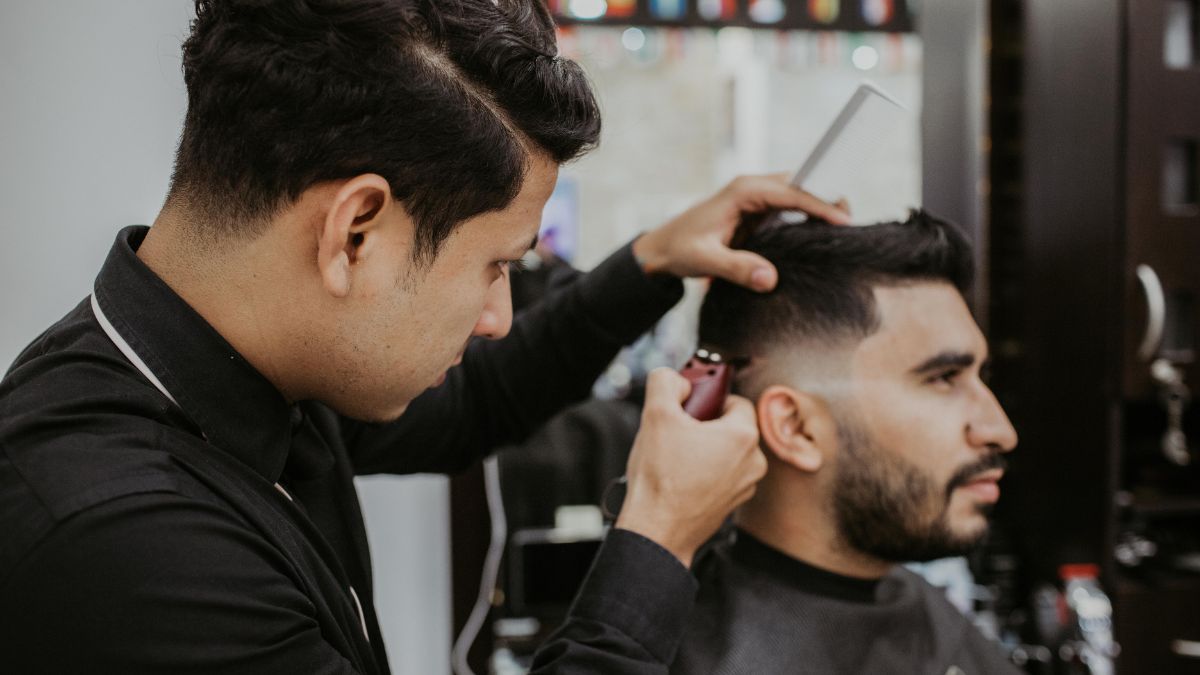
Avoiding volume is the advice. It’s also frequently wrong.
For heavier men, volume on top creates a vertical line that draws the eye upward and that vertical line works directly against the horizontal width of a broader body. The problem most articles are trying to warn you about isn’t volume itself. It’s soft, puffy, unshaped volume that spreads outward instead of pushing upward.
There’s a clear difference between the two:
- Controlled volume sits close at the sides, rises from the crown, and holds a defined shape think a short textured quiff or a structured pompadour kept under two inches.
- Uncontrolled volume is what happens when hair is blown dry without direction, or when a product with too-light a hold lets the shape collapse outward by midday.
- Cuts that build volume structurally like a disconnected undercut or a crop with length left on top hold their shape without heavy product because the cut itself creates the lift.
Product choice matters here. A matte clay or fiber with medium-to-strong hold gives structure without the wet, stiff look that ages a man past 40 faster than gray hair does. Avoid mousses and light pomades they don’t have enough grip to keep volume moving upward through a full day.
One real exception: if your hair is fine and thinning, volume works against you because the scalp shows through. Closer, denser cuts serve that situation better.
Gray Hair After 40 Gets Coarser and That Changes Which Styles Actually Hold
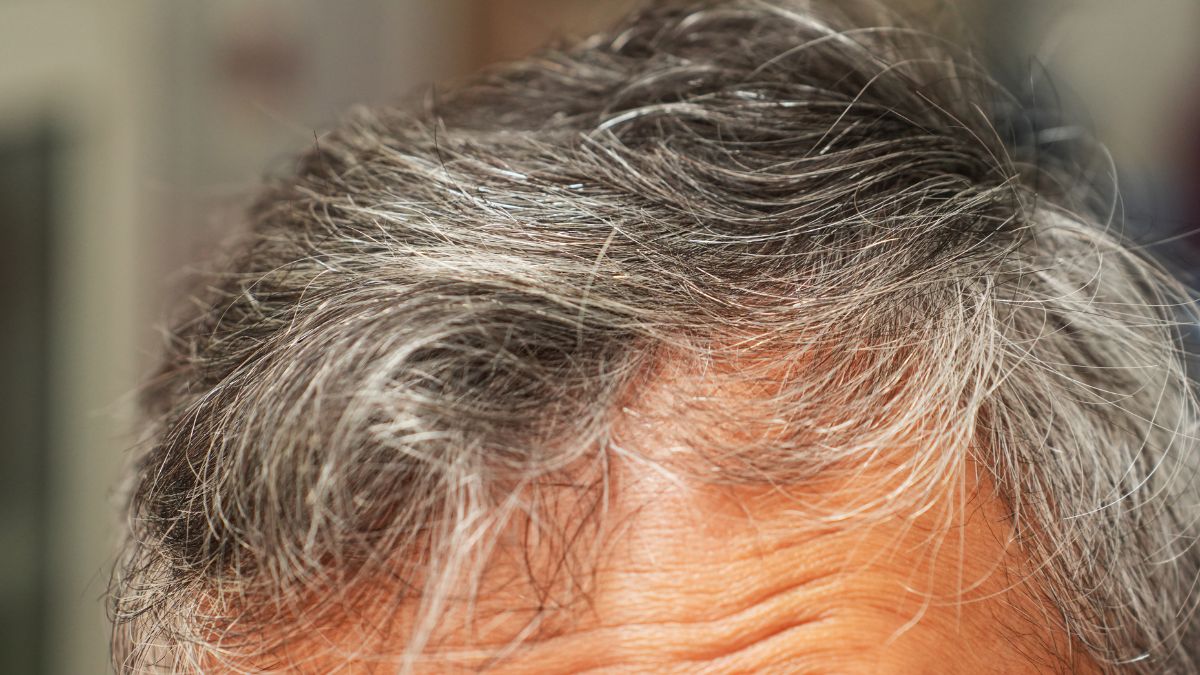
Gray hair doesn’t just look different. It behaves differently and most men don’t adjust until a cut they’ve worn for years suddenly stops working.
After 40, gray hair loses moisture at the follicle level, which makes it drier, coarser, and more resistant to lying flat or holding a shape it’s not built for. That pomade you’ve used since your 30s? It’s sitting on top of the hair shaft now instead of bonding with it which is why it looks greasy by noon without actually holding anything.
Here’s what changes, and what to do about it:
- Switch from pomade to cream or paste. Creams penetrate drier hair shafts instead of coating them. The hold is cleaner, and the finish doesn’t turn shiny or heavy by midday.
- Tell your barber your hair has gotten coarser. Coarser texture needs weight removed differently more point-cutting, less blunt trimming or it puffs outward instead of falling with shape.
- Styles with natural movement work better than styles that fight the texture. A soft taper with a loose, forward-swept top works with coarser hair’s natural resistance. Hard side parts and slicked-back styles increasingly work against it.
One product addition worth making: a leave-in conditioner used before styling. Coarser gray hair takes product better when it has some moisture base without it, even good paste distributes unevenly.
Texture is not a problem to fix. Cut and product choices that match what your hair is now not what it was at 32 make the difference between a style that holds and one that fights you every morning.
The Cuts That Still Look Sharp on Day 14, Not Just Day 2
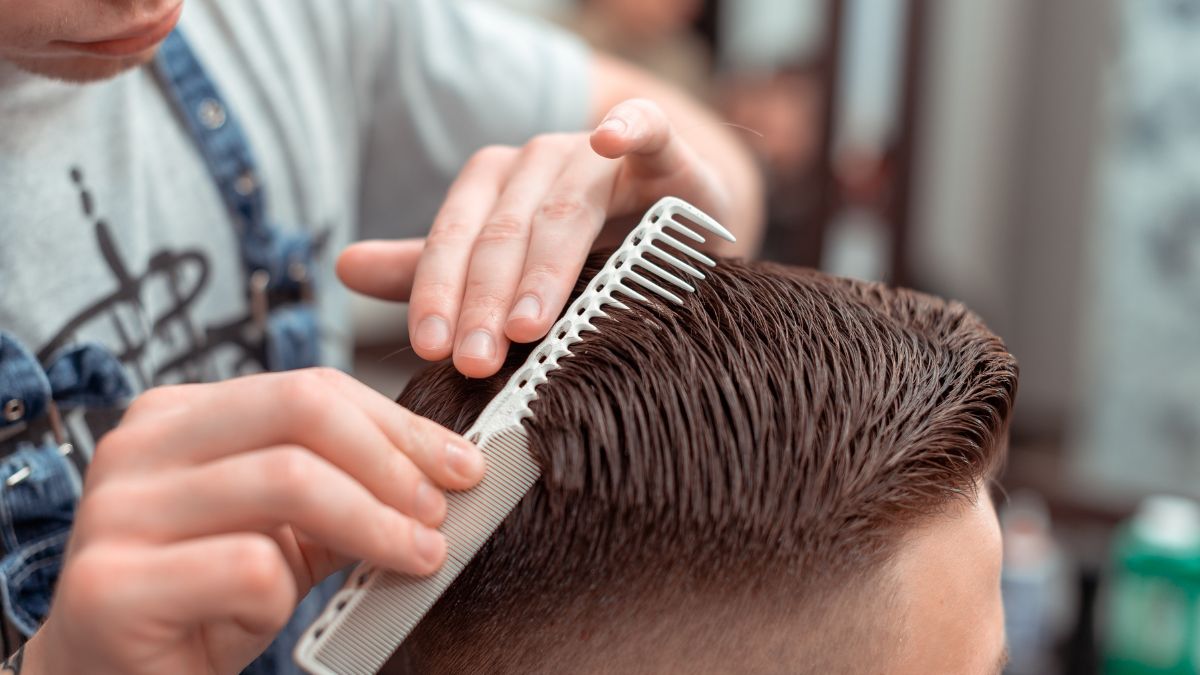
Most barber advice is optimized for day two. Your life happens on days eight through fourteen.
For plus size men, a grown-out neckline is more visible than it is on someone with a narrower neck — the contrast between a clean line and a fuzzy one is sharper against wider skin. That means cut durability isn’t a minor preference. It’s a core part of whether a style works for your life.
Two barber instructions that extend any cut’s lifespan:
- Ask for a “natural neckline” instead of a hard-blocked one. A blocked neckline looks sharp on day two and ragged by day ten. A natural neckline follows your hair’s own growth pattern it grows out gradually and stays presentable longer.
- Request that the taper starts higher, not lower. A taper that starts low on the neck shows growth faster because new hair appears immediately below the fade line.
Here’s how common cuts rank by how well they hold between visits:
| Cut | Durability | Why |
|---|---|---|
| Textured crop | Strong | Top length hides growth; sides stay clean longer |
| Classic taper | Moderate | Neckline shows growth fast without upkeep |
| Skin fade | Weak | Requires a visit every 10–12 days to stay sharp |
| Ivy League / short part | Strong | Grows out with shape intact; no hard lines to betray |
| Buzz cut (uniform) | Moderate | Consistent growth, but loses proportion quickly on wider frames |
One honest exception: if you genuinely visit every two weeks, a skin fade works. But build your cut around your actual schedule not the schedule you intend to keep.
How to Walk Into a Barber Shop and Ask for What You Actually Want
“Just clean it up” is the most expensive phrase in barbering. It tells a barber nothing and you get back whatever they default to.
Most men leave a barber shop with a cut they didn’t want because they couldn’t name what they did want. That’s not a vocabulary problem. It’s a context problem.
A good barber doesn’t need you to know terms like “disconnected undercut” or “mid-fade taper.” They need three pieces of information: what you want it to look like, what your hair does on its own, and how long you go between cuts.
Here’s the exact language that gives a barber something to work with:
- On your neck: “My neck is wider, so I don’t want anything tapered too tight or too low keep the fade above the widest point.” This one instruction prevents the most common mistake barbers make on heavier men.
- On maintenance: “I come in every four to six weeks, so I need something that holds its shape between visits.” A barber who knows this will avoid hard-blocked necklines and aggressive skin fades without you having to explain why.
- On texture: “My hair has gotten coarser as it’s gone gray products don’t hold the way they used to.” This tells a barber to adjust how they cut for texture, not just shape.
- On volume: “I want some height on top but nothing that spreads out to the sides.” Specific direction. No terminology needed.
Bring one photo. Not of a celebrity with a different face and body find someone with a similar build and similar hair. That single image resolves more miscommunication than any description can.
Never say “whatever you think.” You’re the one wearing it.
The Specific Cuts That Work Organized by Neck and Face Proportion, Not Just Face Shape
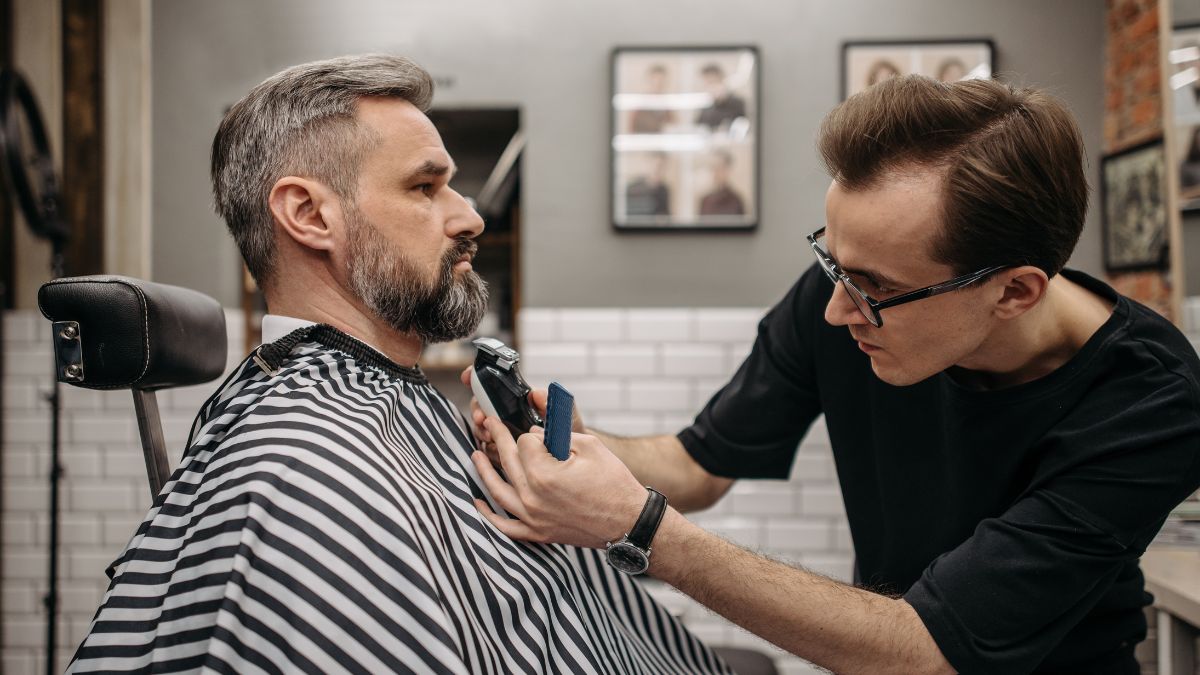
Forget the face-shape chart. Here are cuts organized by the variables that actually determine whether a style works on a plus size man over 40.
Every recommendation below includes what to ask for not just what the cut is called.
Wider neck, broader jaw:
- Textured crop with mid fade. The fade stops above the widest neck point; textured top adds upward height without width. Ask for: “Textured crop, mid fade, keep length on top, point-cut for movement.”
- Ivy League with natural neckline. Grows out cleanly, holds shape for five-plus weeks, adds no bulk to the sides. Ask for: “Ivy League, natural neckline, no hard block.”
Narrower jaw, heavier through the neck and shoulders:
- Short pompadour, kept under two inches. Creates a strong vertical line above a wide shoulder base. Works best with coarser gray hair because the texture holds the shape without heavy product. Ask for: “Low pompadour, tight sides, no skin fade.”
- Classic taper with side part. Clean. Timeless. The side part works here specifically because a narrower jaw can carry the asymmetry without drawing attention downward. Ask for: “Medium taper, natural side part, no fade below the ear.”
Thinning hair, any proportion:
- Uniform short cut with shaped neckline. Nothing to hide. A clean, deliberate shape at the neckline is what separates this from a default buzz. Ask for: “Even length, arced neckline, no block.”
One rule across all of them: the neckline shape matters more than the cut name. Get that right and the rest follows.

Hello there! I’m Jesse Joe, the author and editor behind SolganGenius. I’m thrilled you’ve stopped by, and I can’t wait to share with you the essence of what this platform is all about.
I’m a writer, social media enthusiast, and a firm believer in the power of words. I’ve always been fascinated by how a simple phrase or slogan can capture an emotion, convey a message, and even change perspectives. Learn More