
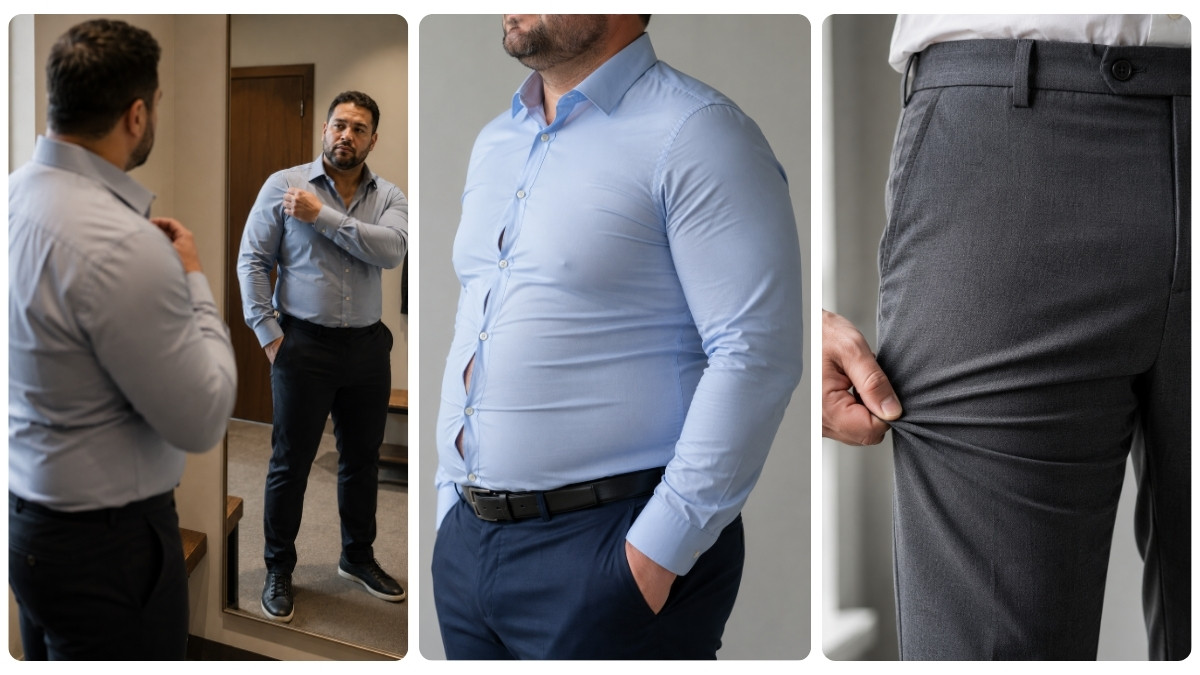
You have stood in a dressing room holding two shirts in the same size, wondering why one makes you look bigger and the other makes you look pulled together.
Slim fit felt like it was made for someone else’s body. Regular fit felt safe but left you swimming in fabric you didn’t ask for. Neither label tells you what actually happens once the shirt is on your back.
Size has less to do with this than shape does. Your shoulders, your waist, and where you carry weight decide which fit works, not the number on the tag.
Why “Slim” and “Regular” Aren’t About Your Weight
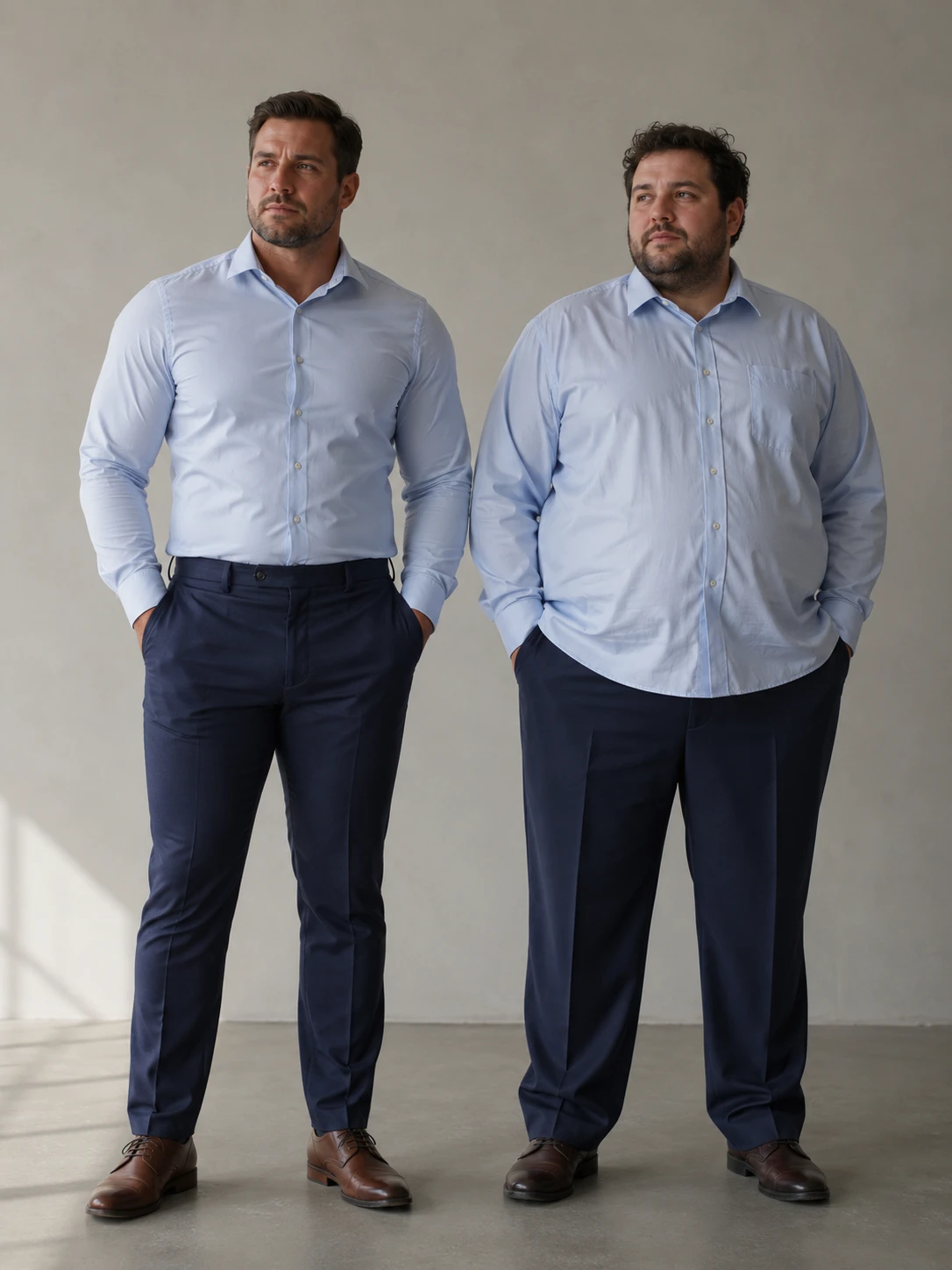
Two men can wear the same size and need completely different fits. Your shape decides the answer, not your weight. A round middle with slim arms and legs needs a different cut than broad shoulders with a flat stomach.
Slim fit hugs your frame in specific spots. Regular fit gives room everywhere. Apple shapes often look sharper in slim pants with a roomier top.
Athletic builds can handle slim almost everywhere. Rectangle shapes have the most flexibility between the two. Forget the label on the tag. Look at where your body actually carries weight first.
Slim Fit — Pros and Cons
| Pros | Cons |
|---|---|
| Creates a clean, vertical silhouette | Can highlight a rounder midsection |
| Removes bulky fabric that adds visual weight | Restricts movement if cut too tight |
| Makes you look taller and leaner when sized right | Pulls at buttons under strain |
| Works well with stretch fabric for all-day comfort | Needs 1 to 3 percent elastane to stay comfortable |
| Flatters athletic and rectangle builds | Less forgiving on a larger midsection |
The Real Difference: Chest-to-Waist Drop and Where Each Fit Tapers
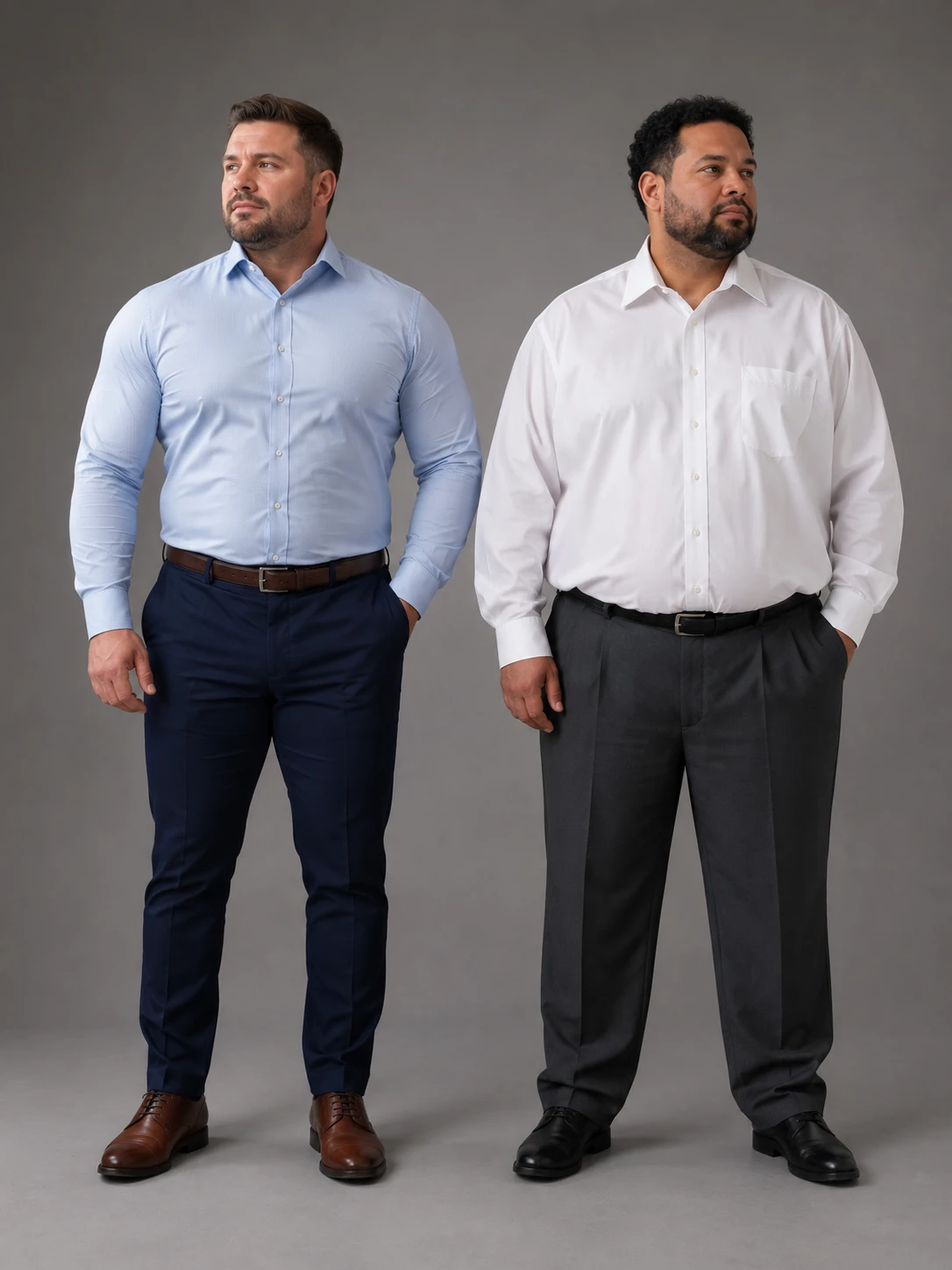
Most brands build slim fit shirts with a 2-inch drop between the chest and waist. Regular fit jackets and shirts use a 3 to 4.5 inch drop instead. This number tells you how much fabric narrows from your chest down to your waistband.
A bigger drop means more room through your midsection. Slim fit also raises the armhole higher and closer to your body. Regular fit drops the armhole lower for easier movement. Taper points matter too.
Slim fit tapers right after the chest. Regular fit waits until the waist to taper. Ask for these numbers by name next time you shop, and salespeople will know you mean business.
What Slim Fit Actually Does to Your Silhouette
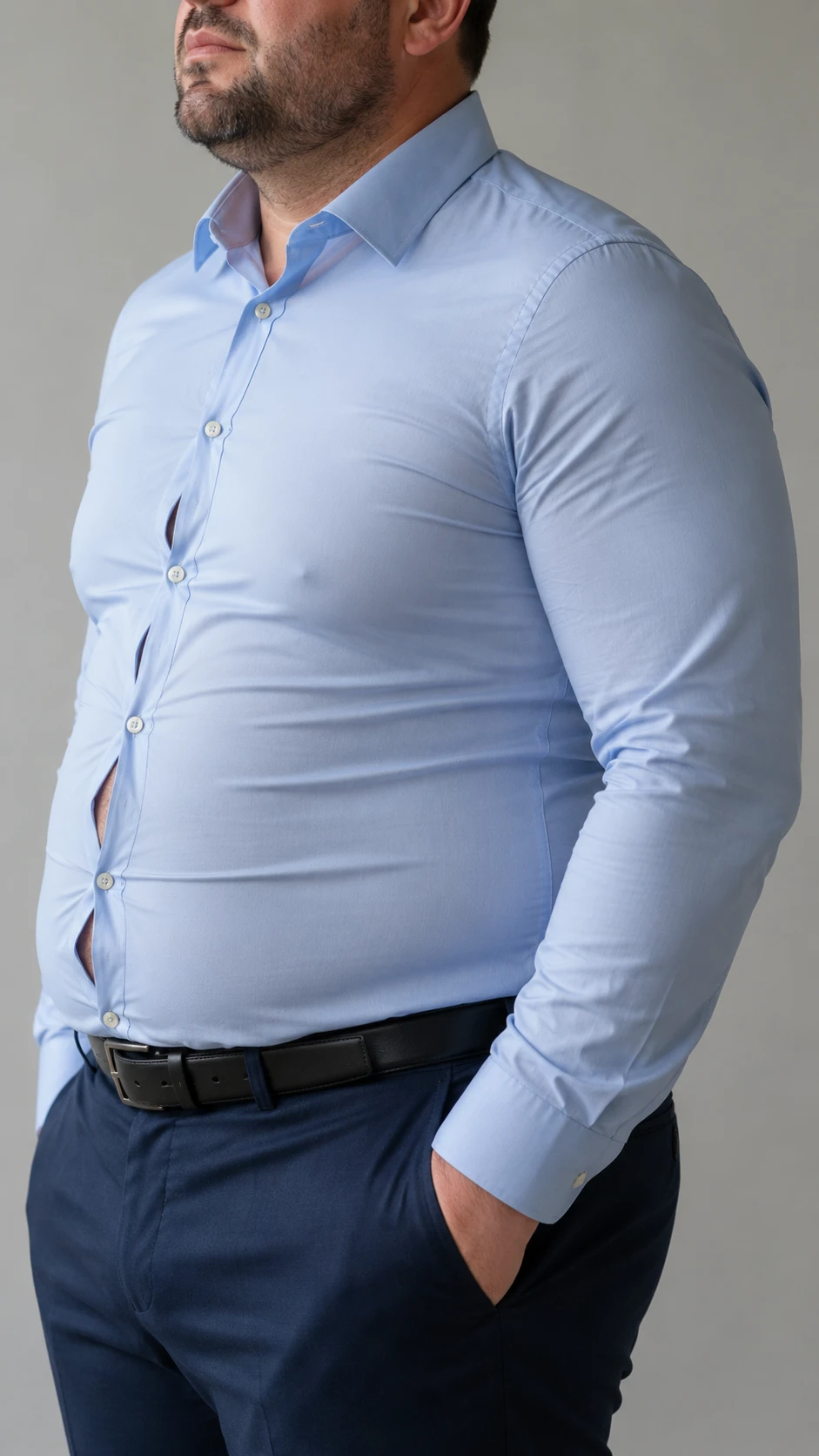
A slim fit shirt creates one long line down your body instead of breaking you into sections. Fabric sits close to your chest and arms, then narrows at the waist. This works in your favor when the cut matches your actual frame instead of a size chart guess.
Problems start at the buttons. A shirt that pulls or gaps between buttons fights your shape all day. Tight armholes cut into your range of motion fast. Reaching, sitting, or bending becomes a constant negotiation with the seams. Fit should move with you, not against you.
Slim fit is cut closer to the body, tapering at the waist and narrowing through the legs.
- The Pros: Creates a clean, structured, and modern silhouette. Eliminates excess fabric, which can prevent you from looking boxy or overwhelmed by material.
- The Cons: It can highlight a rounder midsection or restrict movement if it’s too tight.
- When it works: It is excellent when tailored or bought in stretch fabrics (like elastane-blend denim), allowing you to maintain a sleek look without pulling at the seams
What Regular Fit Actually Does to Your Silhouette
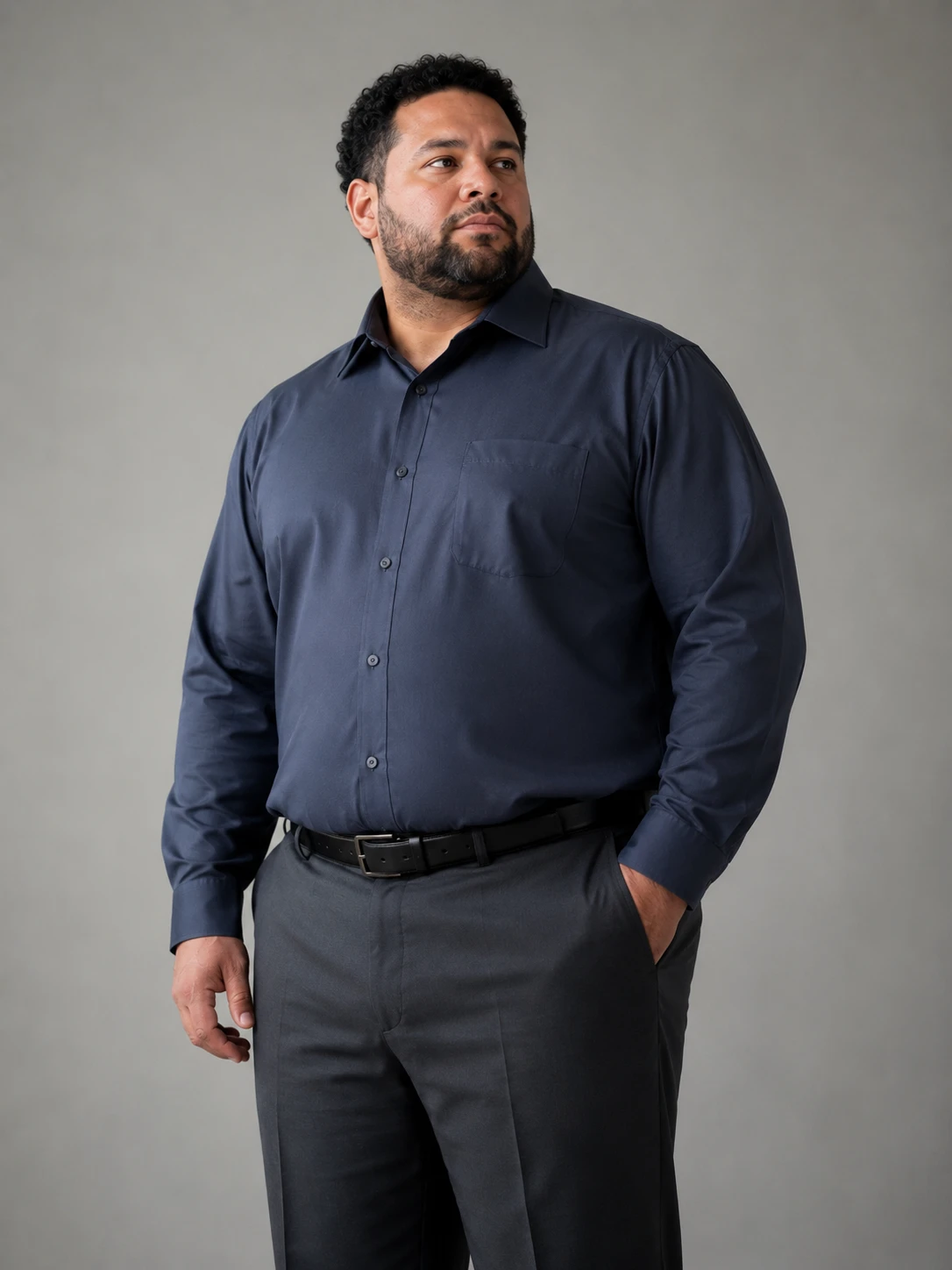
Regular fit gives your body breathing room without announcing every curve underneath. Stocky builds benefit most here. If your chest, shoulders, and midsection carry weight evenly, regular fit skims over that bulk instead of squeezing it.
Men with shorter torsos also gain from this cut, since it avoids the tight pull that slim fit creates around the belly. But regular fit can backfire fast.
Skip it if your shoulders are narrow compared to your stomach, since extra fabric up top adds bulk you don’t need. Sloppy drape happens when the cut runs too loose everywhere, hiding your shape instead of working with it. Fit, not size, makes the difference.
- The Pros: Offers a relaxed, breathable feel and does not hug the body, concealing areas you might want to de-emphasize.
- The Cons: Excess fabric can add visual weight or look sloppy if not proportioned correctly.
- When it works: Best for daily wear, travel, and stocky builds that require extra breathing room across the chest and stomach.
Match the Fit to Your Body Shape, Not Your Size
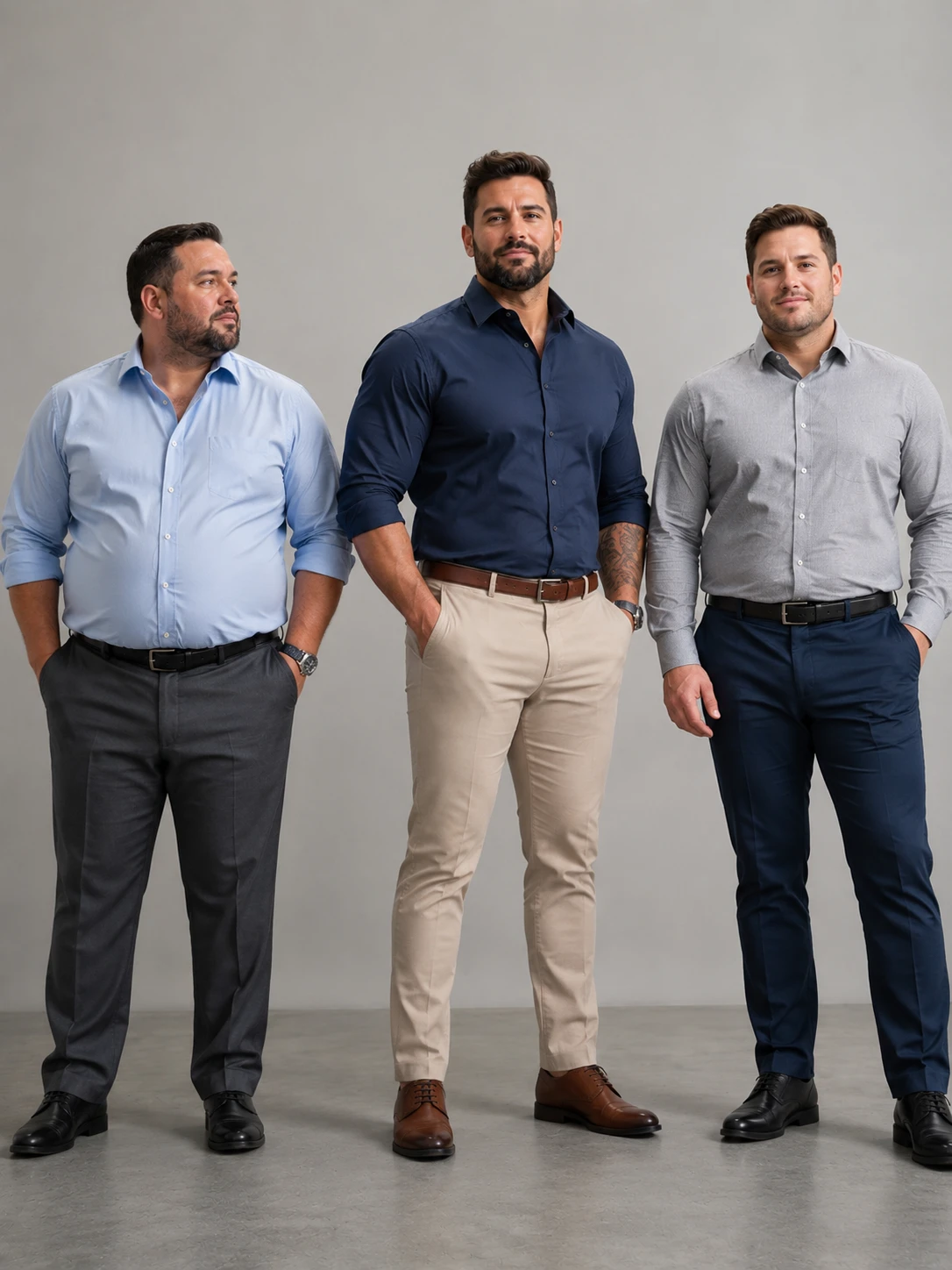
Apple shape (weight carried mostly in the stomach): go with a regular fit. Slim fit pants pull tight across the belly and bunch awkwardly. Regular fit shirts drape smoothly instead of clinging.
Athletic/inverted triangle (broad shoulders and chest, narrower waist): go with slim fit through the body. It highlights your natural shape without squeezing. Avoid baggy cuts; they hide the frame you already have.
Rectangle shape (similar measurements at shoulders, waist, and hips): go with regular fit plus structured tailoring. Look for jackets with shoulder padding to create the illusion of curves.
Regular Fit — Pros and Cons
| Pros | Cons |
|---|---|
| Roomy and breathable for all-day wear | Loose fabric can bunch and add bulk |
| Forgiving for a larger midsection | Can look sloppy if sized too large |
| Good for stocky or apple-shaped builds | Hides your actual shape instead of flattering it |
| Comfortable for travel and casual days | Boxy lines add visual weight, not less |
| Easier off-the-rack fit, less tailoring needed | Excess fabric in the wrong places can overwhelm a smaller frame |
Tapered Fit: The Middle Option Most Guides Don’t Mention
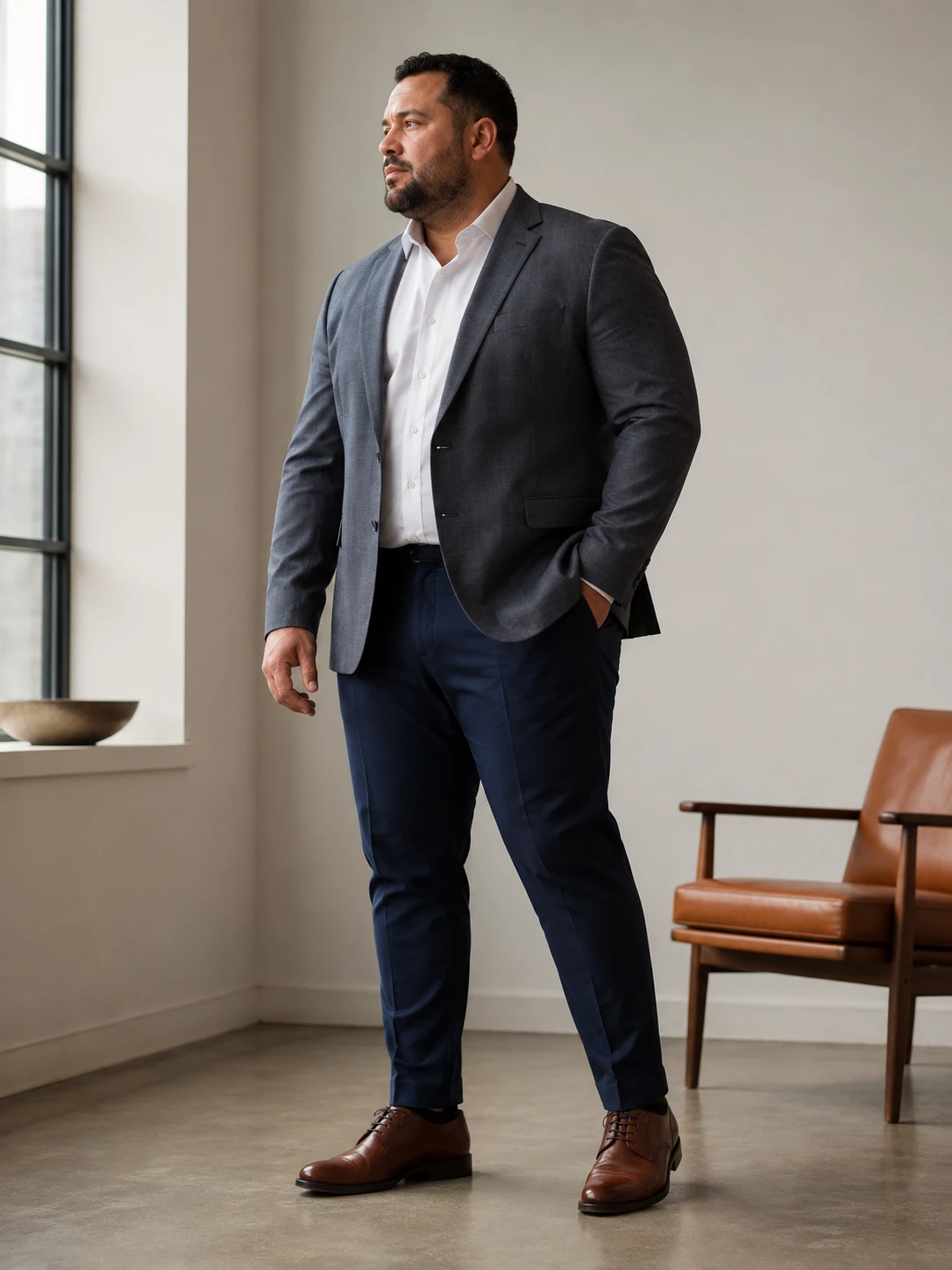
Most plus size guides skip tapered fit entirely. That leaves a real gap. Tapered cuts stay roomy through the thigh and seat, then narrow gradually down to the ankle. Your upper body gets a fitted look without pulling or gaping.
Pants taper instead of falling straight down in a column. This shape works well if slim fit feels tight around your legs but regular fit feels baggy everywhere else.
A tapered blazer follows the same idea. It hugs your chest and shoulders, then skips the boxy fit through the waist. Try this option before ruling out fitted clothing completely. Many men find their best fit sits right here, between the two extremes.
Stretch Fabric and Rise: The Two Details That Decide Comfort
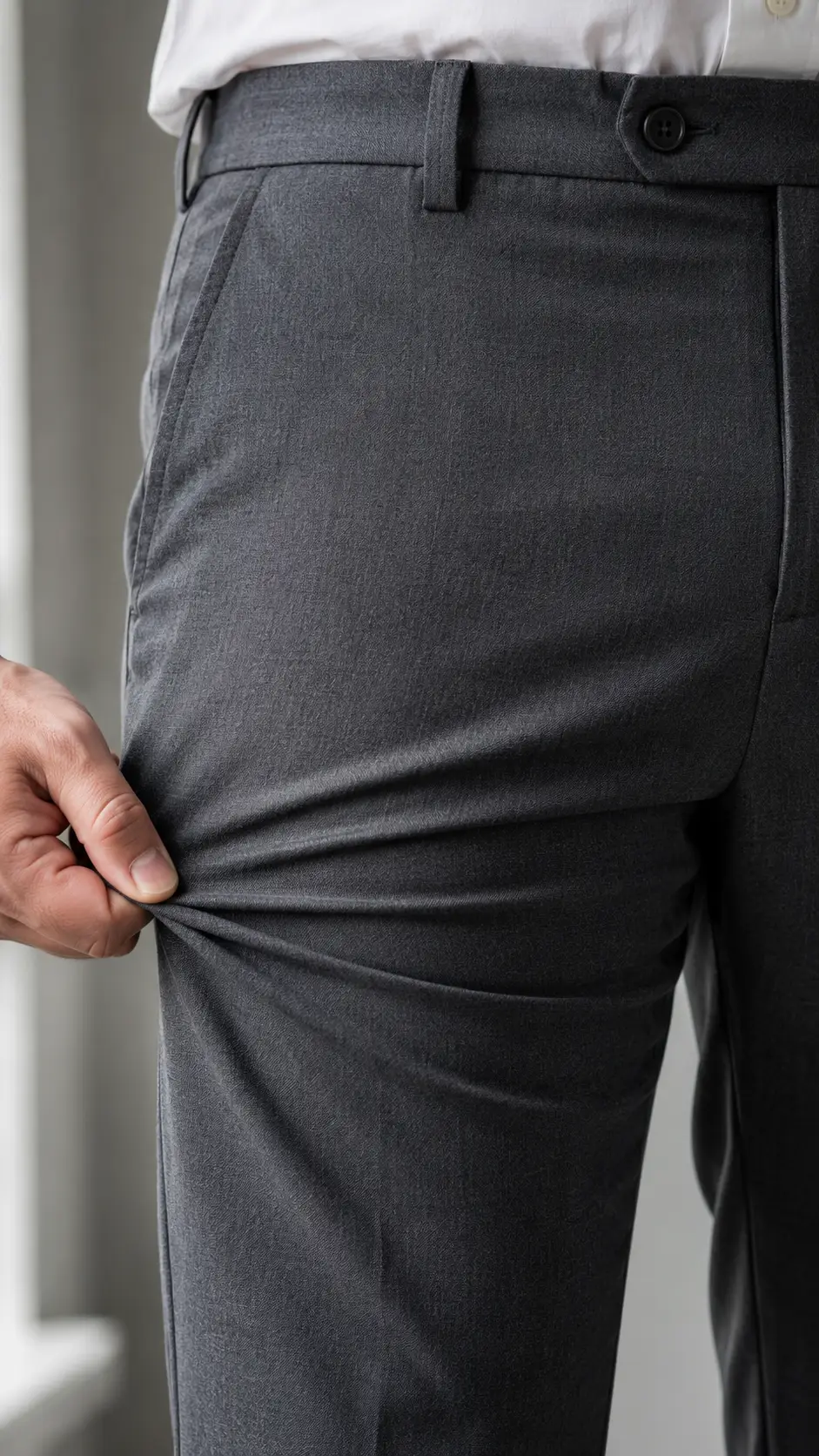
Most guys check the fit label and skip right past the two things that actually decide if pants feel good all day. Stretch and rise matter more than slim or regular ever will.
Look for fabric with at least 2% elastane. This small amount lets fabric move with your body during the day. Without it, fabric pulls tight when you sit, bend, or climb stairs. A higher elastane count, closer to 5%, gives even more give for bigger thighs and hips.
Rise placement changes everything. A mid rise sits closer to your natural waist, which works better for a fuller midsection. Low rise often digs in or slides down. Check the rise before you check the fit label. It tells you more about comfort than slim or regular ever could.
How to Test the Fit Before You Buy It
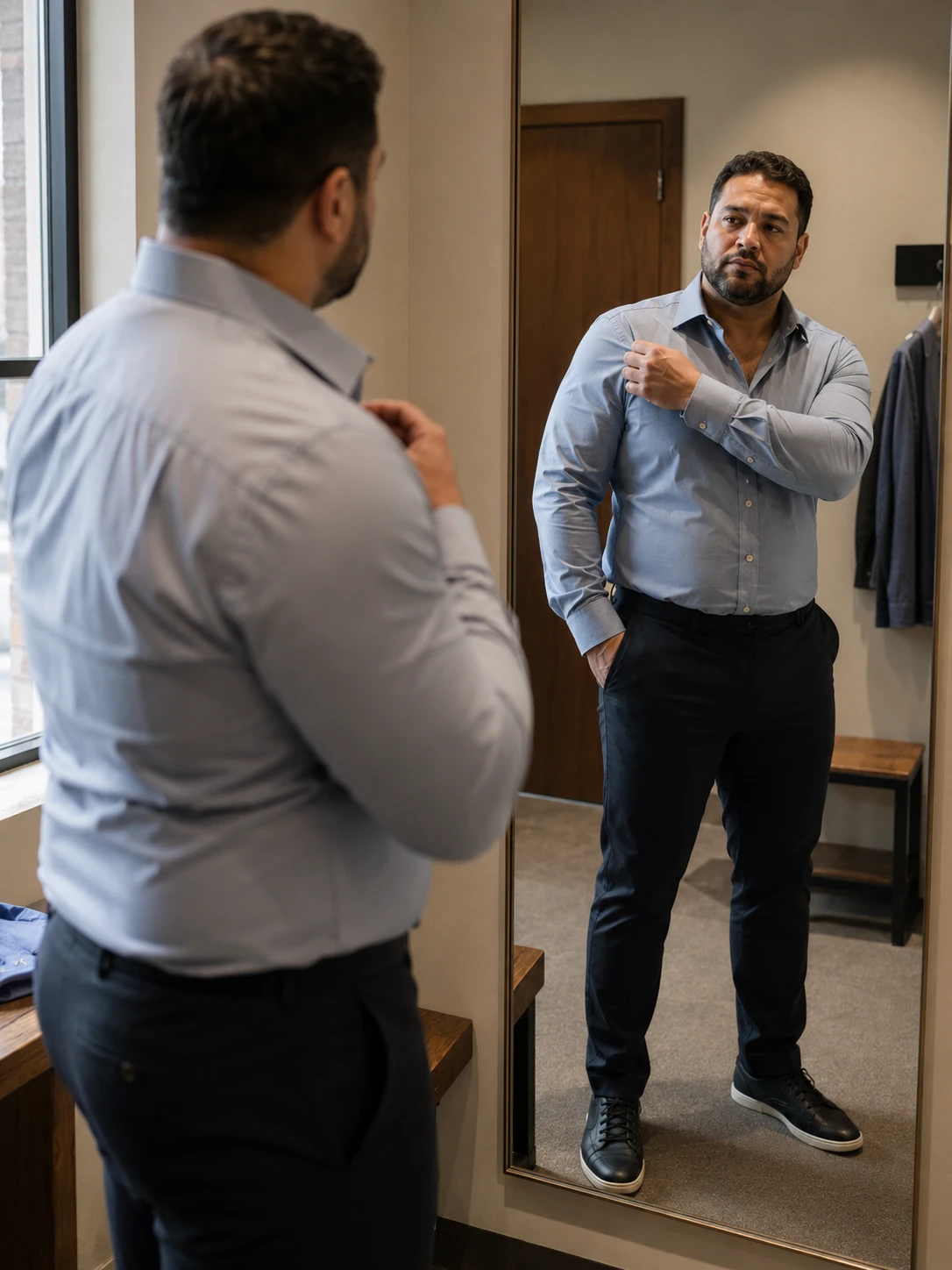
Your shoulders tell the truth before your eyes do. Stand in front of the mirror and check where the seam hits. A good seam sits right at the edge of your shoulder bone. If it climbs onto your neck or droops past your arm, the size is wrong.
Sit down next time. Real fit shows up in motion, not just standing still. Raise both arms above your head. Fabric should stretch a little, never pull tight across your back. Button every button on the shirt or jacket. Watch the gaps between buttons. Strain there means you need a bigger size, not a smaller goal.
Tips for Plus-Size Styling
- Know the Rise: Regular fit pants typically feature a mid- to high-rise, which sits comfortably on your natural waist rather than pinching below the stomach.
- Consider Tapered: If you want the clean look of slim fit pants but need extra room in the thighs, look for a tapered fit—it offers a roomy thigh with a narrow ankle for balance.
- Structure over Baggy: Avoid overly baggy “relaxed” cuts, as they can make you appear larger; instead, choose a regular fit that drapes cleanly.
Slim Fit vs Regular Fit — Side-by-Side Comparison
| Factor | Slim fit | Regular fit |
|---|---|---|
| Chest-to-waist taper | About 3 to 4.5 inch drop | About 2 inch drop |
| Armhole height | Higher, better mobility | Lower, roomier but can restrict reaching |
| Best body shape | Athletic or rectangle | Apple or stocky |
| Comfort over a full day | Needs stretch fabric to last | Naturally comfortable, more airflow |
| Visual effect | Slims and elongates | Can add bulk if oversized |
| Tailoring need | Often needs sleeve or waist adjustment | Usually fits off the rack with minor hemming |

Hello there! I’m Jesse Joe, the author and editor behind SolganGenius. I’m thrilled you’ve stopped by, and I can’t wait to share with you the essence of what this platform is all about.
I’m a writer, social media enthusiast, and a firm believer in the power of words. I’ve always been fascinated by how a simple phrase or slogan can capture an emotion, convey a message, and even change perspectives. Learn More