
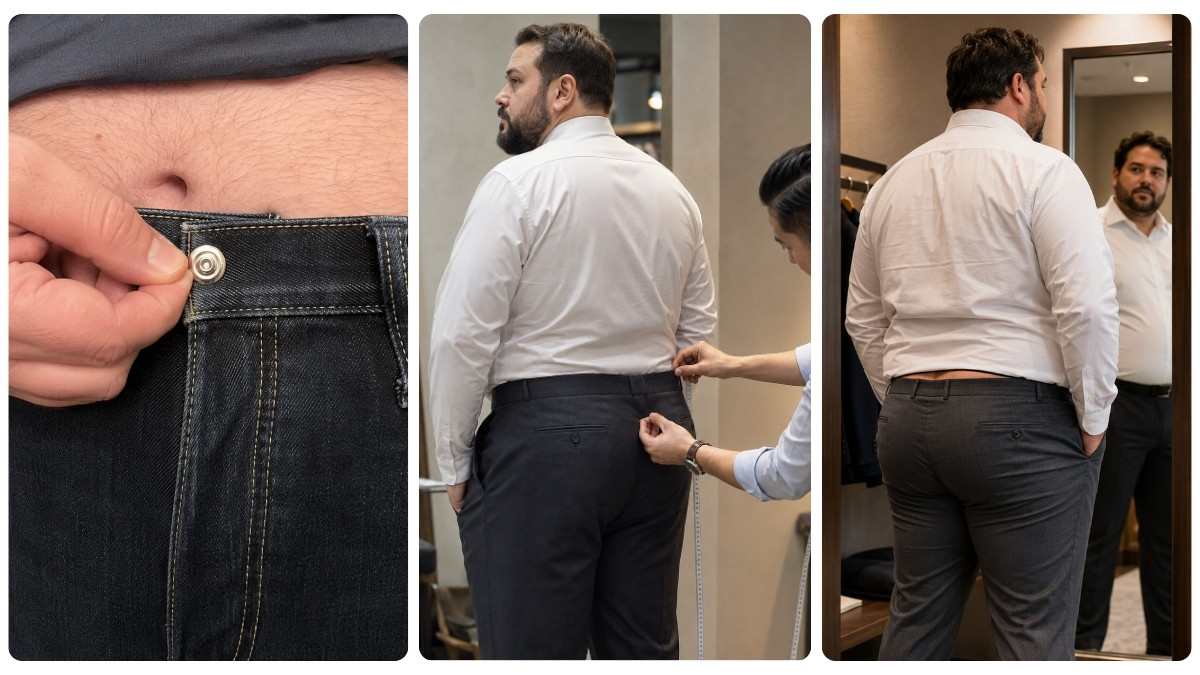
Pants that fit your thighs and seat perfectly but gap two inches at the back waist. That is the trade-off plus size men deal with every time they shop off the rack.
Standard sizing was not built for your body shape. Nobody talks about that honestly.
This article covers three fixes that actually work, from a two-minute no-sew button swap to a tailor alteration that solves the problem for good.
Check Rise, Seat, and Thigh
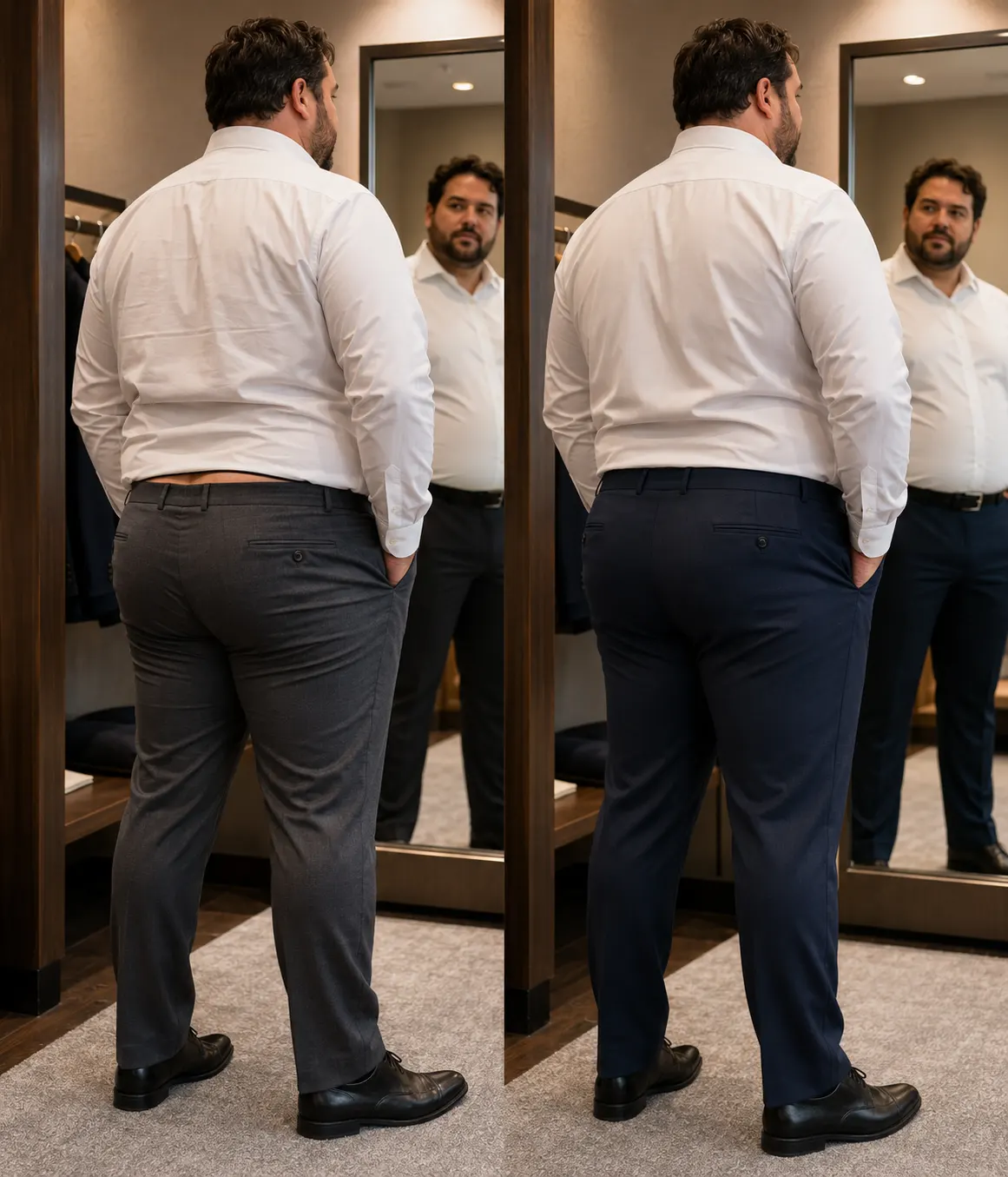
The fastest way to fix a waist gap is to stop blaming only the waistband. Start by checking where the pants are sitting on your body. If the rise is too low, the waistband may slide under your belly and tilt backward, which makes the back gape even when the waist size is close.
Tight thighs can do the same thing. They pull the fabric down each time you sit, walk, or bend, so the waistband loses contact with your lower back. A full seat can also push the pants away at the back because the fabric has no room to curve over your body.
Stand in front of a mirror. Look at the side seam, crotch, and back pocket placement. When the side seam leans forward, the seat feels strained, or the pockets pull open, the problem is fit balance, not just extra inches at the waist.
Better pants should hold your belly, seat, and thighs together without forcing one area to steal room from another. That is the real fix.
Measure the Gap Before You Choose a Fix
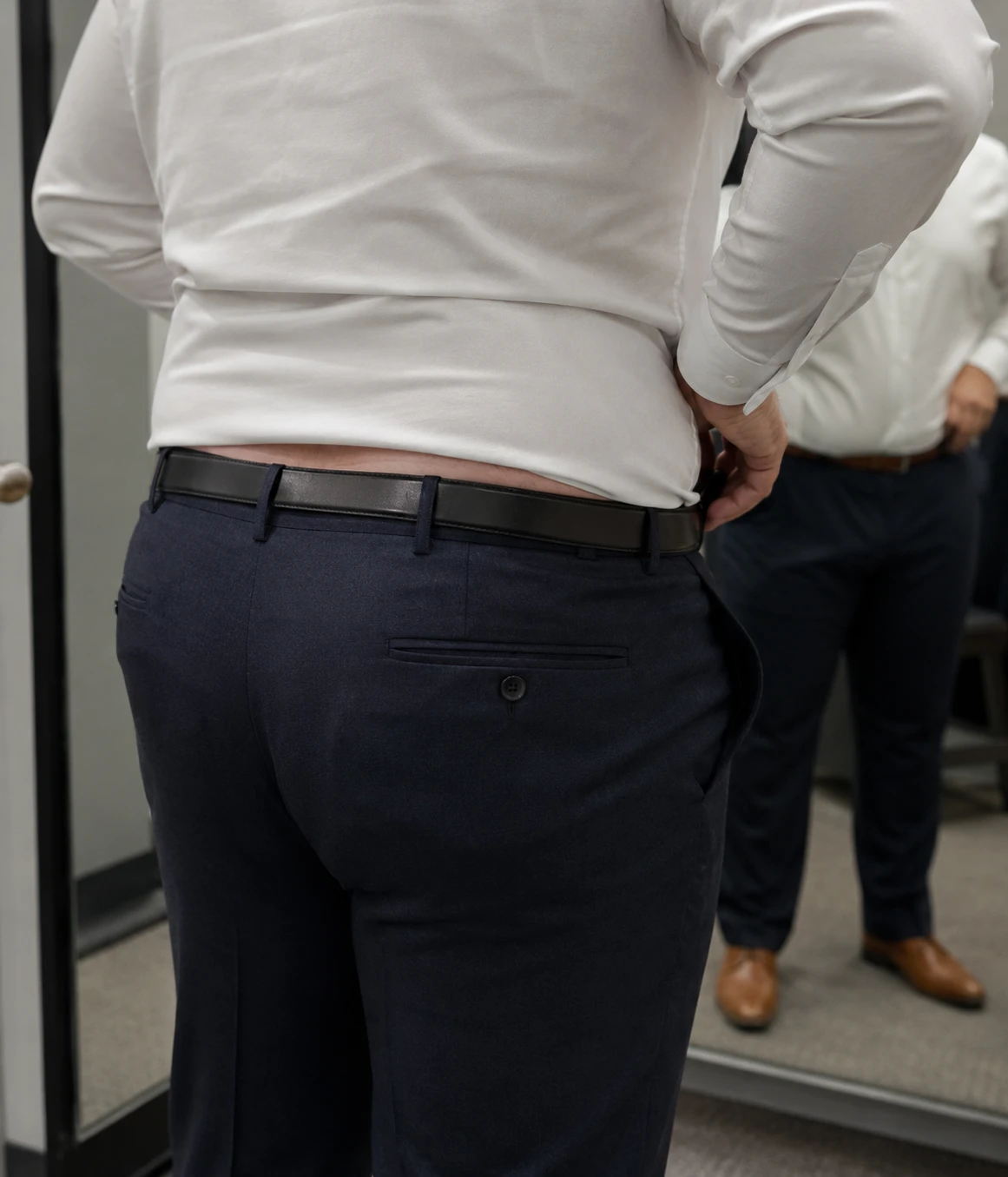
The fastest fix is usually the one that matches the size of the gap, not the one that looks easiest online. Put the pants on first. Stand how you normally stand, without sucking in your stomach or pulling the waistband tight.
Then sit down in a chair. Notice what changes at your belly, seat, and crotch. After that, stand again and pinch the extra fabric at the back waistband with two fingers, like you are showing a tailor how much needs to come in. A small gap, about the width of one or two fingers, may only need a better belt position or a button moved tighter.
Moderate gaps can often be helped with side elastic or an inside waistband adjuster, as long as the fabric still lies smooth. Larger gaps, dress pants, or pants you want to look clean from behind are usually worth taking to a tailor because the seat and waistband may both need shaping. Sit one more time before you decide.
| Waist Gap Size | What It Looks Like | Best Fix | What to Watch For |
|---|---|---|---|
| Small (1–2 fingers) | Slight opening at back waistband | Belt adjustment or button reposition | Should still feel natural when sitting |
| Moderate (2–4 fingers) | Noticeable gap that lifts at back | Side elastic or waistband adjuster | Avoid pulling too tight on stomach |
| Large (4+ fingers) | Clear gap, waistband not hugging back | Tailor adjustment | Seat and crotch comfort must stay balanced |
Solution 1: Take the Waist and Seat In When the Pants Are Worth Keeping
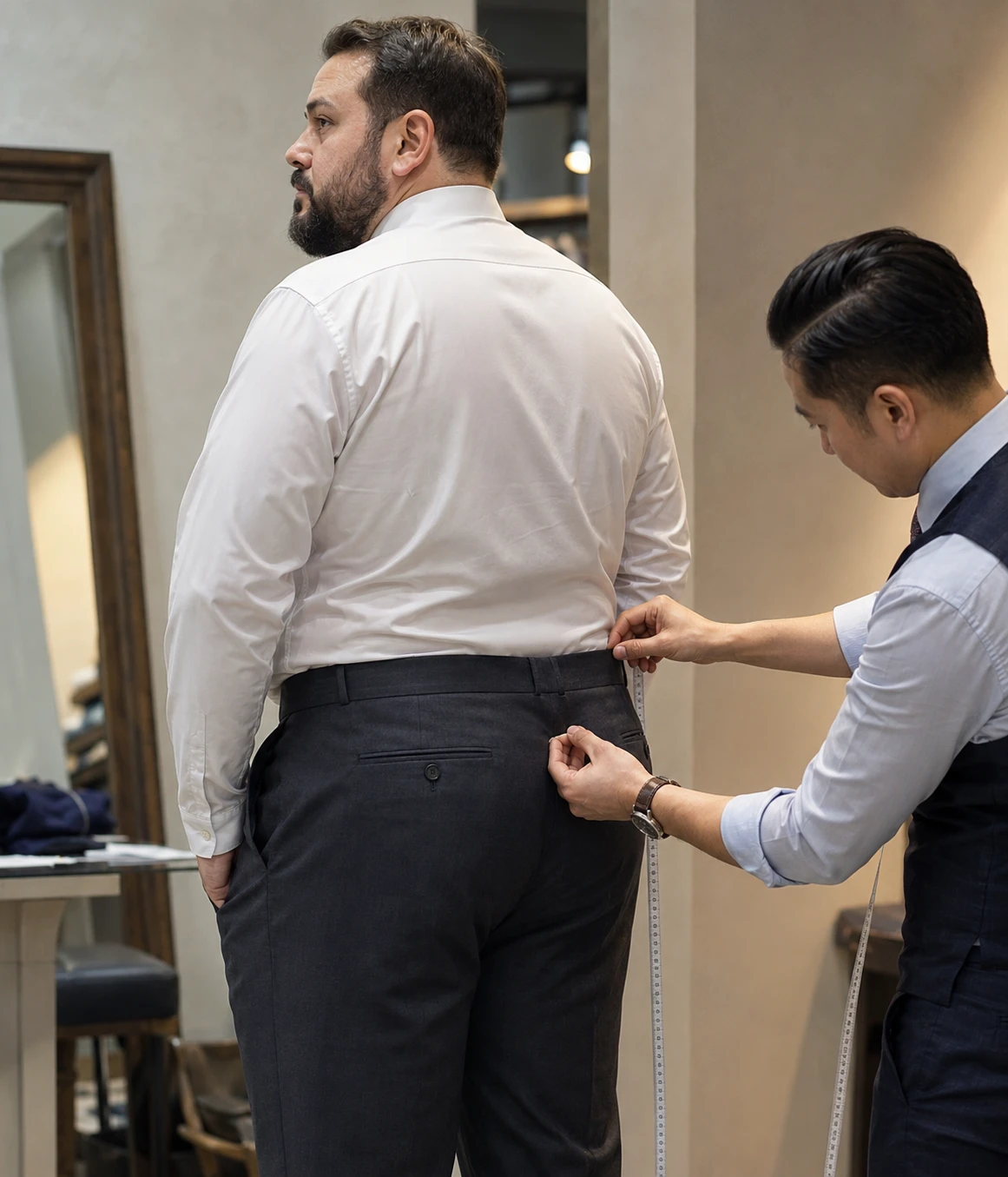
A tailor can permanently close that gap by opening the back of the waistband, removing excess fabric, and resewing the seam so the waist fits your body properly. This is not a simple hem job. The work involves reshaping the entire back waist area, which is why the result looks clean and holds up over time.
When you visit a tailor, use the right words. Ask for a “waist intake” or “waist and seat adjustment.” Saying “make it smaller” leaves too much room for error. Being specific tells the tailor exactly where the problem lives.
- Best pants for this fix: Dress pants, chinos, structured trousers, and quality denim you wear at least once a week are worth the investment.
- Cost you can expect: Most tailors charge between $20 and $50 for a waist intake. Shops in larger cities may charge more. Always ask for a quote before leaving the pants.
- When to skip it: Cheap jeans under $30 are rarely worth altering. If the gap is more than 2 inches, reshaping alone may not properly fix the fit. Pants already tight in the thighs create a new problem if you pull the waist in further.
- What the tailor actually does: They open the waistband at the back seam, remove the excess fabric panel, and restitch everything so the shape follows your natural waist-to-hip ratio.
Solution 2: Add Hidden Back Elastic When Your Waist Changes During the Day
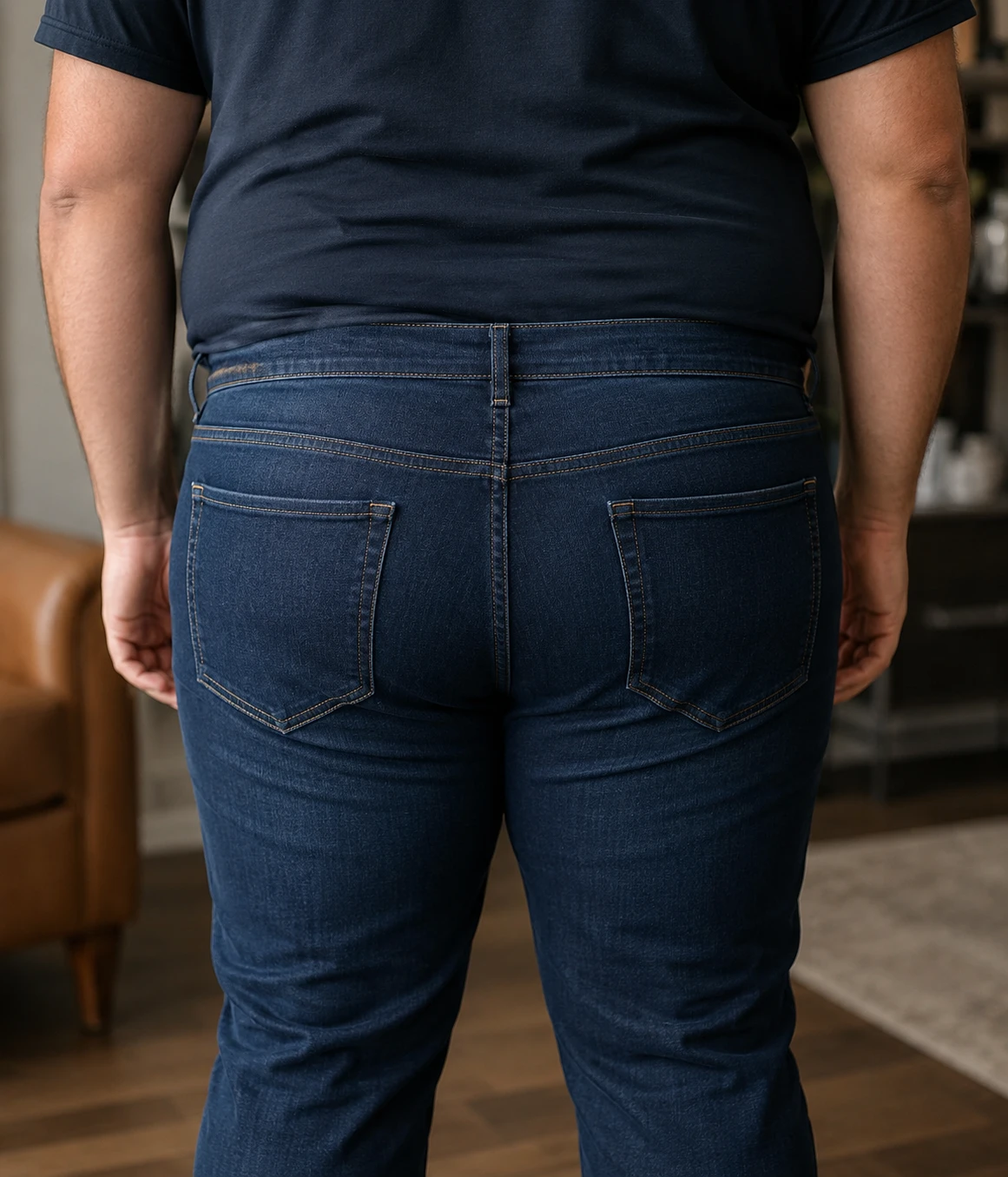
Your waist size shifts throughout the day, and that gap appears worst after lunch or long hours of sitting. Hidden back elastic fixes this without touching the outside of your pants at all.
What this method solves:
- Pulls the back waistband inward so the gap closes flat against your skin
- Stretches when you sit, eat, or move, then contracts back when you stand
- Stays completely invisible from the outside
- Works on most casual pants without professional tailoring
How to do it:
- Turn your pants inside out and locate the back waistband lining
- Use a seam ripper to open two small holes, one on each inner side of the back waistband
- Cut a piece of 1-inch-wide elastic slightly shorter than the gap width
- Thread the elastic through both openings using a safety pin as your guide
- Pull the elastic until the back waistband sits flat and snug against your body
- Stitch or pin both ends of the elastic securely inside the waistband
- Hand-stitch or use fabric glue to close both small openings
Best pants for this fix:
- Everyday jeans with some fabric thickness
- Casual chinos and cotton trousers
- Work pants and khakis
- Joggers or pants with an existing partial elastic waistband
Skip this method on formal dress pants or suit trousers. The waistband on those is structured and thin, which makes threading elastic through difficult and can cause visible bunching on the outside fabric. Once you feel how well the back sits flat on your first pair, you will want to do this to every casual pair of pants you own.
Solution 3: Use an Adjustable Jean Button When You Need the Gap Fixed Today
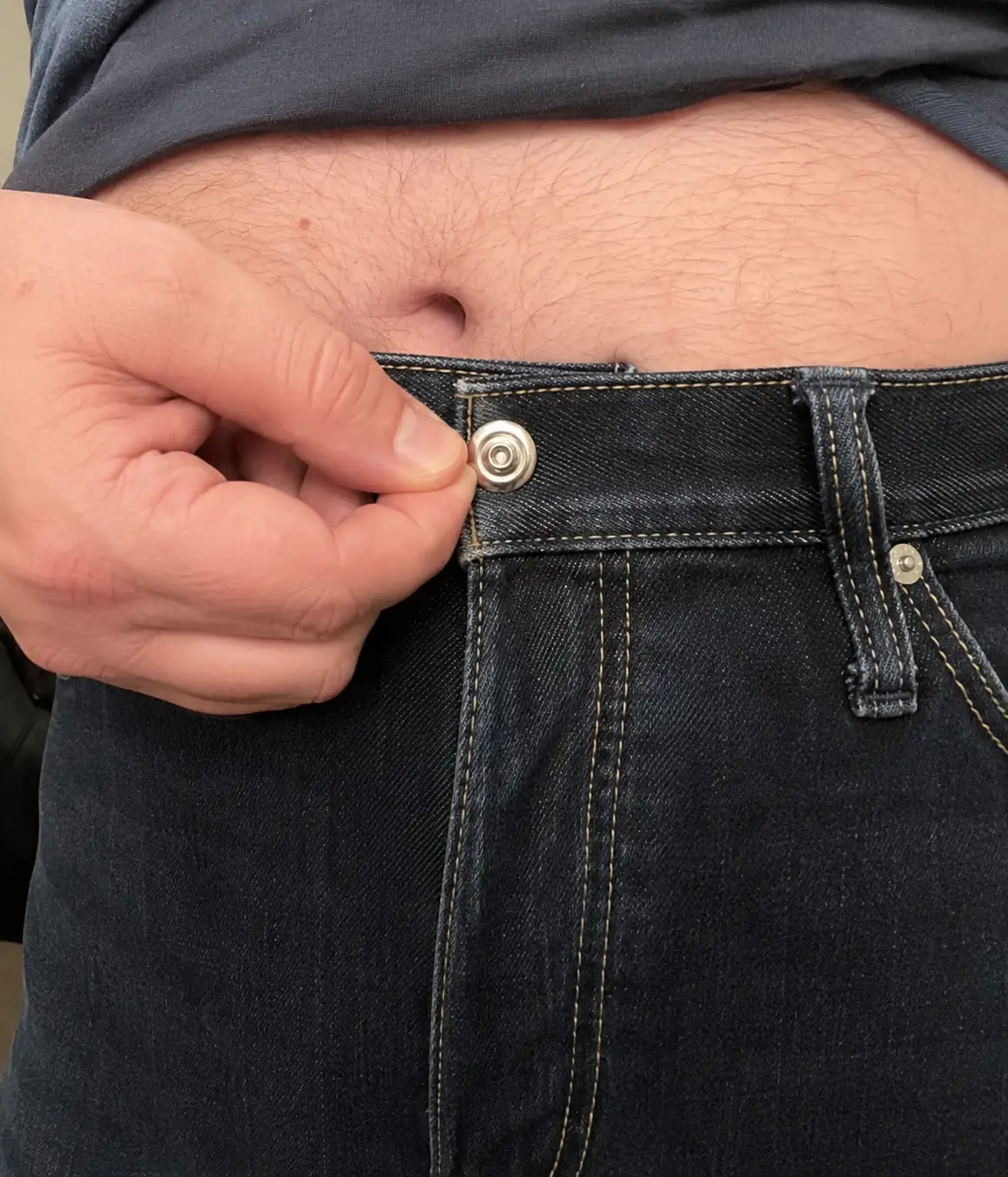
When your waistband is sitting an inch or so too loose, that is often all the fix you need. These small metal buttons come with a sharp tack on the back. You press the tack through the waistband fabric, then snap the button face onto it. No sewing. No tools beyond your fingers or a flat surface to press against.
The key move is placement. Do not replace the old button in the same hole. Instead, position the new button slightly closer to the center of the waistband, moving it inward by half an inch to a full inch depending on how much slack you are dealing with. That shift pulls the waistband tighter when you fasten it.
Heavy denim and canvas pants respond best to this fix because the fabric is stiff enough to hold the tack securely without tearing or warping around the insertion point.
Honest drawbacks you should know before you try it:
- The fly can shift slightly off-center once the waistband pulls tighter
- Front fabric may bunch near the button closure, especially on thinner denim
- The back waistband stays exactly as it was, so the gap behind you does not close the same way tailoring or elastic would fix it
- The tack can loosen over time with repeated wear and washing
This solution works best as a bridge fix while you arrange something more permanent, or when you need the pants to fit well for one specific day.
| Adjustable Jean Button | |
|---|---|
| Cost | Under $5 |
| Time to Fix | 2 minutes |
| Sewing Needed | No |
| Best For | Heavy denim, canvas pants, minor looseness |
| Closes Back Gap | No |
| Risk | Fly shift, front bunching |
| How Long It Lasts | Temporary to medium-term |
| Skill Level | Beginner |
| Tools Needed | None |
| Best Use Case | Quick fix for one day or short-term wear |
6 Ways to Fix the Back Waist Gap on Pants for Plus-Size Men
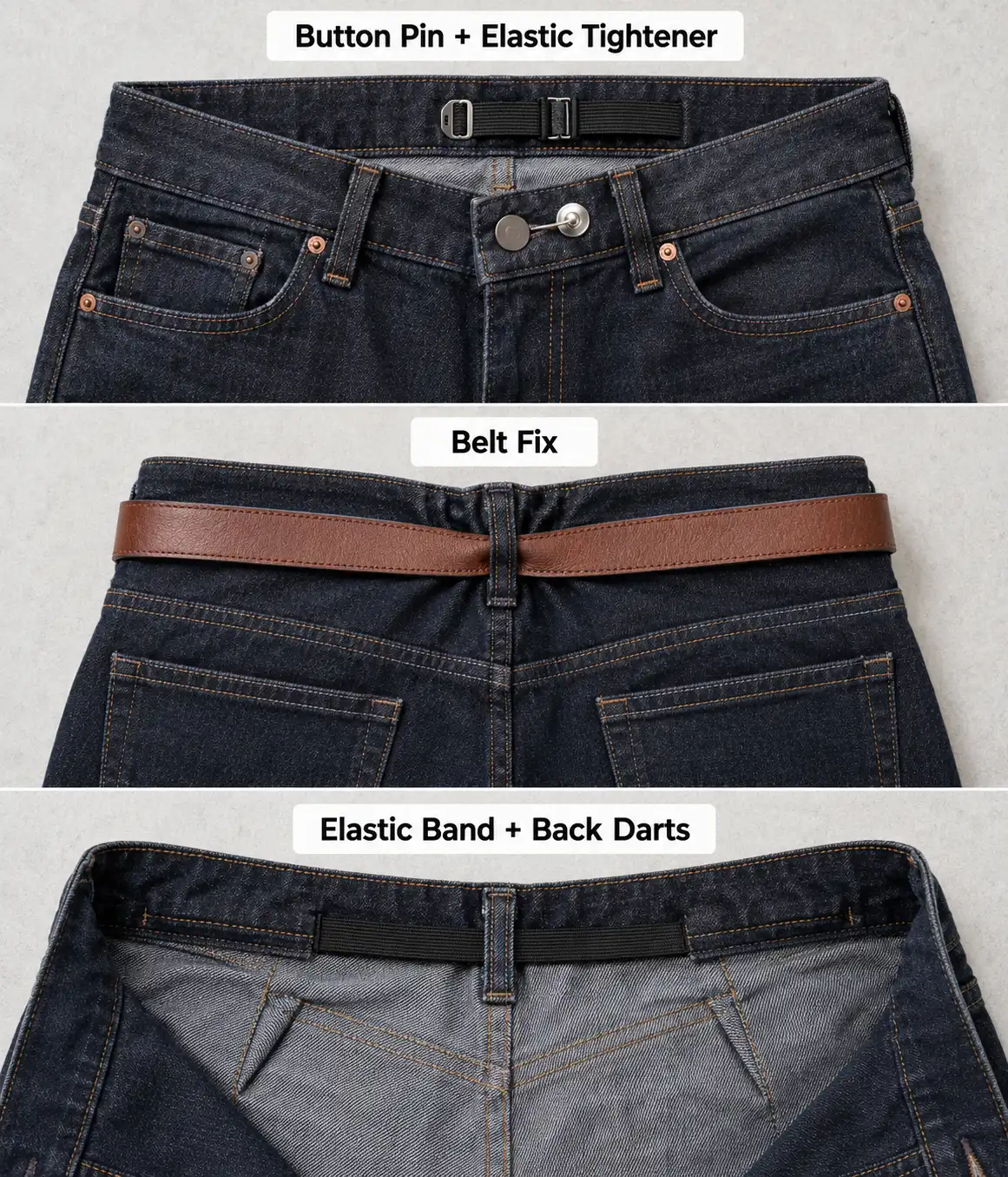
Temporary & No-Sew Fixes
Elastic Waist Tighteners
Clip adjustable elastic bands inside your waistband along the back panel. The elastic pulls the fabric inward and holds it taut against your body. Cost runs between $3 and $8. Takes about five minutes with zero sewing. Works on most pant styles and partially closes the back gap. The one downside is the band can roll or shift inside the waistband after a few wears.
Button Pins
Snap a removable metal button tack through your waistband fabric, placing it one to two inches inward from your original button. That inward shift pulls the front waistband tighter when you fasten it.
Total cost is under $5 and the fix takes about two minutes. Heavy denim and canvas hold the tack best. Watch for slight fly shifting or front fabric bunching once the waistband pulls in.
The Belt Loop Tuck
Thread your belt through the back center loop, pull it firm, then loop it back around to gather the extra fabric behind you. Free to do and takes under a minute. Good for a single-day emergency fix when nothing else is available. The gathered fabric can be visible from outside, so this works better under untucked shirts or jackets.
Simple Sewing Fixes
The Elastic Band Method
Cut a small slit on the inside of your back waistband, thread one-inch elastic through the full length, anchor both ends with a few tight stitches, then sew the slits closed. Cost is $2 to $5 for the elastic.
Takes between 20 and 30 minutes with basic sewing skills. Closes the back gap fully and holds up long-term through regular washing. Thread the elastic evenly or the waistband will pucker and pull unevenly.
Back Darts
Pinch the extra fabric at the back yoke into two equal triangle folds, one on each side. Pin them flat, then sew straight down the inside of each fold to taper the waist permanently. Costs almost nothing if you already have thread and a needle.
Plan for 30 to 45 minutes depending on your comfort with a needle. Closes the back gap completely and gives a clean shaped fit. Uneven darts on both sides can look worse than the original gap, so take your time measuring both folds equally before sewing.
Professional Alterations
Tailor Take-In
A skilled tailor removes your waistband, cuts the excess fabric from the center back seam, and reattaches the waistband cleanly. The result is a custom fit shaped specifically to your body, with the back gap fully closed and no bunching anywhere.
Most tailors charge between $15 and $30 for this alteration depending on your location and the fabric type. Worth every dollar on pants you wear regularly or paid good money for. Finding a tailor who works with plus-size bodies and understands fit through the seat and thighs makes the result significantly better.

Hello there! I’m Jesse Joe, the author and editor behind SolganGenius. I’m thrilled you’ve stopped by, and I can’t wait to share with you the essence of what this platform is all about.
I’m a writer, social media enthusiast, and a firm believer in the power of words. I’ve always been fascinated by how a simple phrase or slogan can capture an emotion, convey a message, and even change perspectives. Learn More