

Retirement can look perfect on paper. Then the paycheck stops, the market falls, the roof leaks, and a medical bill lands in the mailbox.
That is when weak plans begin to break.
The hardest retirement advice is often simple. You cannot spend a portfolio balance. You can only spend the income that balance can support after taxes, inflation, market losses, and health costs.
These eleven retirement planning tips are not exciting. They are useful. Each one can help you build a retirement income strategy that works after real life gets involved.
1. Your Retirement Date Is Not More Important Than Your Numbers

Many people pick a retirement date first.
They choose age 60, 62, 65, or 67. Then they try to force their finances to fit that date.
Reverse the order.
Start by finding out how much your life costs. Include housing, food, insurance, transportation, taxes, health care, gifts, travel, repairs, and support for family members.
Do not use your best month as the model. Look at a full year of bank and credit card records. Irregular bills matter because they still come out of your savings.
The U.S. Bureau of Labor Statistics reported that the average household spent $78,535 in 2024. Housing and transportation made up more than half of total spending. Your numbers may be much lower or higher, but those categories show why a rough estimate is dangerous.
Next, list every dependable source of income:
- Social Security
- Pension payments
- Rental income
- Annuity income
- Part time work
- Planned investment withdrawals
The difference between your expected spending and dependable income is the amount your savings must cover.
Try living on that budget for six months before you retire. Save the rest of your paycheck.
This test will show you more than a calculator can. You may discover that retirement is affordable now. You may also find that one more working year would make the plan much safer.
2. Saving More Helps More Than Chasing a Perfect Investment

When people feel behind, they often look for an investment that can fix everything.
That search can push them into expensive funds, concentrated stock bets, untested products, or schemes promising high returns with little risk.
A higher savings rate is less exciting. It is also something you can control.
For 2026, the Internal Revenue Service allows eligible workers to contribute up to $24,500 to many workplace retirement plans. The general catch up contribution for people age 50 or older is $8,000. Workers who turn 60 through 63 during the year may qualify for a higher $11,250 catch up amount in eligible plans.
The 2026 contribution limit across traditional and Roth individual retirement accounts is $7,500. People age 50 or older may contribute an additional $1,100, subject to income and eligibility rules.
You do not have to reach the maximum to make progress.
Try these steps:
- Contribute enough to receive the full employer match.
- Increase your contribution after each raise.
- Send part of every bonus into retirement savings.
- Automate transfers so the money moves before you spend it.
- Review investment fees once a year.
Do not raise investment risk simply because you started late. More risk can produce higher returns, but it also increases the chance of a large loss. Investor.gov warns that every investment carries some degree of uncertainty and possible financial loss.
A boring plan that you follow is often more useful than a clever plan you abandon.
3. Claiming Social Security at 62 Can Be an Expensive Decision

Social Security retirement benefits can usually begin at age 62.
That does not make 62 the best claiming age.
The Social Security Administration says your monthly amount is based on your work record and the age when you claim. Waiting generally raises the payment until age 70. There is no further increase for delaying beyond age 70.
Claiming early may still make sense when:
- You need income now.
- Your health is poor.
- You have limited savings.
- You cannot continue working.
- A household strategy supports an early claim.
Waiting may deserve more attention when:
- You expect a long life.
- You are still working.
- You have other income available.
- You are the higher earning spouse.
- You want a larger guaranteed monthly payment later.
Do not make this decision using a simple break even age alone.
Think about taxes, investment withdrawals, survivor income, health, family history, and the effect on your spouse. A larger benefit for the higher earner may later support the surviving spouse.
Working while claiming early also needs care. Social Security applies an earnings test before full retirement age. Different limits apply depending on whether you reach full retirement age during that calendar year.
Use your official Social Security account to compare estimates at several claiming ages.
This is one of the largest retirement income decisions many households will make. Give it more than ten minutes.
4. Your Spending Plan Matters More Than Your Savings Goal

People love round retirement numbers.
One million dollars sounds safe. Two million sounds safer.
But an account balance cannot tell you whether your plan works.
A person spending $45,000 a year may have more security than someone spending $120,000 with twice as much saved. The amount leaving the accounts matters as much as the amount inside them.
Divide retirement spending into three groups.
Essential costs
These keep your household running:
- Housing
- Food
- Utilities
- Basic transportation
- Insurance
- Health care
- Taxes
Flexible costs
These improve your life but can be reduced for a time:
- Travel
- Restaurants
- Entertainment
- Gifts
- Home upgrades
Irregular costs
These do not arrive every month, which makes them easy to forget:
- Car replacement
- Major dental care
- Roof repairs
- Appliance replacement
- Family emergencies
Bureau of Labor Statistics data show why the large categories deserve attention. Housing averaged 33.4 percent of total household spending in 2024, while transportation averaged 17 percent.
Cutting a few coffees will not solve a plan with an oversized house, two costly vehicles, and expensive insurance.
Start with the big bills.
Then review spending every year. Inflation, health, family needs, and lifestyle changes can all make the original budget less useful.
5. The First Bad Market Can Damage a Weak Withdrawal Plan
A market fall early in retirement can hurt more than the same fall later.
This is called sequence of returns risk.
The problem is not simply that investments decline. The deeper problem comes when you must sell shares during the decline to pay your bills.
Those shares are no longer invested when the market recovers.
Morningstar’s retirement income research for 2026 estimates a 3.9 percent starting withdrawal rate for retirees seeking steady, inflation adjusted spending over a 30 year period under its base assumptions. The firm also makes clear that the right rate depends on the portfolio, spending method, time period, and desired ending balance.
That number is research, not a promise.
A fixed withdrawal rule can become risky when:
- Retirement lasts longer than expected.
- Spending rises faster than planned.
- The portfolio has heavy fees.
- Large losses occur early.
- The retiree refuses to reduce optional spending.
A stronger plan can include:
- Cash for near term bills
- High quality bonds for medium term needs
- Stock funds for longer term growth
- A rule for cutting flexible spending after major losses
- A yearly review of the withdrawal amount
You do not need to panic during every market decline.
You do need a plan for where next year’s spending will come from before the decline happens.
6. Cash Feels Safe Until Inflation Starts Eating It

Cash does an important job.
It pays bills without forcing you to sell investments during a market decline. It can also cover repairs, deductibles, and other emergencies.
But holding every retirement dollar in cash creates another risk.
Prices tend to rise over time. A dollar that covers a full expense today may cover less ten or twenty years from now.
That time period matters. The Centers for Disease Control and Prevention reported that a 65 year old in the United States had an average remaining life expectancy of 19.7 years in 2024. The average was 18.4 years for men and 20.8 years for women. Many individuals will live longer than those averages.
A retirement plan may therefore need to support spending for two or three decades.
That does not mean every retiree should own the same stock percentage.
Your mix should reflect:
- How much income you need from investments
- How steady your pension or Social Security income is
- How much loss you can afford
- How much loss you can emotionally tolerate
- How long the money may need to last
Keep money needed soon in safer places. Invest longer term money with growth and inflation in mind.
The right balance is the one that lets you pay bills, sleep at night, and stay invested through difficult periods.
7. Medicare Does Not Make Health Care Free
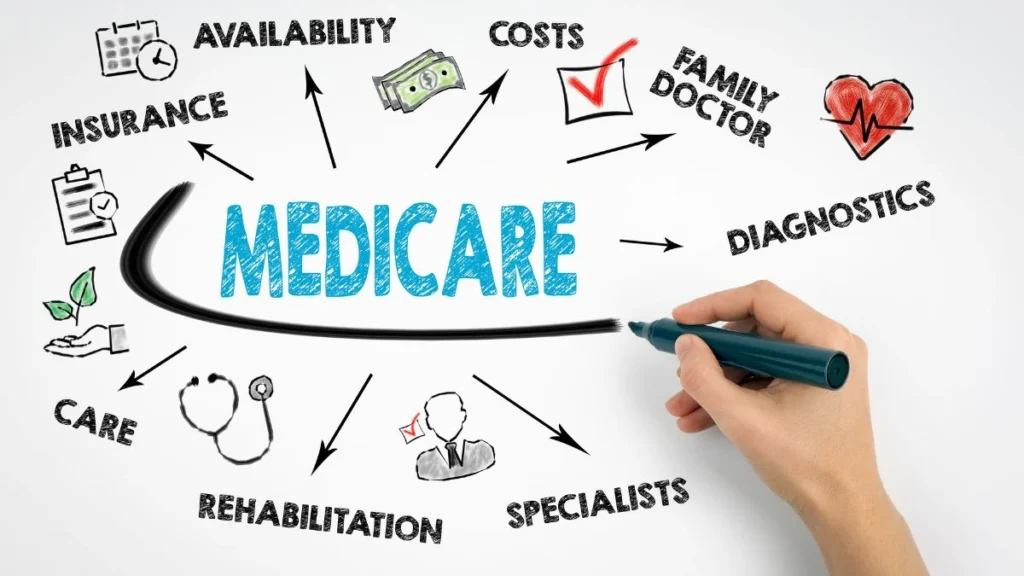
Many retirement budgets treat age 65 as the point when health costs disappear.
They do not.
Most people pay a monthly Medicare Part B premium. The standard Part B premium is $202.90 per month in 2026, though people with higher incomes may pay more.
That is only one part of the cost.
Depending on your coverage, you may also pay for:
- Deductibles
- Copayments
- Coinsurance
- Prescription drug coverage
- A Medicare supplement policy
- Medicare Advantage plan costs
- Dental care
- Vision care
- Hearing services
- Services Medicare does not cover
Your choice of coverage should reflect your doctors, prescriptions, travel habits, local plan network, and ability to handle surprise bills.
Enrollment timing also matters. Medicare warns that people who fail to enroll in Part B when first eligible may face a late enrollment penalty unless they qualify for a special enrollment period. The penalty can continue for as long as they have Part B.
Before retiring, compare the total yearly cost of each health plan. Do not compare premiums alone.
Add expected premiums, drug costs, deductibles, and a reserve for expenses the plan may not pay.
Health coverage is too important to select from a television advertisement.
8. Taxes Do Not Disappear When Your Paycheck Does

Retirement changes your tax return. It does not always shrink it.
Money withdrawn from traditional retirement accounts is generally treated as taxable income. Pension income may be taxable. Part of your Social Security benefits may also be taxable, depending on your total income.
Large withdrawals can create other effects.
They may push more income into a higher tax bracket. They may increase Medicare premiums in a later year. They can also reduce the value of certain deductions or credits.
Traditional individual retirement accounts and many workplace plans eventually face required minimum distribution rules.
The Internal Revenue Service says original account owners generally must begin withdrawals at age 73 under current rules, though details depend on birth year, account type, and employment status.
This can create a planning window after work ends but before required withdrawals begin.
During that period, some households may benefit from:
- Taking planned traditional account withdrawals
- Converting part of a traditional account to a Roth account
- Realizing capital gains at a lower tax rate
- Delaying Social Security
- Using taxable savings for part of their spending
A Roth conversion creates taxable income in the conversion year. It is not automatically a good move.
Run a tax projection first.
The goal is not to pay no tax this year. The goal is to manage taxes across the rest of your life and, where relevant, the life of your spouse.
9. A Paid Off House Can Still Drain Your Retirement

A mortgage free home feels like financial security.
It can be. But it is not free housing.
You may still pay:
- Property taxes
- Home insurance
- Utilities
- Association fees
- Lawn and garden costs
- Repairs
- Appliance replacement
- Accessibility upgrades
Some of these expenses rise even when your income does not.
Home repairs also arrive in clusters. A quiet year can be followed by a failed heating system, roof work, plumbing damage, and a new refrigerator.
Create a home repair fund instead of treating every repair as a surprise.
You can estimate an annual amount based on the home’s age, size, condition, local labor costs, and upcoming projects. Keep that money separate from your normal monthly spending.
Also remember that home equity is not the same as cash flow.
A valuable home may increase your net worth, but it does not pay the grocery bill unless you sell it, borrow against it, or use another equity strategy.
Downsizing can lower costs, but it has its own price. Moving, repairs, agent fees, closing expenses, storage, and new furniture can reduce the expected savings.
Run the numbers before assuming a smaller home will fix the budget.
10. Retirement Without a Purpose Can Feel Like a Loss

Retirement plans often cover money and ignore Monday morning.
Work gives you more than a paycheck. It may provide routine, social contact, goals, status, movement, and a reason to leave the house.
When all of that stops at once, unlimited free time may feel less exciting than expected.
Plan your weekly life before your last day at work.
Ask yourself:
- What time will I get up?
- Who will I see each week?
- Where will I exercise?
- What work or service still feels meaningful?
- Which activities are enjoyable after the first month?
- How much time do my spouse and I expect to spend together?
Test activities while you are still working.
Volunteer twice a month. Take the class. Join the walking group. Start the small business at a limited scale. Spend a week following the routine you expect to have after retirement.
Travel can be part of the plan, but most people do not travel every week.
A strong retirement needs a satisfying ordinary Tuesday, not just an impressive vacation calendar.
11. A Good Retirement Plan Must Survive Change

Your first retirement plan will become outdated.
That is normal.
Markets change. Tax rules change. Insurance prices rise. Spouses die. Adult children need help. Homes become harder to manage. Health needs become more serious.
A good plan expects revisions.
Review these items at least once each year:
- Current spending
- Planned investment withdrawals
- Social Security and pension income
- Investment mix
- Account fees
- Tax estimates
- Medicare and other insurance
- Beneficiary forms
- Will and estate documents
- Emergency contacts
- Housing plans
Widowhood deserves special attention.
A surviving spouse may lose one Social Security payment, while many household costs remain. The survivor may also face different tax brackets, insurance choices, and account duties.
Both partners should know where accounts are held and how bills are paid.
Keep a secure list of:
- Financial institutions
- Insurance policies
- Account contacts
- Monthly bills
- Legal documents
- Trusted advisers
- Digital account instructions
Do not place passwords in an unprotected notebook or open computer file. Use a secure method that a trusted person can access when needed.
The strongest retirement plan is not the one with the most pages. It is the one your household can follow during a stressful week.
The Retirement Advice That Matters Most

Seven years of studying retirement advice leads to one blunt lesson.
You cannot remove every risk. You can stop one risk from destroying the whole plan.
A strong retirement uses several supports. It combines controlled spending, dependable income, reasonable investments, tax planning, health coverage, cash reserves, and a life you actually want to live.
Start with one task this week.
Check your Social Security estimate. Total last year’s spending. Review your Medicare choices. Raise your savings rate. Write down where your spouse can find the accounts.
Good retirement planning does not require one perfect decision. It requires many sensible decisions made early enough to matter.

I’m Austin Becker, an advocate for living life with intention and resilience. I write for men who are actively navigating life’s major transitions, tackling the realities of reinvention and finding renewed purpose with grit and honesty. I believe that personal growth doesn’t have a deadline it’s about continuously gearing up for the chapters that matter most.
Through my work, I aim to strip away the clichés of modern manhood, offering practical, no-nonsense insights on health, mindset, and legacy for those who want to move forward with strength and clarity.