
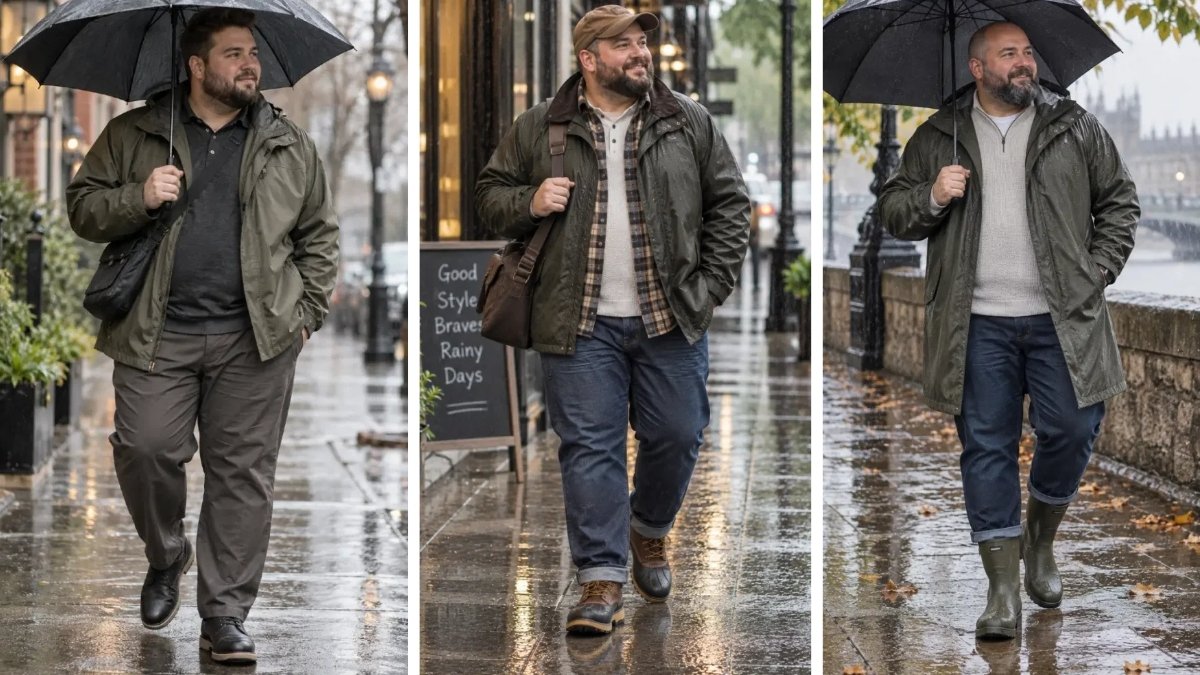
Stepping outside into a downpour shouldn’t mean sacrificing comfort. Raindrops hitting your shoulders feel fine until cheap fabrics stick to your skin. Heavy, clingy clothes make wet weather miserable.
Building a wet-weather wardrobe proves highly practical. Smart layers save you from feeling damp and restricted all day. Mixing sturdy textiles works for busy commuters, weekend errands, and outdoor workers alike.
Build a Rainproof Foundation Smart Layering Strategies
Waterproof shells only work if the base layer cooperates. Mixing synthetic blends with structured mid-layers prevents that dreaded static cling.
Heavier frames benefit from stiff, woven fabrics that hold their shape. Avoiding thin cotton ensures the outfit moves with you instead of wrapping tight against your torso.
1. Olive Shell and Charcoal Base
Crisp Lines for City Commutes
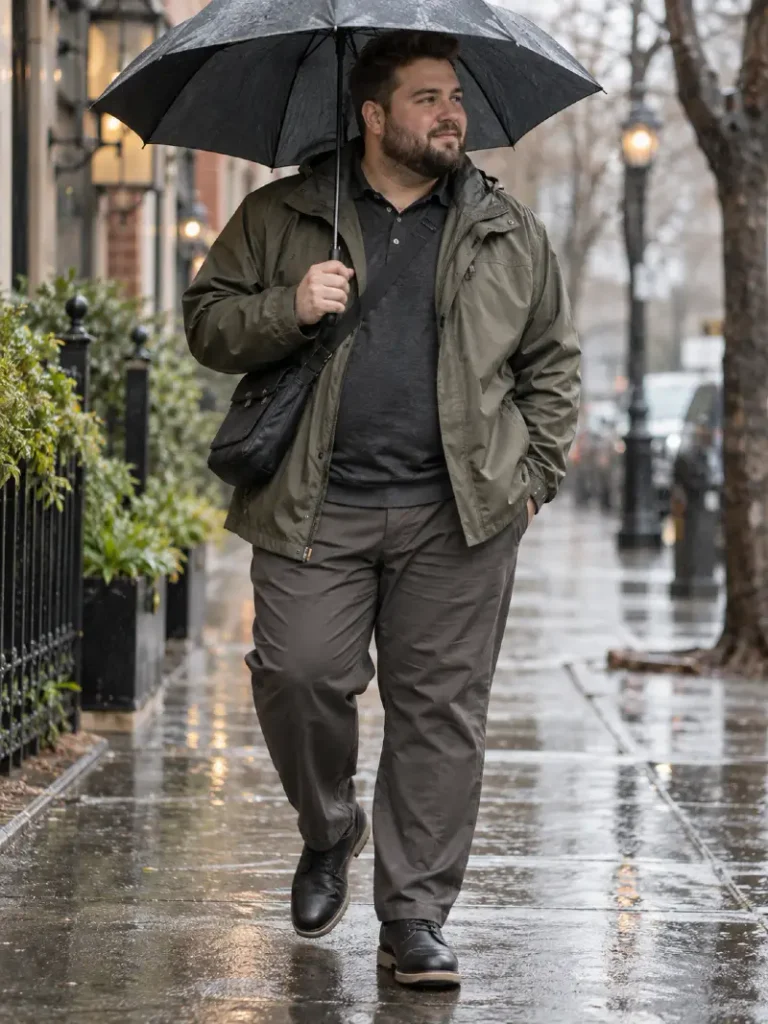
Dark charcoal tones ground the outfit against a wet city backdrop. A crisp olive green jacket stays unzipped to reveal a soft knit polo. Sturdy woven trousers drape cleanly over heavy black leather boots.
Pairing a rigid waterproof shell with a thicker mid-layer guarantees the fabric falls away from your body.
Keeping the jacket open forms a strong vertical line down the center of the chest. Woven utility pants block wind and hold their shape much better than standard cotton chinos. This outfit formula works well for office commuters facing unpredictable morning downpours.
2. Navy Trench and Heavy Knits
Structured Layers for Commuter Comfort
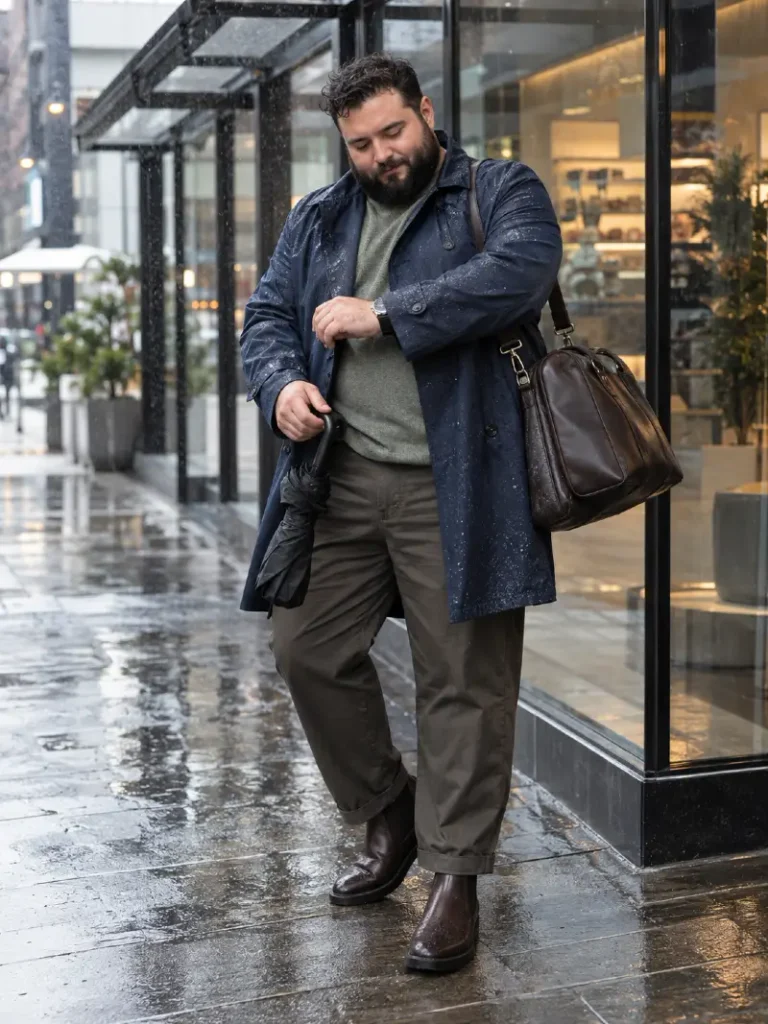
Rain beads directly off the sturdy exterior of a navy trench coat. A soft sage green sweater adds warmth underneath while keeping the silhouette relaxed. Dark olive trousers cuff cleanly above polished brown leather Chelsea boots, matching the rich texture of a leather weekend bag.
Heavy knit mid-layers refuse to stick to your skin even when humidity peaks.
Extending the outer coat past the waistline creates a grounded, protective layer against harsh weather. Cuffed hems keep pant legs out of puddles and stop fabric from soaking upward. Build this durable outfit for long travel days or walking through wet downtown districts.
3. Tan Shell and Rust Base
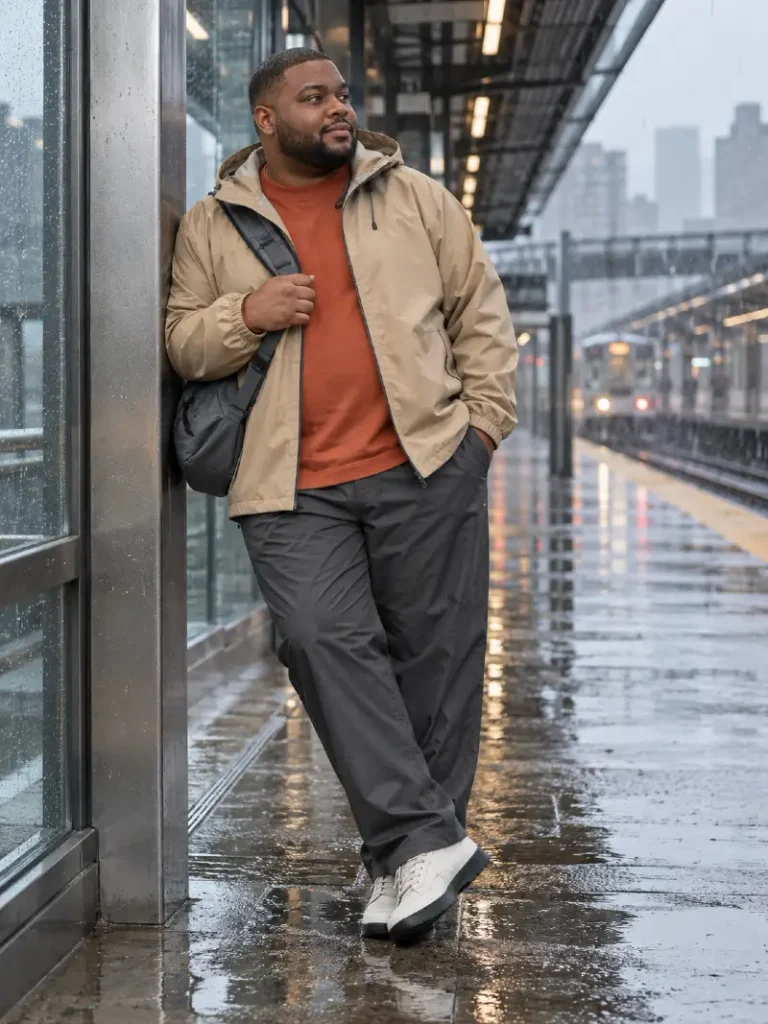
Crisp tan fabric forms a lightweight barrier against the damp station air. A matte rust shirt adds a warm color anchor beneath the unzipped hooded shell. Loose charcoal trousers fall cleanly down to thick white sneakers with heavy black soles.
Contrasting a bright base layer against a neutral shell draws the eye inward and flatters broader frames.
Wide-leg nylon pants create crucial airflow to prevent fabric from clinging to wet skin. Layering an open jacket gives you immediate temperature control during crowded transit delays. Try this color-blocked formula for casual commuter routes or relaxed weekend travel.
Why This Works
Element 1: The rust orange shirt acts as a warm focal point to break up muted outerwear.
Element 2: Roomy technical trousers repel rainwater while maintaining a relaxed, non-clingy drape.
Element 3: Thick-soled sneakers lift the fabric hem safely away from deep station puddles.
4. Dark Teal Coat and Heathered Grey Polo
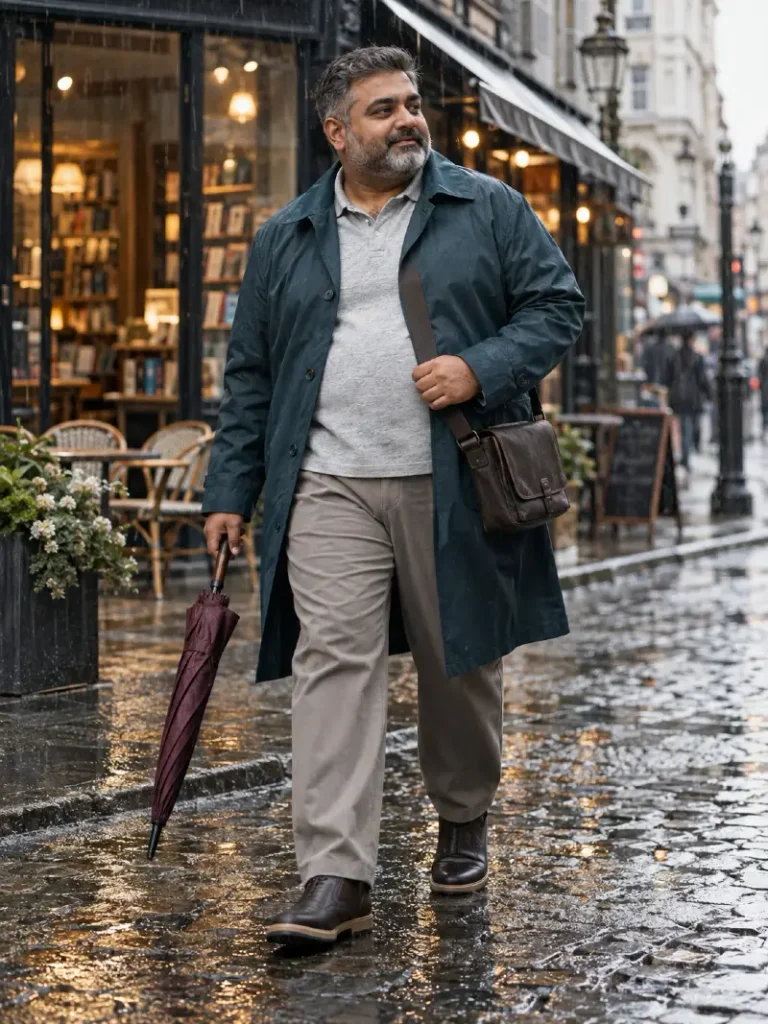
Deep teal waterproof fabric creates a long protective shell against the damp city air. A light grey heathered polo sits comfortably underneath the unbuttoned jacket. Relaxed beige trousers meet thick brown leather boots to complete this grounded walking outfit.
Longer waterproof coats push rainwater well below the waistline to keep your trousers completely dry.
Thick cotton blend polo shirts breathe easily while resisting the urge to wrap around your torso. Carrying a structured leather messenger bag across the chest breaks up a wide front profile. Try this layered approach for weekend errands or walking through wet cobblestone districts.
Quick Styling Tips
- Budget version: Swap a premium waterproof coat for a basic nylon rain shell in deep green.
- Renter tip: Fold and secure long trouser hems with temporary fabric tape instead of paying for permanent tailoring.
- Pro move: Match your wooden umbrella handle to your leather boots for a grounded focal point.
5. Forest Green Shell and Cream Knit
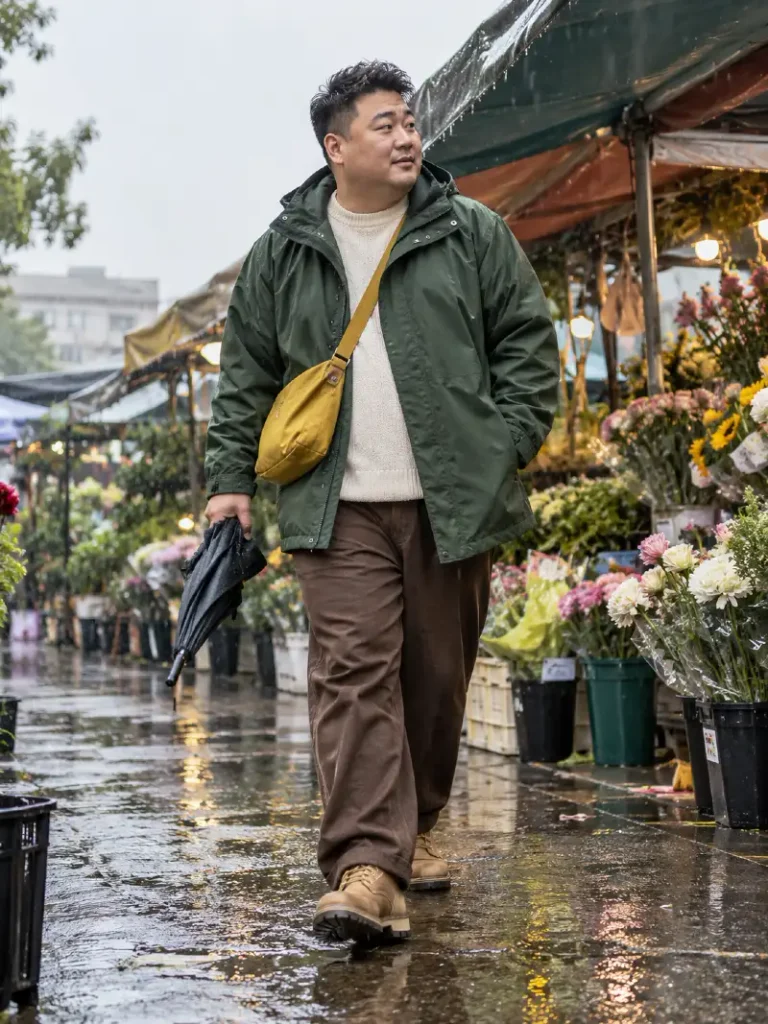
Heavy droplets bounce off a crisp forest green rain jacket worn open over a plush cream sweater. Across the chest, a bright mustard bag cuts diagonally to break up the wide front profile. Loose brown trousers drape cleanly down to sturdy tan work boots.
Pairing a highly textured sweater with a smooth outer shell guarantees zero fabric cling on humid rainy days.
Thick woven pants hold their structure even when damp, avoiding the dreaded wet-leg wrap of thin cotton. Slanting a colorful accessory across your torso draws the eye vertically while keeping your hands free for an umbrella.
6. Mustard Shell and Olive Cargo Pants
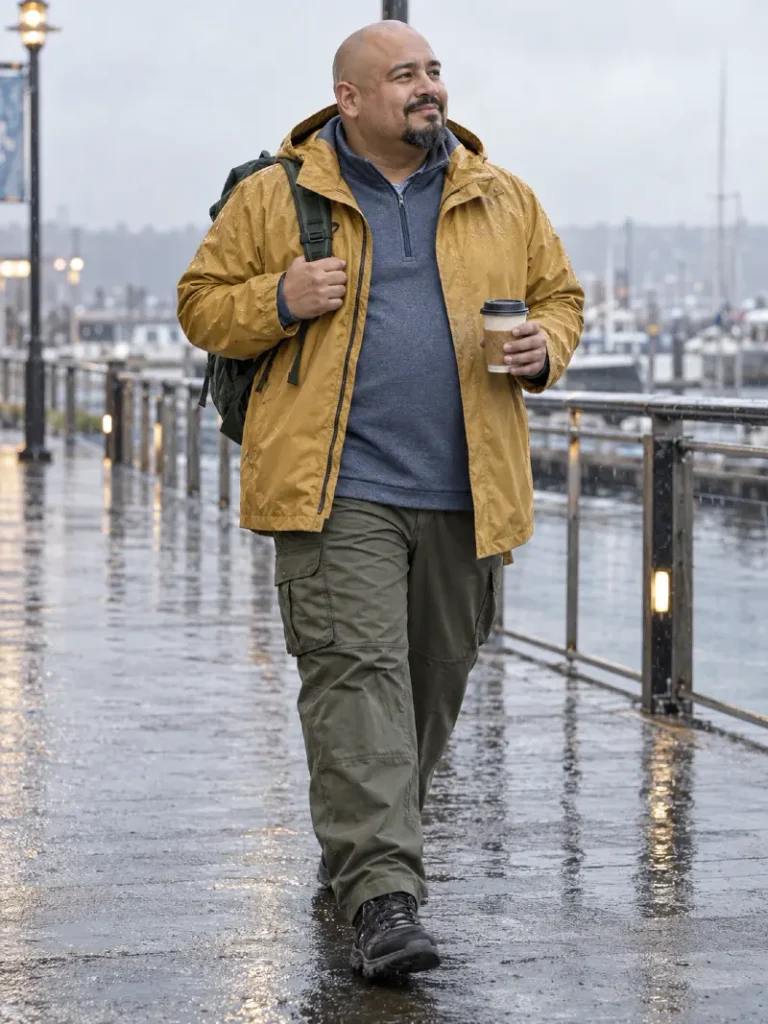
Raindrops bead off a bright mustard yellow shell, cutting through the grey boardwalk morning. A soft blue half-zip fleece sits underneath, offering thick insulation against the damp chill. Sturdy olive green cargo pants drape generously over heavy dark hiking boots.
Thick fleece mid-layers push the outer shell away from your body to eliminate sticky moisture buildup.
Cargo pants built from heavy woven fabrics hold their shape well against the wind. Unzipping the fleece neckline lets you vent heat quickly during an active morning walk. Wear this high-contrast utilitarian mix for coastal weekend trips or early coffee runs.
7. Beige Trench and Olive Knit
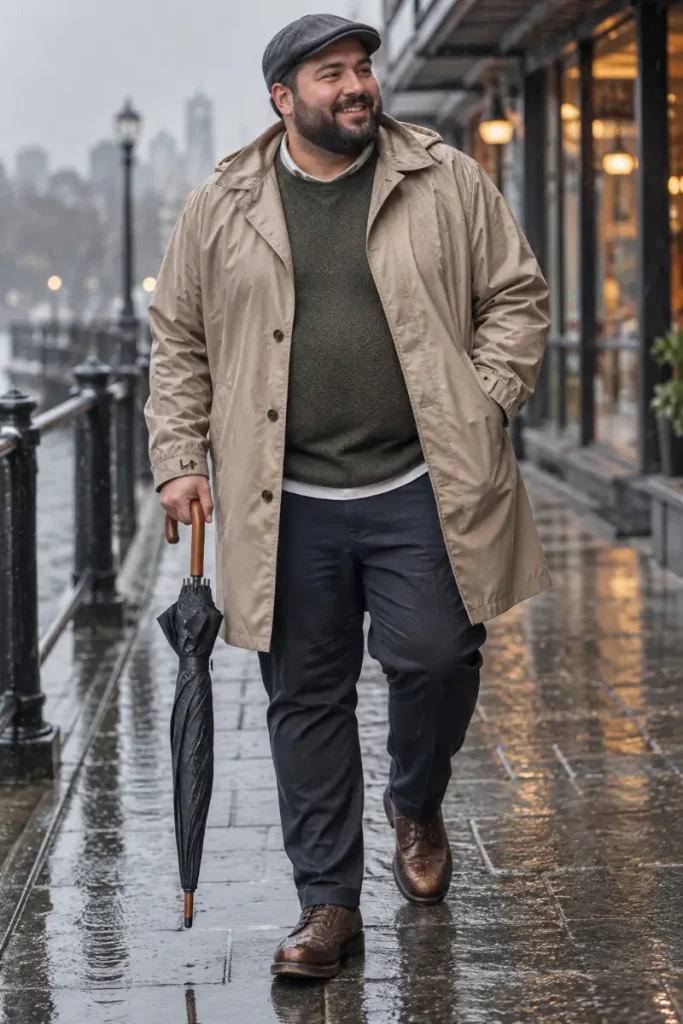
Thick beige fabric forms a long protective barrier against the cold city rain. A plush olive sweater adds vital insulation over a crisp white cotton base. Dark woven trousers fall straight past the ankle to meet heavy brown leather brogue boots.
Letting a white base layer peek out breaks up heavy dark blocks of color on a larger frame.
Longer coats push rainwater away from your waistline and thighs. Chunky knits create natural breathing room between your skin and the waterproof shell. You stay completely dry without feeling trapped in rigid fabrics. Try this layered formula for brisk morning walks or outdoor weekend markets.
Quick Styling Tips
Budget version: Source a thick wool sweater from a local vintage shop to build cheap texture.
Renter tip: You cannot control your apartment building radiators, so wearing a removable sweater prevents you from overheating indoors.
Pro move: Add a grey flat cap to keep rain off your face while maintaining a sharp profile.
8. Olive Shell and Khaki Cargo Pants
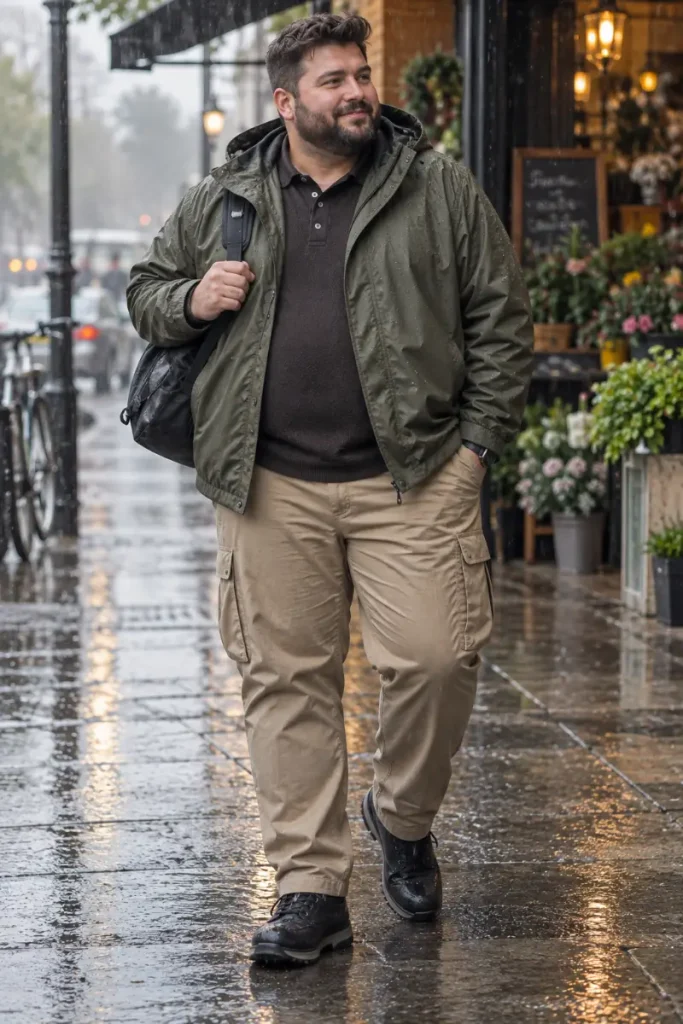
Rain glosses over a crisp olive green shell worn open down the front. A soft espresso brown polo shirt brings rich texture beneath the smooth outer layer. Heavy khaki cargo pants drop cleanly over thick black leather shoes.
Contrasting a dark shirt against a light jacket creates a strong vertical line that flatters broader frames.
Woven canvas cargo pants refuse to cling to wet legs during heavy downpours. Slinging a black backpack over one shoulder keeps your hands completely free. Wear this grounded color combination for busy morning commutes or casual weekend errands.
9. Navy Shell and Plaid Flannel
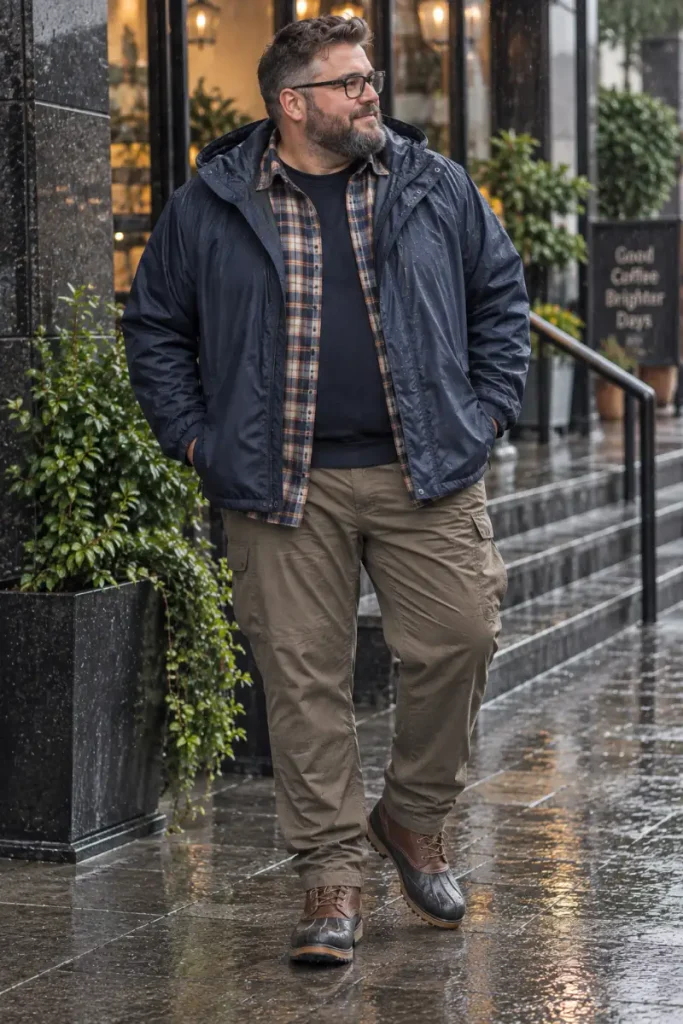
Rain hits a dark navy windbreaker acting as a protective canopy. A soft plaid flannel adds warm earth tones over a solid dark base. Sturdy olive cargo pants anchor the look above thick rubber boots.
Layering patterned fabrics between solid colors builds structural depth without causing sticky bulk.
Heavy rubber footwear acts like weatherstripping against deep street puddles. Leaving the flannel unbuttoned creates vital airflow around your chest. Use this durable arrangement for morning coffee runs or damp outdoor chores.
Why This Works
Element 1: The open flannel functions as a firm middle layer to stop the waterproof shell from clinging. Element 2: Roomy cargo trousers offer necessary breathing room similar to an open floor plan. Element 3: Rubber base boots seal out rainwater while grounding the entire color palette.
10. Olive Coat and Cuffed Denim
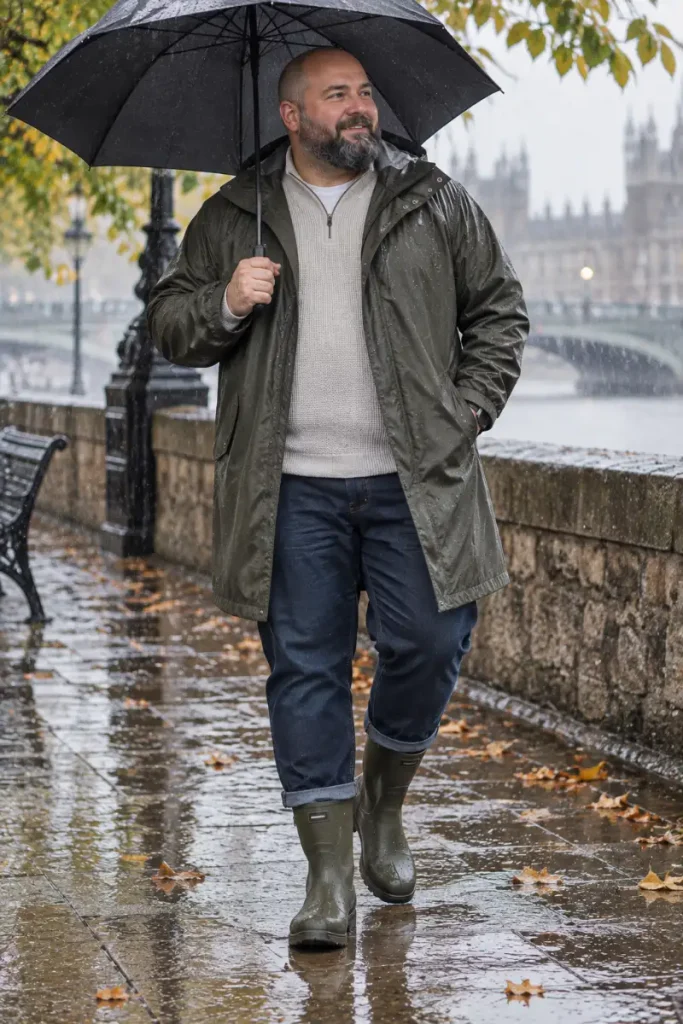
Rain streaks across a long olive green coat worn open against the autumn chill. A heavily textured cream sweater zips at the collar over a crisp white base layer. Dark indigo denim falls straight down to meet thick olive rubber boots.
Matching your footwear to your outerwear creates a grounded visual frame that anchors the whole look.
Thick denim acts like heavy upholstery fabric, resisting wind and holding its shape in damp weather. Rolling the hem creates a clear break above the rubber boots to stop water from wicking upward. Try this robust outdoor layering strategy for brisk city walks or muddy park trails.
Quick Styling Tips
- Budget version: Find a heavy-duty half-zip knit sweater at a local vintage shop to build cheap, rugged texture.
- Renter tip: Secure your rolled denim cuffs with double-sided fabric tape instead of paying a tailor for permanent alterations.
- Pro move: Coordinate the color of your rain boots directly with your outer shell to bookend the outfit.
11. Yellow Shell and Black Hoodie
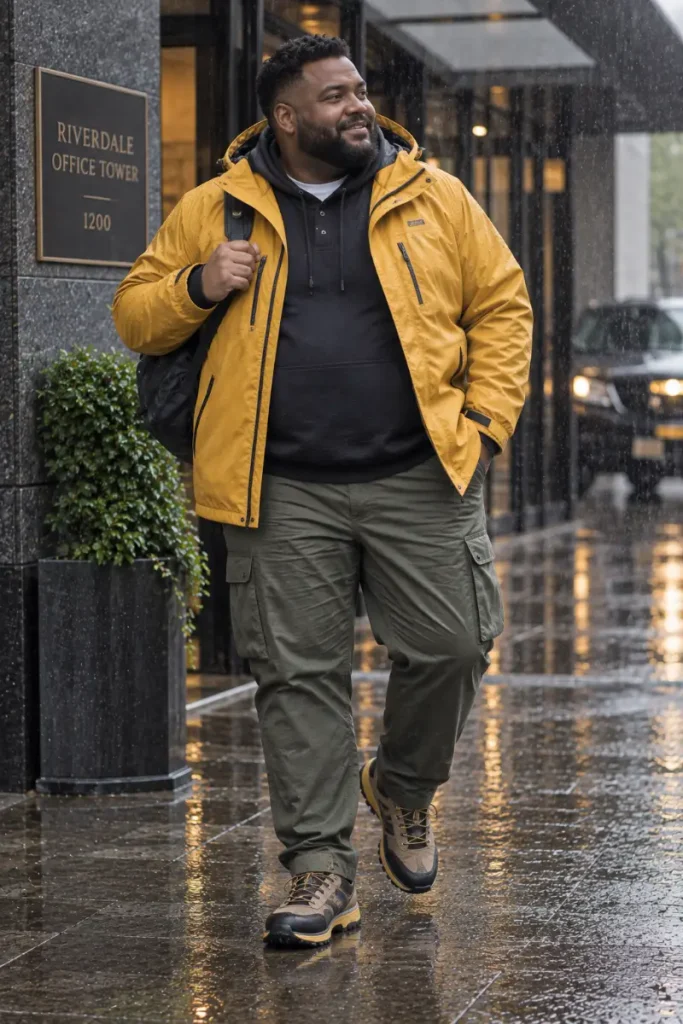
Rain bounces off a crisp yellow outer shell that cuts sharply through the grey downtown environment. Underneath the unzipped waterproof jacket, a plush black hoodie absorbs the morning cold. Sturdy olive green cargo pants break cleanly over thick two-tone hiking sneakers.
Anchoring a bright outer shell with a dark core creates a structured vertical line that visually grounds broader frames.
Heavy cotton hoodies provide essential structural support similar to thick upholstery backing. This dense fabric pushes the waterproof layer outward to stop damp materials from clinging to your torso. Slinging a dark backpack over one shoulder maintains vital airflow across the chest. Try this high-contrast utility formula for casual office commutes or wet weekend errands.
12. Charcoal Shell and Burgundy Crewneck
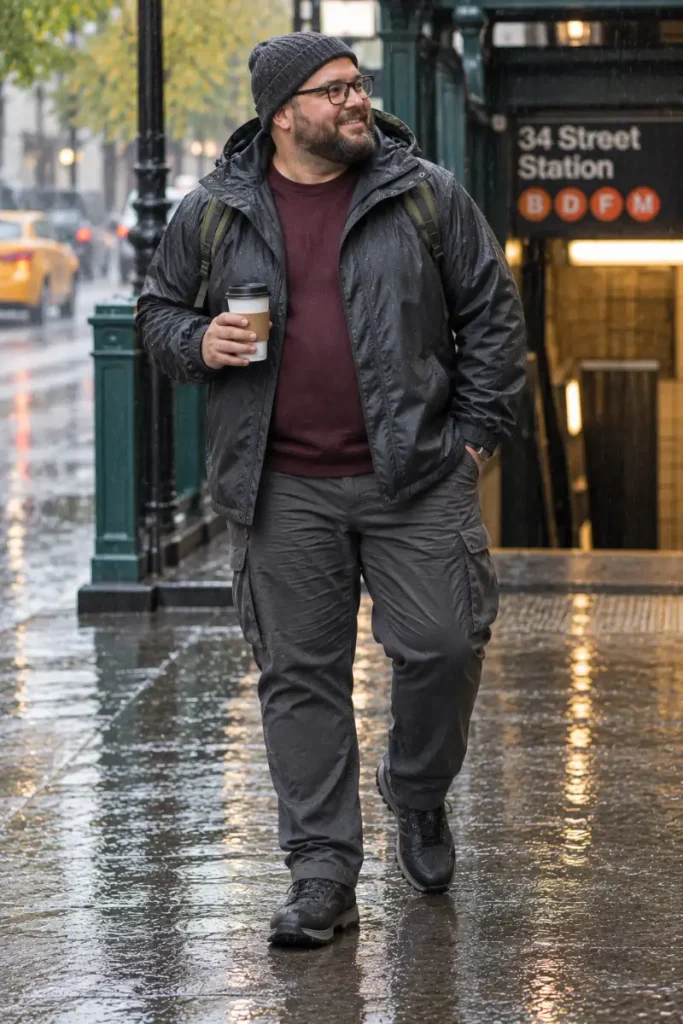
Rain streaks across a dark charcoal waterproof jacket worn open against the cold city morning. A thick burgundy crewneck sweater provides a warm central anchor beneath the smooth outer layer. Storm grey cargo trousers drop cleanly over heavy black walking shoes.
Grounding dark outerwear with a rich color core creates visual depth without adding bulky materials.
Heavy knit sweaters function like thick rug padding beneath your protective shell. This dense fabric pushes the smooth nylon outward to stop wet materials from sticking to your body. Adding a textured grey beanie seals in heat while breaking up the solid dark blocks of the jacket.
Why This Works
Element 1: The plush burgundy sweater acts as a warm focal point against muted grey city tones.
Element 2: Roomy cargo trousers offer necessary breathing space similar to an open room layout.
Element 3: A textured knit cap introduces contrasting material to soften the slick waterproof fabrics.
13. Olive Field Jacket and Layered Plaid
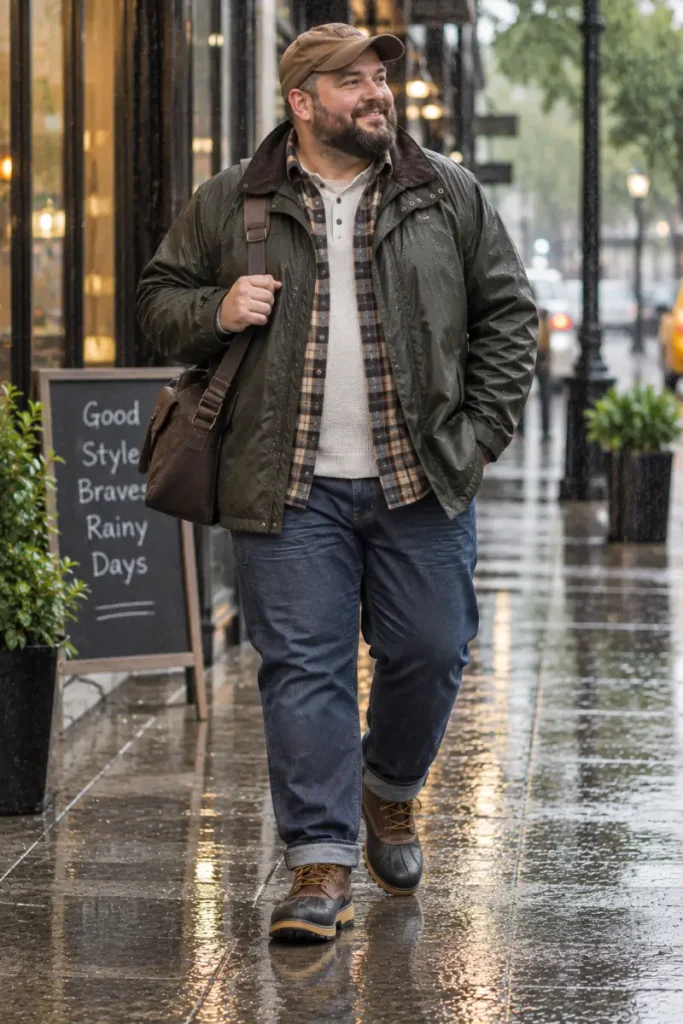
Heavy rain falls against a rugged olive green field jacket worn open over a textured cream henley. An unbuttoned plaid flannel shirt adds a warm mid-layer of earthy brown and navy tones.
Layering three distinct fabric weights builds structural depth without causing damp materials to cling.
Waffle-knit cotton acts like breathable upholstery padding, pushing the outer waterproof shells away from your skin. Leaving the middle flannel open creates vital airflow similar to an open-concept floor plan.
Why This Works
Element 1: The structured corduroy jacket collar frames the face while adding a dry, tactile focal point.
Element 2: Heavyweight denim blocks wind and holds its shape much like sturdy canvas furniture.
Element 3: Rubber-coated duck boots seal out deep puddles and ground the entire earthy color palette.
14. Khaki Trench Coat and Heavy Olive Knit
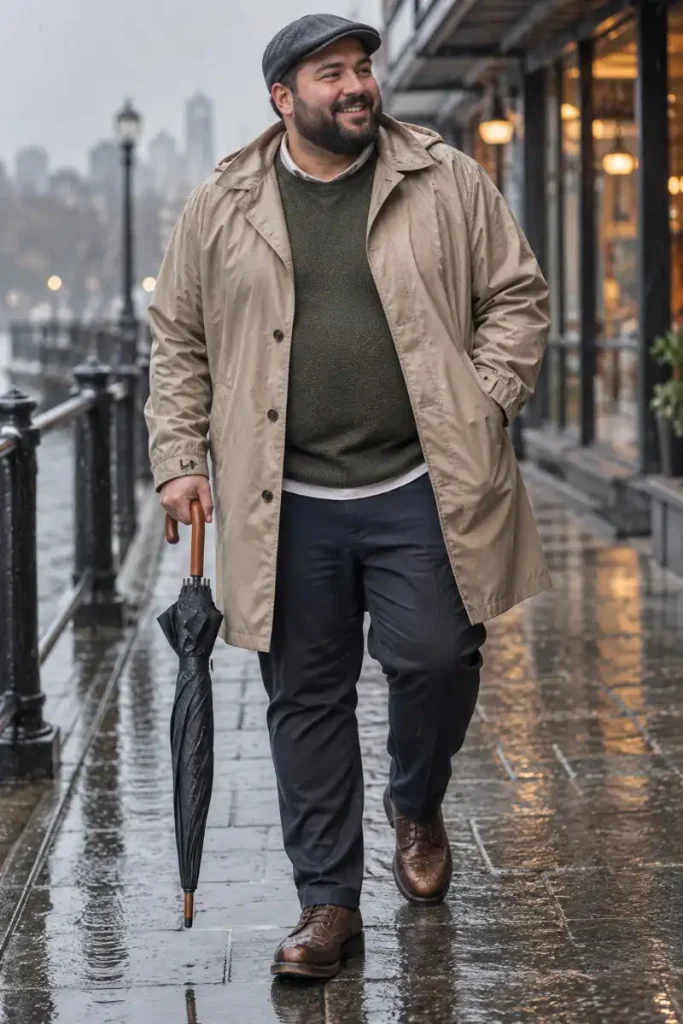
Crisp khaki fabric provides a long protective awning against heavy city rainfall. A dense olive green sweater adds rich tactile warmth beneath the unbuttoned outer shell. Dark charcoal trousers drop cleanly to meet sturdy brown leather brogue boots.
Leaving a crisp white base layer exposed breaks up heavy color blocks much like white crown molding grounds a dark painted room.
Long outer coats act like extended roof eaves, pushing rainwater far away from your waistline. Chunky knits create natural breathing room between your skin and the waterproof shell, functioning similar to thick rug padding.
Quick Styling Tips
- Budget version: Hunt local thrift shops for heavyweight wool sweaters to build cheap rugged texture.
- Renter tip: You cannot control office heating systems, so wearing a removable middle layer prevents you from overheating indoors.
- Pro move: Add a structured grey flat cap to keep rain off your face while maintaining a sharp profile.
15. Teal Shell and Light Blue Knit
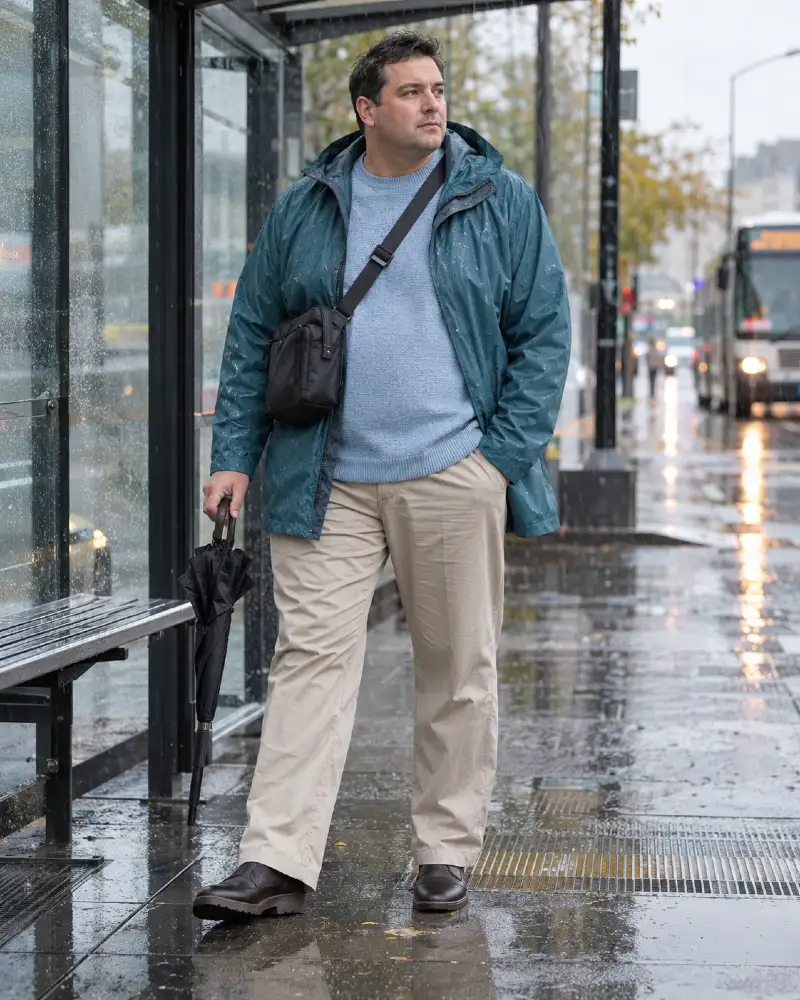
Rain washes over a crisp teal waterproof jacket near the city transit stop. A plush light blue sweater brings airy texture beneath the unzipped outer layer. Relaxed khaki trousers drop cleanly down to meet dark brown leather walking shoes.
Layering monochromatic tones builds visual depth similar to painting a room in varying shades of the same color family.
Thick knit sweaters push the nylon shell away from your skin to eliminate static cling. Light beige trousers brighten the overall palette much like large windows open up a cramped living space.
16. Rust Shell and Grey Crewneck
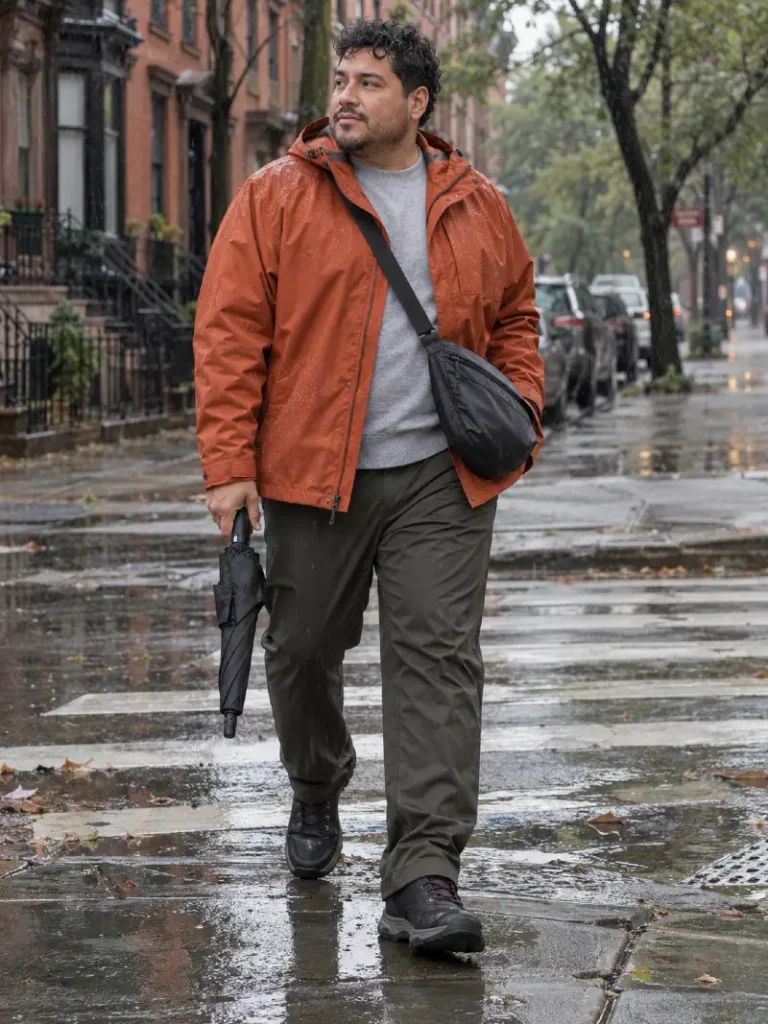
Heavy rain darkens the quiet city street behind a bright rust-colored waterproof jacket. A crisp light grey crewneck sweatshirt offers soft, breathable texture underneath the unzipped outer shell. Dark olive woven pants drop straight down to thick black walking shoes.
Treating a bright jacket like an accent wall brings warm energy to a muted outfit without overwhelming the frame.
Thick cotton sweatshirts act like dense upholstery padding, creating a firm barrier against the slick rain shell. Securing a black sling bag tight across the chest breaks up the wide front profile similar to placing a dark throw pillow on a vibrant sofa.
17. Olive Shell and Tall Rubber Boots
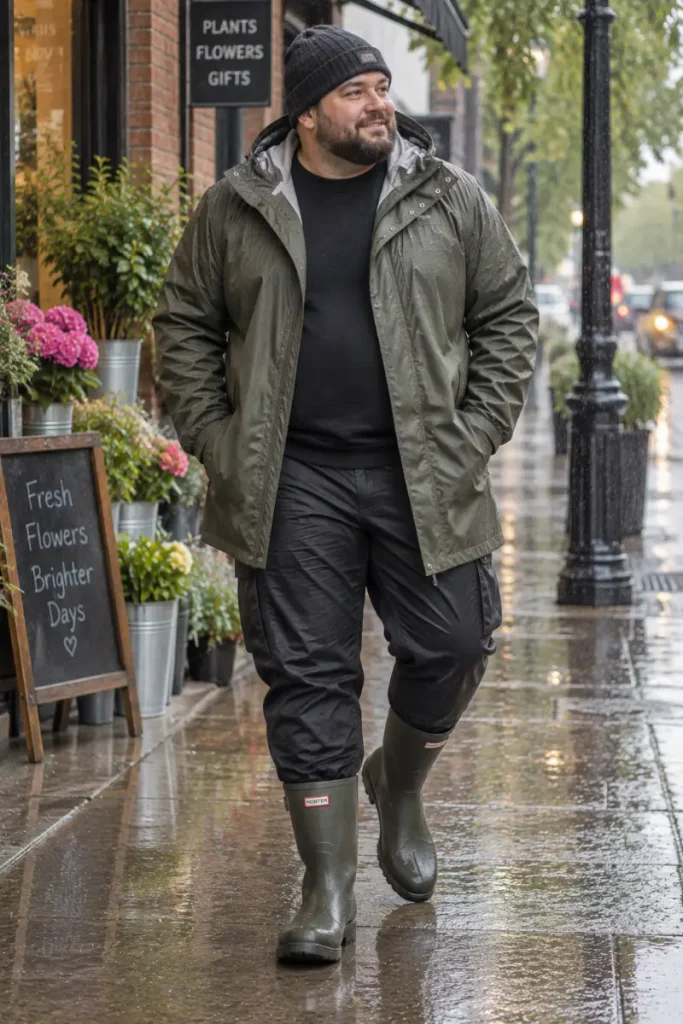
Rain glosses the surface of a long olive green jacket outside a vibrant flower shop. A dense black crewneck sweater brings dark, solid warmth beneath the unzipped waterproof shell. Wide black cargo trousers tuck tightly into tall olive rubber boots to block out the wet pavement.
Bookending an outfit with matching outerwear and footwear frames your body exactly like dark hardwood floors and exposed ceiling beams anchor a rustic living room.
Tall rubber boots act as heavy-duty baseboards, protecting your lower layers from splashing street water. Pushing loose pant legs down inside rigid footwear stops damp fabric from wrapping around your ankles. Try this high-coverage strategy during severe downpours or muddy outdoor chores.
Why This Works
Element 1: A ribbed black beanie traps heat while mirroring the dark central core of the sweater.
Element 2: Woven cargo trousers balloon slightly above the boot collar to maintain crucial airflow around your calves.
Element 3: Matching the rain jacket color directly to the boots establishes a grounded visual boundary.

Hello there! I’m Jesse Joe, the author and editor behind SolganGenius. I’m thrilled you’ve stopped by, and I can’t wait to share with you the essence of what this platform is all about.
I’m a writer, social media enthusiast, and a firm believer in the power of words. I’ve always been fascinated by how a simple phrase or slogan can capture an emotion, convey a message, and even change perspectives. Learn More