

Retirement is supposed to make life simpler. Then the bills arrive.
Medicare premiums come out of Social Security. Prescription costs pile up. Grocery prices take a larger bite from the monthly budget. Heating, cooling, rent, property costs, and phone service still need to be paid whether you are working or not.
What many retirees miss is that Social Security and Medicare are only part of the government benefit system.
Federal, state, and local programs can help eligible older adults with health costs, food, utilities, housing, transportation, taxes, legal problems, and even pension disputes.
USAGov maintains a Benefit Finder specifically designed to help people identify government assistance they may qualify for.
1. Medicare Savings Programs Can Cut Bills You Thought Were Fixed

One of the first programs every retiree with limited income should check is a Medicare Savings Program.
These state run programs can help eligible Medicare beneficiaries pay Part A and Part B costs. Depending on the program, assistance can include premiums, deductibles, coinsurance, and copayments.
There are four Medicare Savings Programs. The one that applies to most lower income retirees is often the Qualified Medicare Beneficiary program, known as QMB.
For 2026, Medicare lists the federal QMB monthly income limit at $1,350 for one person and $1,824 for a married couple, with resource limits of $9,950 and $14,910 respectively.
That number should not make you stop reading.
Medicare specifically says some states allow higher income or resource levels. States may also count income and assets differently.
2. Medicare Extra Help Can Dramatically Reduce Prescription Costs

Prescription costs can turn a manageable retirement budget into a stressful one.
Medicare’s Extra Help program assists people with limited income and resources with Medicare drug coverage costs. In 2026, qualifying beneficiaries can have a $0 plan premium and $0 deductible under the program’s rules.
Medicare says prescription costs under Extra Help in 2026 can be limited to as much as $5.10 for a covered generic drug and $12.65 for a covered brand name drug at participating pharmacies. Once qualifying total drug costs reach the applicable threshold, covered prescription costs can fall to $0.
Some people receive Extra Help automatically because they qualify for certain other assistance. Others need to apply.
That distinction matters because having Medicare does not automatically mean every beneficiary receives Extra Help.
3. Medicaid Can Pay Health Costs Medicare Does Not Fully Cover

Many retirees assume Medicaid is completely separate from Medicare.
It is possible to qualify for both.
Medicaid.gov reports that millions of lower income seniors enrolled in Medicare also receive Medicaid. People with both forms of coverage are commonly called dual eligible beneficiaries.
Medicaid can cover services that vary by state. Federal mandatory benefits include certain hospital, physician, laboratory, home health, and other services. States can offer additional benefits as well.
Medicaid is also a major source of coverage for long term services and supports. That can become extremely important when an older person needs substantial care at home or in another setting.
Eligibility rules differ by state and personal circumstances.
What to do: Use your state Medicaid agency rather than a general online income calculator for the final answer. Medicaid.gov says the state agency determines whether you qualify.
Health Benefits Worth Checking First
| If This Is Your Biggest Expense | Check This Program First | Then Check |
| Medicare premiums | Medicare Savings Programs | Medicaid |
| Prescription drugs | Extra Help | Medicare Savings Program |
| Long term care | Medicaid | Local aging services |
| Medicare plan confusion | SHIP | Medicare |
| Medical bills on a low income | Medicaid | Medicare Savings Programs |
4. SNAP Can Put Grocery Money Back Into Your Monthly Budget
SNAP is often called food stamps, but benefits are now generally provided electronically.
The program helps eligible lower income households buy food. USDA guidance also includes special rules that can matter when a household includes an older adult.
That is important for retirees because the eligibility calculation is more detailed than simply comparing your Social Security check with one income number.
Household circumstances and allowable expenses can affect the calculation. Older adults may have significant medical costs, housing costs, or other expenses that matter under program rules.
The amount you receive depends on your household and state administered eligibility process.
You do not need to be completely without income to apply.
What to do: Contact your state SNAP agency and complete an actual eligibility screening. Do not rely on what a neighbor receives because two retirees with similar Social Security benefits can have very different financial situations.
5. LIHEAP Can Help When Heating and Cooling Bills Get Painful
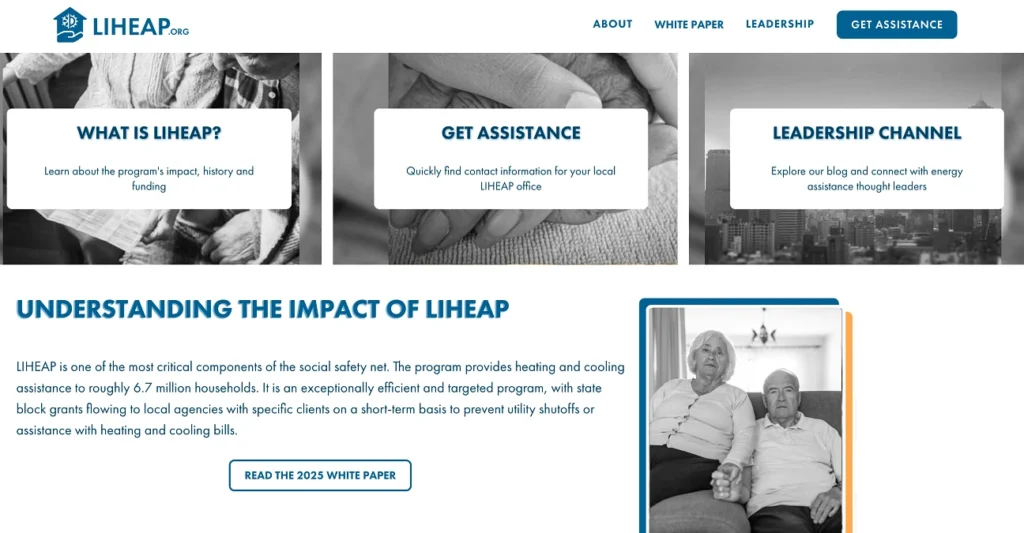
Utility bills are difficult to control when the weather turns extreme.
The Low Income Home Energy Assistance Program, commonly called LIHEAP, helps eligible households with heating or cooling expenses. Depending on where you live, assistance may also cover certain electric bills or emergency energy situations.
Eligibility is based partly on income, but each state and territory manages its own program and requirements.
That means hearing that someone in another state was denied tells you very little about your own eligibility.
Funds can also be limited.
Applying early can matter when your local program has a defined application period or limited funding.
What to do: Search for your state’s LIHEAP office through USAGov and ask about both regular energy assistance and emergency programs.
6. Weatherization Assistance Can Improve Your Home Without a Remodeling Bill
Paying an electric bill helps for one month.
Making a home more energy efficient can reduce the problem for much longer.
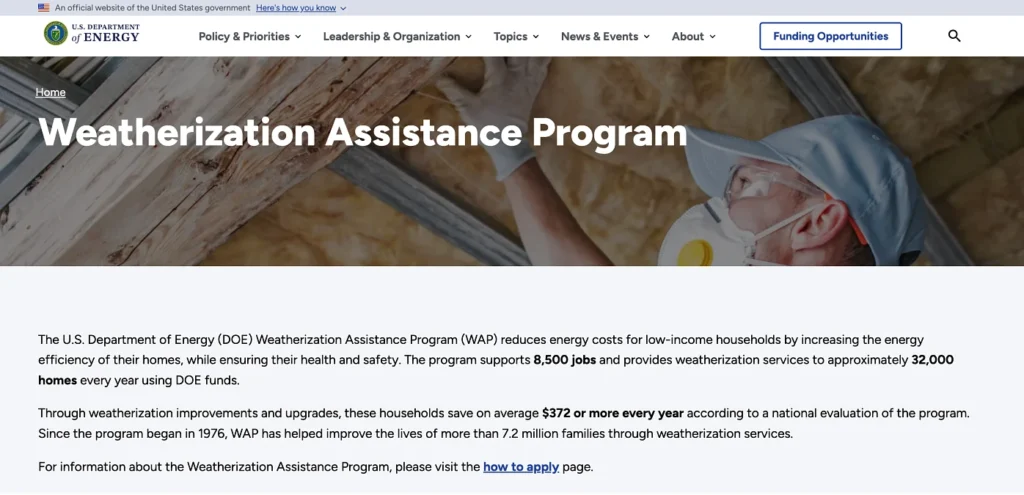
The Department of Energy’s Weatherization Assistance Program helps qualifying lower income households improve home energy efficiency while addressing certain health and safety concerns.
Services depend on the property and local program. Weatherization is based on an assessment, so it is not a blank check for any renovation you want.
The Department of Energy says households at or below 200 percent of federal poverty guidelines can meet its income eligibility standard. States may also use certain LIHEAP eligibility rules.
Older adults are among the vulnerable groups the program was created to help.
What to do: Contact the weatherization administrator in your state and ask for the local provider serving your county.
7. Lifeline Can Reduce Your Phone or Internet Bill
A phone is not much of a luxury when it is how you reach doctors, pharmacies, family members, banks, and emergency services.
The FCC’s Lifeline program provides a monthly discount on qualifying communications service for eligible lower income consumers.
As of 2026, the FCC says Lifeline provides a discount of up to $9.25 per month for eligible subscribers. Qualifying consumers on Tribal lands may receive a larger benefit.
Eligibility can be based on income or participation in certain qualifying assistance programs.
The benefit is a discount rather than free unlimited internet or phone service, so retirees should be careful with ads that promise more than the official program provides.
What to do: Check Lifeline eligibility through the official program before choosing a provider or changing service.
8. Housing Assistance Could Cut One of Your Largest Monthly Expenses

Housing can consume a huge share of retirement income.
Federal housing programs may help eligible older adults reduce rent. Options include Housing Choice Vouchers, public housing, and privately owned subsidized housing. USAGov specifically lists these resources when explaining rental assistance available to seniors and other qualifying groups.
Housing Choice Vouchers are often still called Section 8.
The major catch is availability.
Local housing agencies can have long waiting lists. Some lists may temporarily close when demand greatly exceeds available assistance.
That is exactly why waiting until a housing emergency can be a mistake.
What to do: Contact your local public housing agency before you urgently need assistance. Ask about vouchers, senior housing, public housing, and privately owned subsidized properties.
Do not pay someone who claims they can sell you a guaranteed government housing voucher.
9. Senior Nutrition Programs Can Provide Meals at Home or in Your Community
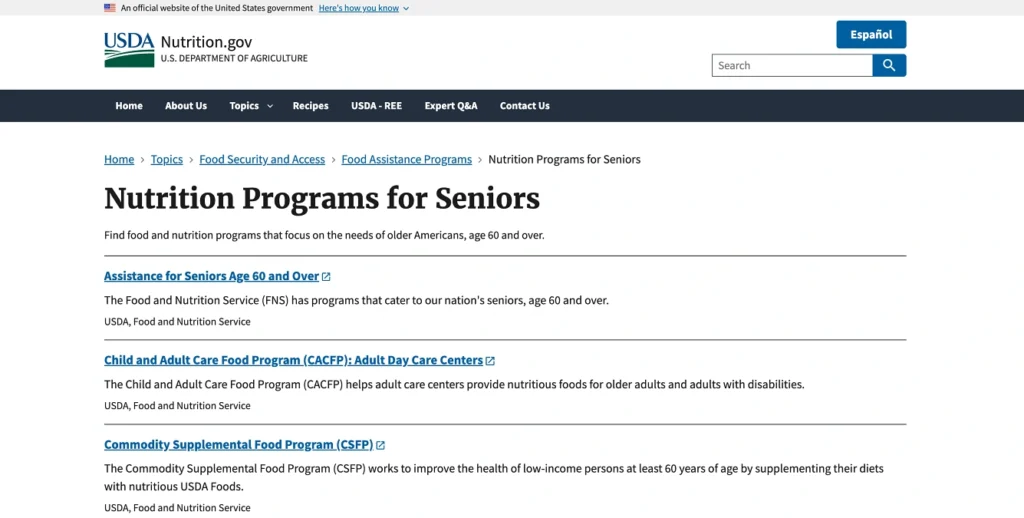
Government food assistance does not end with SNAP.
The Older Americans Act supports nutrition services for older adults through thousands of community providers.
The Administration for Community Living says its Senior Nutrition Program offers both congregate meals and home delivered meals through local networks. In 2026, ACL reported that the national program works through roughly 5,000 local providers and serves close to one million meals each day.
Local nutrition services are generally available to people age 60 and older under the Older Americans Act program structure, although program details can differ locally.
A congregate meal can also provide social contact, which may matter to someone spending most days alone.
What to do: Contact your Area Agency on Aging or use the federal Eldercare Locator to ask what meal services operate where you live. ACL’s Eldercare Locator connects older adults with local nutrition and support services.
10. Senior Farmers Market Benefits Can Help Pay for Fresh Produce
Fresh fruits and vegetables can be expensive on a fixed budget.
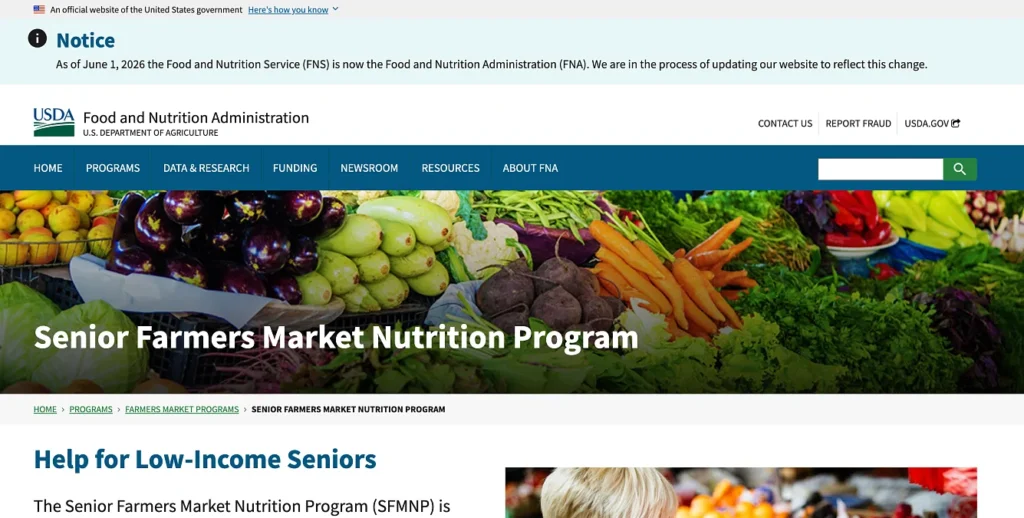
The Senior Farmers Market Nutrition Program is a federal nutrition program administered through participating state and local agencies. It helps qualifying lower income older adults obtain eligible foods from participating farmers, farmers markets, roadside stands, and similar approved sellers.
USDA’s Food and Nutrition Administration continues to list the Senior Farmers Market Nutrition Program among its assistance programs for older adults in 2026.
Availability is not identical everywhere. Benefits can also be seasonal because farmers markets operate differently across the country.
That makes it easy to miss.
What to do: Ask your state agriculture department, aging agency, or local nutrition program whether senior farmers market benefits are offered in your area.
11. Supplemental Food Programs Can Provide Groceries to Eligible Seniors
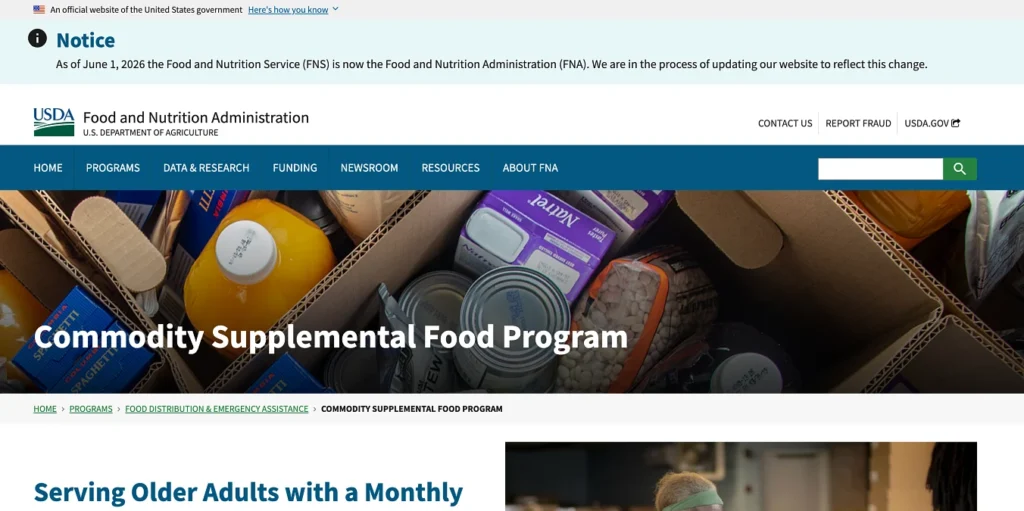
Another food program receives far less attention than SNAP.
The Commodity Supplemental Food Program, sometimes promoted locally under different names, distributes USDA foods through participating agencies to eligible lower income older adults.
USDA groups this program with its supplemental food assistance for older adults.
Instead of giving you unrestricted grocery money, participating local agencies distribute specific nutritious foods supplied through the program.
That means it works differently from SNAP.
You may also be able to participate in more than one nutrition program when eligibility rules allow it, so do not assume one form of food assistance automatically prevents you from asking about another.
What to do: Ask your state or local food assistance agency specifically about supplemental food programs for adults age 60 and older.
Food and Household Assistance at a Glance
| Program | Main Benefit | Key Catch |
| SNAP | Grocery purchasing assistance | Income and household rules apply |
| Senior Nutrition Program | Community or home delivered meals | Services vary locally |
| Senior Farmers Market Program | Eligible fresh foods | Not available everywhere |
| Supplemental Food Program | USDA food packages | Local distribution rules apply |
| LIHEAP | Energy bill assistance | State rules and funding matter |
| Weatherization | Energy efficiency improvements | Home assessment required |
| Lifeline | Communications discount | It does not make every plan free |
12. Free Tax Preparation Can Save You From Paying Someone to File
Retirement can make taxes more confusing.
Social Security, pensions, retirement account withdrawals, investment income, and other sources may all appear on a return.
The IRS runs the Tax Counseling for the Elderly program, commonly called TCE. The service provides free tax help with special attention to taxpayers age 60 and older.
IRS certified volunteers often have experience with pension and retirement related tax questions.
The IRS also supports Volunteer Income Tax Assistance for qualifying taxpayers.
TCE does have limits. Volunteers may not prepare every type of complicated return.
But for many retirees with relatively standard tax situations, paying a commercial preparer may be unnecessary.
What to do: Use the IRS free tax preparation locator before tax season and ask whether your return falls within the site’s scope.
13. Free Medicare Counseling Can Help You Avoid Costly Enrollment Mistakes

You do not need to buy something every time you need Medicare advice.
Every state has access to a State Health Insurance Assistance Program, known as SHIP.
SHIP programs provide local, objective counseling for people with Medicare, their families, and caregivers. The programs are federally funded through the Administration for Community Living, and consumers are not charged for SHIP counseling.
Counselors can help with Medicare enrollment questions, coverage, costs, and related insurance issues.
That can be valuable during enrollment periods when retirees are surrounded by television ads, mailers, sales calls, and plan marketing.
SHIP counselors are not there to earn a sales commission from the plan you select.
14. Older Americans Act Programs Can Provide Free Legal Help

A lawyer can be expensive when your retirement budget is already tight.
Older Americans Act funding supports legal assistance for older people, with particular attention to older adults facing economic or social need.
Local programs may help with issues involving benefits, long term care, housing, financial security, and other matters affecting an older adult’s independence.
The exact legal services available depend on where you live and the nature of the issue.
This is not a promise of a free attorney for every type of lawsuit.
But a retiree dealing with a benefit denial, housing problem, or other qualifying issue may have access to help that would otherwise cost hundreds of dollars.
What to do: Contact your Area Agency on Aging and ask specifically for the Older Americans Act legal assistance provider serving your county.
15. Local Aging Programs May Provide Transportation and Help at Home
Some of the most useful retirement benefits never arrive as a check.
Older Americans Act supportive services can include transportation, case management, information services, homemaker assistance, chores, personal care, and community programs. ACL also supports senior centers that coordinate services such as meals, health activities, education, and transportation.
What is available depends heavily on your community.
One county may offer rides to medical appointments. Another may have homemaker assistance or help connecting residents with home care.
There may be eligibility rules, waiting lists, suggested contributions, or limits on how often a service can be used.
Still, these services can make the difference between staying independently at home and needing more expensive care.
16. Free Pension Counseling Can Help You Recover Retirement Benefits
A forgotten pension can be worth far more than a small monthly discount.
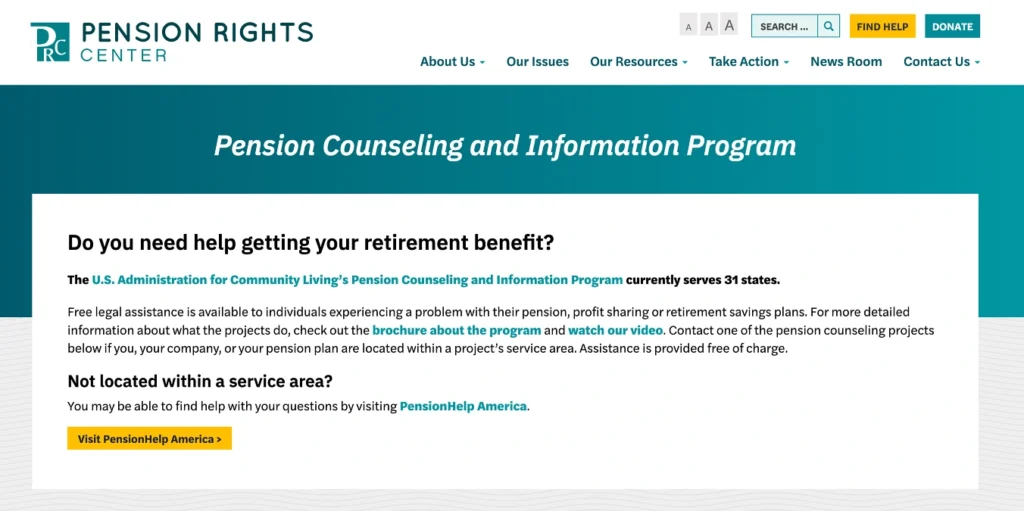
The Administration for Community Living supports a Pension Counseling and Information Program that helps people with retirement benefit problems. Its regional projects provide specialized assistance at no charge.
Counselors may help people obtain information about pension rights or deal with problems involving former employers and retirement plans.
This can be useful if you worked for several employers, left a company decades ago, received conflicting pension information, or believe benefits have been denied incorrectly.
Do not assume an old pension is too small or too difficult to pursue.
A benefit paid every month for years can become significant retirement income.
What to do: Check the Administration for Community Living’s pension counseling resources and identify the project serving your state.

I’m Austin Becker, an advocate for living life with intention and resilience. I write for men who are actively navigating life’s major transitions, tackling the realities of reinvention and finding renewed purpose with grit and honesty. I believe that personal growth doesn’t have a deadline it’s about continuously gearing up for the chapters that matter most.
Through my work, I aim to strip away the clichés of modern manhood, offering practical, no-nonsense insights on health, mindset, and legacy for those who want to move forward with strength and clarity.