
You wake up tired before the workday has even started. Sunday evening feels heavy. Trips, family visits, hobbies, and simple quiet mornings keep getting pushed to some future date.
Yet leaving work still feels risky.
You may wonder whether you are truly ready or simply having a bad season. You may also fear losing income, status, routine, or contact with people. That fear can keep a person working long after the job has stopped adding much to life.
The signs it is time to retire are rarely found in your age alone. They appear in your finances, health, energy, relationships, and plans for the years ahead.
1. Your Retirement Income Can Cover Your Real Spending

The clearest sign is simple. Your retirement income can support the life you actually live.
Do not base this decision on a round savings number. A person with $1 million may struggle with high spending. Another person may retire comfortably with less because housing costs are low and guaranteed income covers basic needs.
Start with your real spending from the past 12 months. Include:
- Housing and property taxes
- Food and utilities
- Insurance
- Health care
- Transportation
- Travel and hobbies
- Home and vehicle repairs
- Gifts and family support
- Federal and state taxes
Then compare those costs with Social Security, pensions, rental income, savings, and retirement accounts.
The 2026 Retirement Confidence Survey found that worries about inflation, debt, health care, and housing were hurting confidence among both workers and retirees. That makes a detailed spending plan more useful than a hopeful guess.
A good plan should also survive a few expensive years. Cars break. Roofs leak. Markets fall. A plan that works only when nothing goes wrong is not ready.
2. Work Is Taking More From Your Health Than It Gives Back

A difficult week can leave anyone tired. The concern begins when your body no longer recovers.
You may notice that work is causing or worsening:
- Poor sleep
- Lasting pain
- High stress
- Headaches
- Irritability
- Low energy
- Missed medical visits
- Trouble exercising or eating well
Retirement is not a medical treatment. Leaving work will not fix every health problem. You should speak with a doctor about any serious or lasting symptoms.
Still, work has a real cost when it uses all the energy you need to care for yourself.
Health problems also force many people to retire before they had planned. In the 2026 Retirement Confidence Survey, 46 percent of retirees said they left the workforce earlier than expected. That is a strong reason to build a retirement plan before health makes the decision for you.
Ask yourself one direct question:
Is this job helping me protect my health, or is it using up the health I have left?
3. You Spend Most Workdays Watching the Clock

Everyone watches the clock sometimes. It becomes a retirement sign when you do it most days for months.
You are no longer interested in the next project. Meetings feel empty. Success brings relief instead of pride. Your main goal is simply to get through the week.
Before assuming retirement is the only answer, check the real source of the problem.
Would any of these changes help?
- A different manager
- A new position
- Fewer hours
- Remote work
- A longer break
- Less responsibility
- A move to consulting
A change may be enough when the problem is your current role.
But if every possible version of the job feels like a burden, your mind may already be leaving. Staying from habit will not bring the interest back.
4. Your Best Energy Is Going to Work Instead of Your Life
Your job may get your sharpest hours while everyone else receives what remains.
You plan to exercise after work but feel too tired. You want to see family but need the weekend to recover. You own hobby supplies that have not been touched in years.
This is one of the most personal signs it is time to retire. Money can be earned and counted. Healthy time is harder to replace.
That does not mean you should quit the moment you feel busy. It means you should notice the pattern.
Write down the five things that matter most outside work. Then record how much useful time each one received during the past month.
The result can be uncomfortable.
Retirement may be worth serious thought when work keeps taking time from your marriage, grandchildren, friendships, health, creative goals, or community.
5. You Have a Clear Reason to Retire

Leaving a job is easier when you know what you are moving into.
You do not need a packed schedule. You do need more than a wish to stop setting an alarm.
Your reason might be:
- Caring for a spouse or parent
- Spending time with grandchildren
- Traveling while your health allows it
- Volunteering
- Learning a skill
- Starting a small project
- Improving your health
- Creating a slower daily life
Four in 10 retirees in a Transamerica study said their enjoyment of life or happiness had improved after retirement. That does not mean everyone becomes happier. It does show that retirement can create a positive life change when the new time is used well.
Create a sample week before retiring. Add meals, exercise, social time, errands, rest, and one meaningful activity.
If the week feels calm and interesting, that is useful evidence. If it looks empty, build more structure before leaving work.
6. You No Longer Need Your Job to Prove Your Worth

For many people, work answers a large question: “Who am I?”
A job gives you a title, a role, a reason people call, and a clear way to measure progress. Giving that up can feel like becoming less important.
Emotional readiness begins when you see your job as something you do, rather than the full meaning of who you are.
Try introducing yourself without mentioning your career.
You might say:
- “I help care for my grandchildren.”
- “I am learning photography.”
- “I volunteer at the library.”
- “I enjoy restoring old furniture.”
- “I am the person who keeps our family connected.”
These answers may feel strange at first. That is normal.
You do not lose your skills when you retire. You carry them into a wider life where your value is no longer measured by a salary or title.
7. Your Partner Is Ready to Discuss Daily Life After Work
A couple can agree about retirement and still picture two different lives.
One partner may expect constant travel. The other may want quiet days at home. One may expect to spend every day together. The other may need several hours alone.
Talk about ordinary life, not just dream trips.
Discuss:
- What time each person wants to wake up
- How household work will be shared
- How much travel is affordable
- How often family will visit
- How much time will be spent together
- Which activities will remain separate
- What purchases require a joint decision
Retirement changes the rhythm of a home. Small habits that were hidden by the workday become more visible.
A partner does not need to approve every detail. But both people should know what the other expects before the first Monday morning arrives.
8. You Have Solved the Health Insurance Question

You may be ready to stop working but not ready to lose employer health coverage.
This matters most when you want to retire before age 65.
Medicare’s Initial Enrollment Period generally lasts seven months. It begins three months before the month you turn 65 and ends three months after that month. Missing the right enrollment window may lead to delayed coverage or lasting penalties in some situations.
Before retiring, compare:
- Employer retiree coverage
- Coverage through a working spouse
- Marketplace plans
- Medicare
- Medicare supplement plans
- Medicare Advantage plans
- Prescription coverage
Do not compare premiums alone. Look at deductibles, medicine, doctor networks, dental care, hearing care, vision care, and the highest amount you may pay in a bad year.
Speak with your benefits office before giving notice. You can also contact your State Health Insurance Assistance Program for free Medicare counseling.
Health coverage should be settled in writing. A guess is not enough.
9. Staying One More Year Has No Clear Purpose

Working longer can improve retirement security.
You may add another year of savings. Your investments get more time. You may qualify for a larger pension. Delaying Social Security can also raise your future monthly payment.
But “one more year” should have a job.
For example:
- Pay off the mortgage
- Save another $40,000
- Reach Medicare age
- Earn a pension benefit
- Build two years of cash
- Finish supporting a child
Without a clear target, fear can keep moving the retirement date.
Ask how much one extra year will change your plan. Then ask what you will give up for that gain.
The answer may support staying. That is fine.
But when the extra year adds little security and costs a healthy year you deeply value, retirement may be the better trade.
10. You Can Retire Without Claiming Social Security at Once
Stopping work and starting Social Security do not have to happen on the same day.
Social Security retirement benefits can generally begin at age 62 for eligible workers. However, claiming before full retirement age reduces the monthly payment. For someone turning 62 in 2026 with a full retirement age of 67, claiming at 62 can produce a benefit about 30 percent lower than waiting until 67.
For people born in 1960 or later, full retirement age is 67. Benefits can keep increasing when delayed beyond that age, up to age 70.
You may be able to leave work and use savings, a pension, or a spouse’s income for a few years before claiming.
Delaying is not right for everyone. Health, life expectancy, family needs, spouse benefits, taxes, and available savings all matter.
The key sign is flexibility. Your plan is stronger when you can choose a claiming age instead of being forced to claim immediately because no other income is available.
11. You Are Staying Mainly Because Other People Expect It

Your employer may rely on you. Your coworkers may worry about replacing you. Adult children may feel safer knowing you still receive a paycheck.
Their feelings matter. But they should not control the rest of your working life.
Retirement guilt often sounds like this:
- “The team cannot manage without me.”
- “My clients will be upset.”
- “My children think I should keep earning.”
- “People will think I am lazy.”
- “My boss asked me to stay one more year.”
You can leave responsibly.
Give fair notice. Document your work. Train another person. Finish key tasks. Introduce clients to the new contact.
Then let the organization adjust.
A healthy workplace should be able to continue after one person retires. Your responsibility is to provide a thoughtful transition, not permanent availability.
12. A Gradual Exit Sounds Better Than Another Full Year

Retirement does not always need to be a single sharp break.
You may be ready to stop working full time but still enjoy parts of your role. A phased exit can give you income, structure, and social contact while creating more personal time.
Possible choices include:
- A three day workweek
- Seasonal work
- Project based consulting
- A less demanding role
- Temporary assignments
- Mentoring younger staff
- Work during only part of the year
Older adults are already using flexible work. The Bureau of Labor Statistics reported that 38.3 percent of employed Americans aged 65 and older worked part time in 2024.
A gradual exit also lets you test your retirement budget and routine.
The downside is that some employers offer flexibility without truly reducing the workload. Get the hours, duties, pay, and end date in writing.
If a reduced role feels exciting but another full year feels unbearable, full time work may be the part you are ready to retire from.
13. You Would Regret Losing the Time More Than Losing the Paycheck
Picture yourself five years from now under two different choices.
In the first, you kept working. You saved more and received more paychecks, but you postponed your personal plans.
In the second, you retired. You had less income, but more time for health, family, rest, and meaningful goals.
Which loss feels harder?
This question cannot replace financial planning. A strong desire to retire does not pay bills. But it can reveal what matters after the basic numbers work.
Workers often expect to retire later than people actually do. Gallup reported in 2026 that nonretired adults expected to retire at an average age of 66. Current retirees said they had retired at an average age of 61.
Plans can change because of health, caregiving, layoffs, or family needs.
You may never feel fully certain. But when the money is workable and the cost of waiting feels greater than the benefit, it may be time to claim your life back.
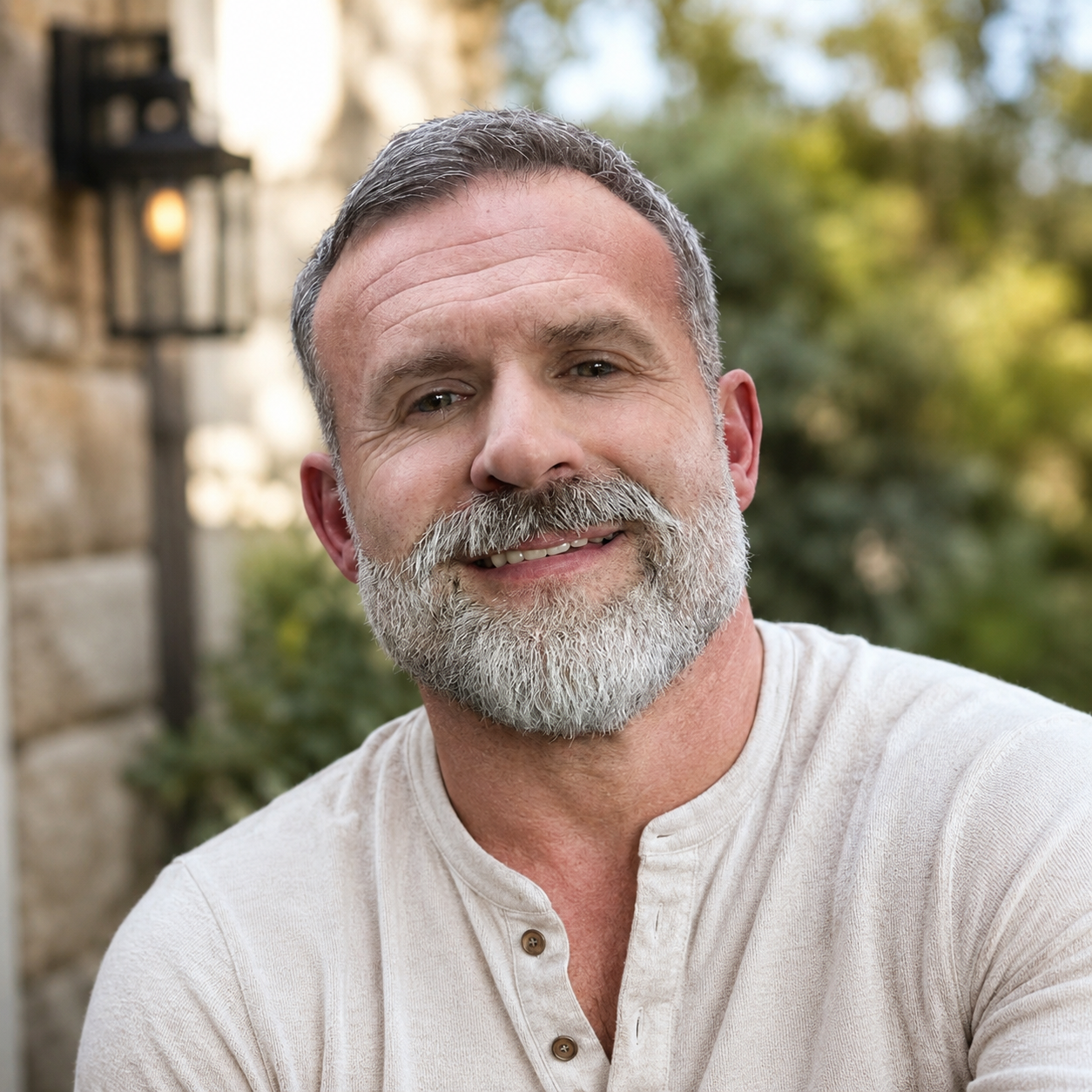
I’m Austin Becker, an advocate for living life with intention and resilience. I write for men who are actively navigating life’s major transitions, tackling the realities of reinvention and finding renewed purpose with grit and honesty. I believe that personal growth doesn’t have a deadline it’s about continuously gearing up for the chapters that matter most.
Through my work, I aim to strip away the clichés of modern manhood, offering practical, no-nonsense insights on health, mindset, and legacy for those who want to move forward with strength and clarity.